Petrol Diesel Prices Hiked for Fourth Time in 13 Days — Petrol Crosses Rs 102 in Delhi as Cumulative Rise Tops Rs 7.50 per Litre

Fourth Fuel Price Hike in 13 Days Pushes Petrol Past Rs 102 Mark
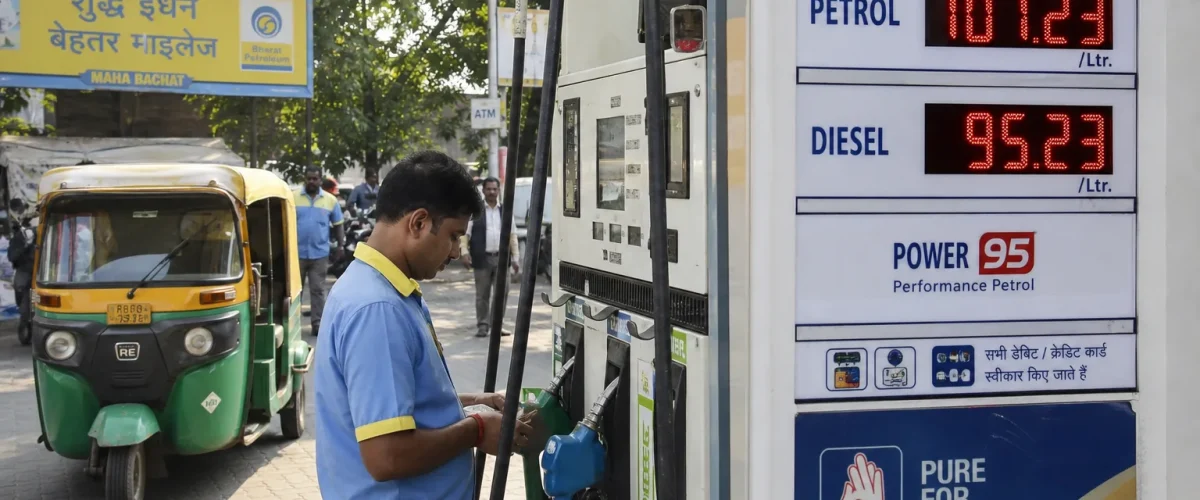
State-run oil marketing companies on Sunday, 25 May 2026, increased the retail prices of petrol and diesel for the fourth time in less than two weeks, pushing the price of petrol in New Delhi past the psychologically significant Rs 102 mark. Indian Oil Corporation Limited, Bharat Petroleum Corporation Limited and Hindustan Petroleum Corporation Limited raised petrol prices by Rs 2.61 per litre and diesel prices by Rs 2.71 per litre across all metros, bringing the cumulative increase since 13 May to over Rs 7.50 per litre for both fuels.
Following Sunday’s revision, petrol in the national capital is now priced at Rs 102.12 per litre, up from Rs 99.51 before the latest hike. Diesel in Delhi has risen to Rs 95.20 per litre from Rs 92.49. Consumers in other major cities are paying even more, with petrol in Kolkata now at Rs 113.51 per litre, Mumbai at Rs 111.21 per litre and Chennai at Rs 107.85 per litre. The differential pricing reflects varying state taxes and value-added tax structures across India.
Why Are Fuel Prices Rising So Rapidly?
The rapid succession of price hikes — four in just thirteen days — is a direct consequence of the escalating West Asia crisis and its impact on global crude oil markets. International benchmark Brent crude has been trading above the 80-dollars-per-barrel mark for several weeks, driven by heightened tensions between the United States and Iran, supply disruptions in the Strait of Hormuz and reduced output from key OPEC producers. India, which imports approximately 85 per cent of its crude oil requirements, is particularly vulnerable to such price shocks.
Oil marketing companies had absorbed significant losses by keeping fuel prices unchanged between January and early May despite the sustained rally in global crude prices. Industry estimates suggest that IOCL, BPCL and HPCL collectively incurred under-recoveries of Rs 8,000 to Rs 10,000 crore during this period. The current round of hikes represents an attempt to close this gap, though analysts believe further increases may be necessary if global crude remains elevated.
The timing of the hikes is also linked to the shift in India’s crude oil sourcing patterns, with Venezuela recently overtaking Saudi Arabia as the country’s third-largest supplier. However, even diversified sourcing has been insufficient to fully insulate India from the broader market dynamics driven by Middle Eastern geopolitical uncertainty.
City-Wise Fuel Prices After Latest Revision
The price differential across Indian cities is substantial and reflects the complex tax structure that determines final retail fuel prices. While the central government levies excise duty on petrol and diesel, individual states impose their own value-added taxes, which vary considerably. Here is a snapshot of revised fuel prices in major metros as of 25 May 2026.
In Delhi, petrol is now Rs 102.12 per litre with diesel at Rs 95.20. Mumbai sees petrol at Rs 111.21 and diesel at Rs 97.85, the higher rates reflecting Maharashtra’s relatively steep state levies. Kolkata has the most expensive petrol among the four major metros at Rs 113.51, with diesel at Rs 99.82. Chennai rounds out the metro picture with petrol at Rs 107.85 and diesel at Rs 98.10 per litre.
These price levels represent multi-year highs for most Indian cities. The last time petrol crossed the Rs 100 mark in Delhi was during the global commodity spike of 2022, when international crude prices surged past 120 dollars per barrel following Russia’s invasion of Ukraine. The current breach of this psychological threshold, occurring at comparatively lower crude prices, highlights the limited fiscal space that oil marketing companies have to absorb losses in the current economic environment.
Impact on Inflation and Consumer Spending
Economists have warned that the cumulative fuel price increase of over Rs 7.50 per litre in under two weeks will have cascading effects on the broader economy. Transportation costs, which directly influence the prices of food, consumer goods and industrial inputs, are expected to rise in the coming weeks as logistics operators pass on higher fuel expenses to their customers.
The Reserve Bank of India’s recent record dividend to the government of Rs 2.87 lakh crore for FY26 provides some fiscal cushion, potentially allowing the Centre to consider a reduction in excise duty if prices continue to climb. However, any such decision would need to balance fiscal prudence with the political imperative of containing inflation ahead of several state assembly elections later this year.
Consumer sentiment has already been affected. Industry data shows that fuel consumption growth slowed to 2.1 per cent in April compared to a robust 5.8 per cent in January, suggesting that higher prices are beginning to dampen demand. The automobile sector is also watching closely, with Maruti Suzuki announcing price hikes of up to Rs 30,000 from June partly in response to rising input costs linked to elevated fuel prices.
What Lies Ahead for Fuel Prices
The trajectory of fuel prices in the coming weeks will depend largely on two factors: the evolution of the US-Iran standoff and OPEC’s production decisions at its next meeting in June. If diplomatic efforts, including the recently discussed 60-day truce framework, gain traction, crude prices could ease significantly, potentially halting or even reversing the domestic fuel price increases.
However, if tensions escalate further, particularly if shipping routes through the Strait of Hormuz face disruption, analysts warn that crude could spike towards the 100-dollars-per-barrel level, necessitating further domestic price corrections. In such a scenario, petrol prices in several Indian cities could approach or cross the Rs 120 mark, levels that would represent an unprecedented burden on household budgets.
For now, the government has signalled that it is monitoring the situation closely but has stopped short of committing to any intervention in the form of excise duty cuts. Finance Ministry officials have privately indicated that any decision will be guided by the average crude price over a sustained period rather than short-term fluctuations, suggesting that consumers should brace for the possibility of further hikes in the near term.
The previous round of hikes had already pushed the cumulative increase past Rs 5 per litre. With Sunday’s revision taking the total past Rs 7.50, the pressure on household budgets and business operating costs is intensifying rapidly.
Explore more: Economy | Business
Related Articles
- Petrol Diesel Prices Hiked for Third Time in 9 Days
- Venezuela Overtakes Saudi Arabia as India’s Third Largest Oil Supplier
- RBI Approves Record Rs 2.87 Lakh Crore Dividend to Government
- Sensex Rallies Over 900 Points and Crosses 76,300 as Crude Oil Prices Plunge 5 P

- Fentanyl Vaccine Breakthrough: Scripps Research Develops Shot That Blocks Deadly Overdoses Before They Reach the Brain - June 13, 2026
- Nipah Virus Returns to Kerala — First Case of 2026 Confirmed, State Declares High Alert - June 12, 2026
- Jill Biden Reveals She Wanted to Keep PM Modi’s 7.5-Carat Diamond Gift but Returned It After State Department Valued It at $20,000 - June 8, 2026