Iran Suspends Ceasefire Talks with US and Threatens to Close Strait of Hormuz Again Over Lebanon Strikes

Iran Accuses Washington of Ceasefire Violations, Suspends Diplomacy
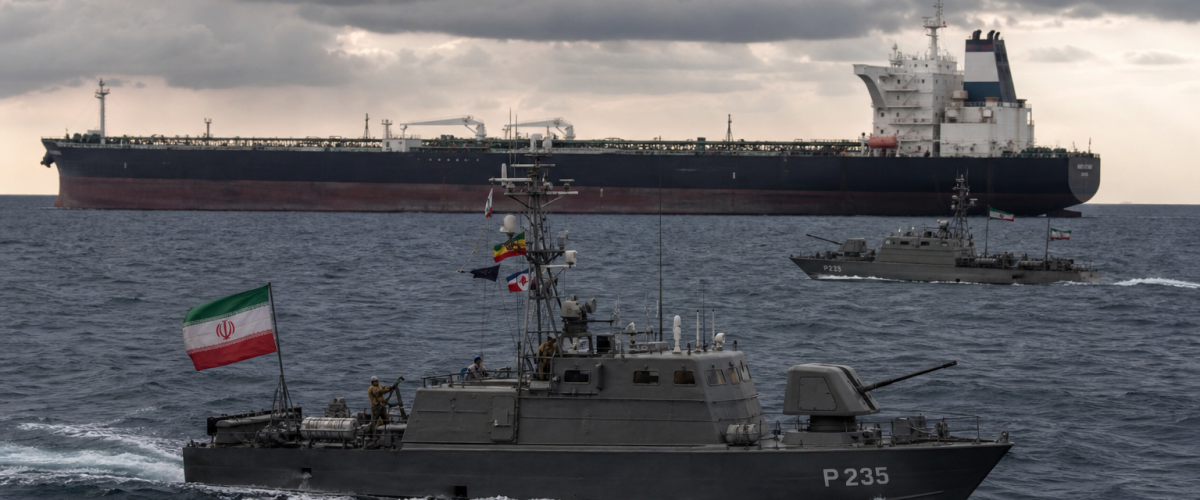
Iran announced on Monday that it has suspended all ceasefire negotiations with the United States and will move to reimpose restrictions on shipping through the Strait of Hormuz, in a dramatic escalation that threatens to reignite the global energy crisis that has plagued markets since February 2026.
The announcement, made through Iran’s state-affiliated Tasnim News Agency, cited Israel’s continued military operations in Lebanon against the Iranian-backed militia Hezbollah as a direct violation of the ceasefire framework agreed with Washington. Iran’s Foreign Minister posted on social media that “a ceasefire between Iran and the United States constitutes without any ambiguity a comprehensive ceasefire across all fronts, including Lebanon. Any violation of the ceasefire on one front shall be considered a violation of it across all fronts.”
The Strait of Hormuz: A Global Chokepoint Under Threat
The Strait of Hormuz is the world’s most critical maritime passage for energy trade. Roughly 20 percent of the world’s daily oil consumption — approximately 21 million barrels per day — passes through the narrow waterway connecting the Persian Gulf to the Gulf of Oman. Any disruption to traffic here sends immediate shockwaves through global energy markets and supply chains.
Iran has had a turbulent relationship with the strait since February 2026, when the US and Israel launched an air campaign against Iranian military targets. Since then, Iran has alternately blocked, controlled, and charged tolls on shipping through the passage. A temporary reopening in April, linked to the Israel-Lebanon ceasefire, provided some relief to global markets, but that arrangement now appears to be collapsing.
According to economy analysts, the crisis has already added an estimated $15–20 per barrel premium to global crude oil prices. A full re-closure could push Brent crude above $120 per barrel, triggering fresh inflationary pressures worldwide.
Timeline of the 2026 Hormuz Crisis
The current standoff has its roots in the dramatic events of late February 2026. On 28 February, following the US-Israeli air campaign against Iran and the assassination of Supreme Leader Ali Khamenei, Iran moved to block all shipping through the strait as a retaliatory measure.
On 8 April, a temporary ceasefire was agreed, which was supposed to involve the reopening of the strait. However, Iran began controlling traffic and charging tolls of over $1 million per ship, prompting the US to impose a naval blockade of Iranian ports from 13 April. The situation was described by The Guardian as a “dual blockade” — the US Navy blockading Iran, and Iran blockading the Gulf.
On 17 April, an Israel-Lebanon ceasefire led Iran to announce the strait would be open to commercial shipping during the truce. But the US continued its blockade, and Iran reimposed restrictions in response. On 4 May, Trump launched Operation Project Freedom, a US Navy escort mission for merchant ships through the strait.
A tentative 60-day ceasefire deal reached in late May brought cautious optimism, but Israel’s latest military escalation in Lebanon has now undermined the entire framework.
Global Market Impact
Oil futures spiked immediately on the news. Brent crude jumped 3.4 percent in early Asian trading on Tuesday, while West Texas Intermediate rose 3.1 percent. Gold, typically a safe-haven asset during geopolitical crises, climbed 1.8 percent to hover near $2,680 per ounce.
Indian markets are particularly vulnerable. India imports approximately 85 percent of its crude oil, with a significant portion sourced from Gulf nations whose shipments transit through the Hormuz strait. The Indian rupee weakened to 87.65 against the US dollar in early trading, and analysts warned of potential increases in petrol and diesel prices domestically if the crisis persists.
“This is the nightmare scenario that markets have been pricing in since February,” said Vandana Hari, founder of Vanda Insights, a Singapore-based oil market consultancy. “A full Hormuz closure would be unprecedented in modern history and would dwarf even the 1973 oil embargo in terms of global economic impact.”
US and European Response
The White House issued a statement late Monday calling Iran’s decision “reckless and counterproductive” and vowing that the United States would “take all necessary measures to ensure freedom of navigation in international waterways.” The statement stopped short of announcing new military deployments but reaffirmed commitment to Operation Project Freedom.
European leaders expressed alarm. French President Emmanuel Macron called for an emergency session of the UN Security Council, while British Foreign Secretary David Lammy urged “all parties to step back from the brink.” The European Union, which depends heavily on Gulf oil and gas, announced it was activating emergency energy reserves as a precautionary measure.
India’s Strategic Concerns
For India, the renewed Hormuz crisis presents both economic and strategic challenges. Beyond the immediate impact on oil prices, India’s significant trade with Gulf nations — totalling over $180 billion annually — could face disruption if the crisis escalates further.
India’s External Affairs Ministry said it was “monitoring the situation closely” and was in “constant touch” with all relevant parties. India has historically maintained balanced relations with both Iran and Israel, and diplomatic sources in New Delhi suggested that India could potentially play a mediating role if asked.
The Indian Navy’s Western Fleet has reportedly been placed on heightened alert, with vessels deployed in the Arabian Sea to ensure the safety of Indian merchant ships and oil tankers in the region.
What Comes Next
The immediate focus will be on whether Iran follows through on its threat to physically block shipping, or whether the announcement is primarily a negotiating tactic designed to pressure Washington into restraining Israel. Diplomatic sources told Reuters that back-channel communications between Iran and the US through Omani intermediaries have not been completely severed, leaving a narrow window for de-escalation.
However, with global energy companies already rerouting tankers around the Cape of Good Hope — adding 10–15 days and significant costs to each journey — the economic damage is mounting regardless of whether a full closure materialises. The world watches and waits as the Middle East’s interconnected conflicts continue to spiral.