US-Iran Ceasefire Expires on April 22: Impact on India’s Oil Prices, Strait of Hormuz, and Economy

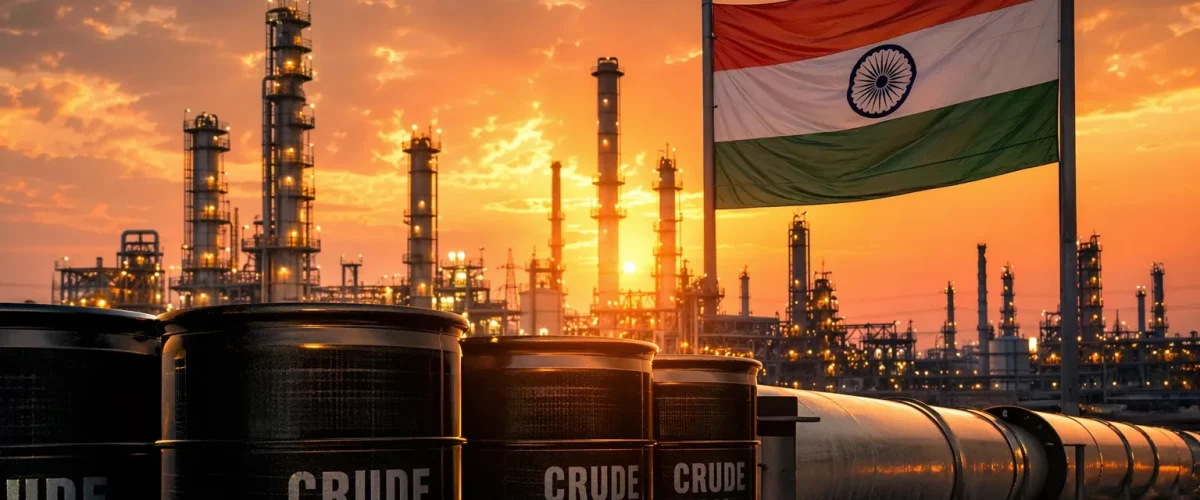
The fragile US-Iran ceasefire is set to expire on the evening of April 22, 2026 (Washington time), and with Iran pulling out of the second round of peace talks in Pakistan, the world is bracing for what comes next. For India — the world’s third-largest oil importer — the stakes could not be higher. A return to active hostilities threatens to send crude oil prices surging past $100 per barrel, choke the critical Strait of Hormuz shipping lane, and deliver a devastating blow to India’s already strained economy.
The ceasefire, brokered on April 8 after weeks of devastating conflict between the United States, Israel, and Iran, was always seen as temporary. Vice President JD Vance led 21 hours of face-to-face negotiations in Islamabad with Iranian officials, but the talks collapsed when Tehran refused to accept Washington’s core demand: an affirmative commitment to abandon its nuclear weapons programme. Now, with Iran calling American demands “childish” and refusing to attend a second round of negotiations, diplomatic channels appear all but closed.
How the Strait of Hormuz Crisis Unfolded
The current crisis traces back to February 28, 2026, when the United States and Israel launched a coordinated air campaign against Iran and assassinated Supreme Leader Ali Khamenei. Iran retaliated with missile and drone strikes against Israel, US military bases, and American-allied Gulf states. The Islamic Revolutionary Guard Corps (IRGC) then made its most consequential move — effectively closing the Strait of Hormuz to international shipping.
According to data compiled by maritime tracking agencies and confirmed by the Wikipedia entry on the crisis, the IRGC issued warnings forbidding passage through the strait, launched at least 21 confirmed attacks on merchant vessels, and reportedly laid sea mines across the shipping channel. Before the conflict, the Strait of Hormuz handled approximately 25% of the world’s seaborne oil trade and 20% of global liquefied natural gas (LNG) shipments. Ship transits, which previously numbered 200 to 300 per week, plummeted to near-zero during the height of the blockade.
The April 8 ceasefire was supposed to change that. Iran agreed to reopen the strait, but instead began controlling traffic and charging tolls exceeding $1 million per ship. When the Trump administration responded by declaring a US Navy blockade of Iranian port traffic from April 13, Iran cancelled its commitment to reopen the waterway entirely. Video footage showed commercial ships turning away from the strait as recently as last week. As this geopolitical turmoil unfolds, stock market updates reflect the growing anxiety among global investors.
Oil Prices Surge: Brent Crude Approaches $95 Per Barrel
The disruption to one of the world’s most critical energy chokepoints has sent oil prices soaring. Brent crude, the international benchmark, has been trading near $93 to $95 per barrel in recent weeks — roughly double the levels seen in early 2026 before the conflict erupted. West Texas Intermediate (WTI) and Mars Sour grades have hit six-year premium highs, trading between $85 and $92 per barrel as demand for non-Gulf supply intensifies.
India’s crude oil basket, which is a weighted average of Brent and Dubai/Oman grades, currently stands at approximately ₹8,124 per barrel on the Multi Commodity Exchange (MCX), though the trend has shown a slight 1.7% decline in the most recent session. Energy analysts warn that if the ceasefire expires without renewal and hostilities resume, Brent could breach the psychologically critical $100 mark within days.
The implications extend far beyond commodity trading floors. India imports approximately 85% of its crude oil needs, making it extraordinarily vulnerable to supply shocks. Before the conflict, Gulf countries collectively supplied 50% to 55% of India’s oil imports, with Iraq and Saudi Arabia as dominant exporters. Russia accounted for 19% to 21% of imports, down from 35% to 40% in 2024 due to trade negotiations with the United States. The war has effectively cut off nearly half of India’s traditional supply sources, forcing an urgent pivot toward Russian and American crude.
Impact on India’s Economy: Inflation, Current Account Deficit, and Growth
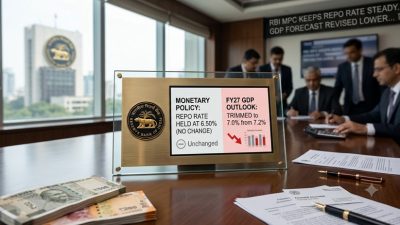
For India, elevated crude prices are not merely an inconvenience — they represent a structural threat to economic stability. The country’s current account deficit (CAD), which had narrowed to a comfortable 0.2% of GDP in Q1 FY2026, is now projected to widen sharply. ICRA estimates the CAD could reach $13 to $15 billion (approximately 1.5% of GDP) in Q2 FY2026, and independent analysts suggest the full-year figure could surpass 1% of GDP if oil prices remain elevated. As the RBI holds repo rate at 5.25%, the central bank faces mounting pressure to balance growth support with inflation control.
Every $10 per barrel increase in crude oil prices adds roughly 0.3% to India’s wholesale price inflation and widens the trade deficit by approximately $15 billion annually. With Brent hovering near $95 — almost $25 above pre-crisis levels — the cumulative inflationary impact is substantial. Consumer price index (CPI) inflation, which the Reserve Bank of India targets at 4%, could face upward pressure from rising fuel and transportation costs that cascade through the entire supply chain.
Indian Oil Marketing Companies (OMCs) including Indian Oil Corporation, Bharat Petroleum, and Hindustan Petroleum are absorbing significant under-recoveries on petrol and diesel sales. While retail fuel prices have been held steady for political reasons, the gap between international crude costs and domestic pump prices is widening. Analysts at Crisil and ICRA have warned that OMCs may be forced to pass on costs to consumers if the crisis persists beyond Q1 FY2027, which would directly feed into headline inflation.
JD Vance’s Failed Diplomacy and What Comes Next
The diplomatic picture remains bleak. Vice President Vance, who spent 21 hours in intensive negotiations in Islamabad and spoke with President Trump “a half dozen to a dozen times” during the talks, left Pakistan without a deal. The core sticking points — Iran’s nuclear enrichment programme, its regional proxies including Hezbollah, and control over the Strait of Hormuz — remain unresolved.
Iran’s state media confirmed on April 20 that Tehran would not participate in a planned second round of talks, blaming Washington’s “excessive demands, unrealistic expectations, constant shifts in stance, repeated contradictions,” and the ongoing US naval blockade, which Iran has described as an “act of aggression” and a direct breach of the ceasefire terms. Pakistan’s Foreign Minister Ishaq Dar has called on both nations to maintain the ceasefire, but with neither side willing to compromise, the diplomatic path forward is unclear.
Meanwhile, the Sensex rally driven by Q4 earnings last week now looks increasingly fragile as geopolitical uncertainty overshadows corporate fundamentals. Indian markets have been whipsawed by conflicting signals — strong domestic earnings on one hand, and escalating Middle East tensions on the other.
What Indian Consumers and Investors Should Watch
For ordinary Indians, the most immediate concern is fuel prices. If the ceasefire collapses and Brent crude crosses $100, the government will face an impossible choice between allowing pump prices to rise — fuelling inflation and public anger — or absorbing the costs through fiscal subsidies that would widen the budget deficit. The technology sector is also feeling the pressure, with AI automation reshaping India’s IT industry even as global clients cut discretionary spending amid economic uncertainty.
Key indicators to monitor in the coming days include:
- Brent crude price movements: A sustained breach above $95 signals escalation pricing.
- Strait of Hormuz shipping data: Any resumption of commercial traffic would be a positive signal.
- RBI policy signals: The central bank may need to intervene in currency markets to defend the rupee.
- Diplomatic developments: Any back-channel engagement between Washington and Tehran.
- OMC stock prices: Significant declines would indicate market expectations of prolonged elevated crude costs.
For the latest developments on how geopolitical events are shaping Indian economy news, stay tuned as this rapidly evolving situation continues to unfold. The next 48 hours could determine whether the world’s energy markets face their worst disruption since the 1973 oil embargo — and whether India’s economic growth trajectory is permanently altered.