US Proposes Extra 12.5 Percent Tariffs on India and 59 Other Countries Over Forced Labour Import Ban Failures

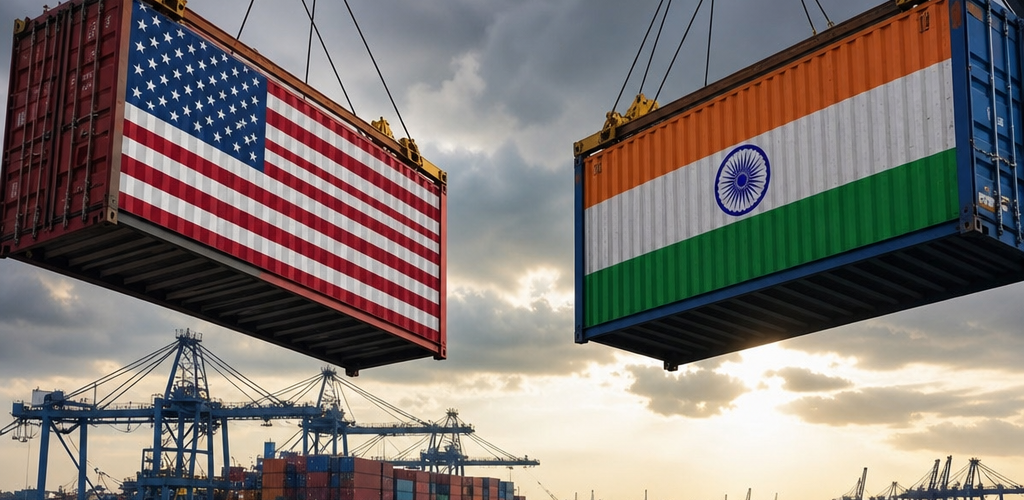
The Office of the United States Trade Representative has proposed imposing additional tariffs of at least 12.5 percent on imports from 60 economies, including India, China, the European Union, and Japan, for allegedly failing to adequately enforce bans on imports produced through forced labour. The proposal, which emerged on June 3, 2026, adds a new layer of complexity to an already volatile global trade environment and threatens to undermine the India-US bilateral trade agreement that both nations have been working to finalise.
What the USTR Proposal Contains
According to reports, the USTR’s proposal targets countries that it says have not implemented sufficient measures to prevent goods produced through forced labour from entering their markets. The additional tariffs of up to 12.5 percent would apply on top of existing tariff rates, effectively raising the cost of imports from affected countries into the United States.
The proposal is particularly significant for India, which is already subject to an 18 percent reciprocal tariff under the terms agreed to in the February 2026 bilateral trade framework. If the forced labour tariffs are implemented alongside existing duties, Indian exporters could face combined tariff rates that substantially reduce the competitiveness of their goods in the American market.
The USTR’s action appears to stem from Section 307 of the US Tariff Act of 1930, which prohibits the import of goods produced through forced labour, and newer legislative frameworks that require trading partners to demonstrate adequate enforcement of labour standards. The proposal targets a broad swath of the global economy — 60 countries representing the majority of US trade partners — suggesting it may be intended as a negotiating lever rather than a blanket enforcement action.
Impact on India-US Trade Relations
The timing of the proposal is particularly awkward for both sides. India and the US are currently in the midst of a four-day high-level negotiation in New Delhi, running from June 1 to 4, aimed at finalising the interim bilateral trade agreement whose framework was agreed upon in February. Commerce and Industry Minister Piyush Goyal had said on June 1 that “large parts” of the proposed trade agreement have been finalised, with both sides working through a few remaining details.
India’s chief negotiator Darpan Jain, Additional Secretary in the Department of Commerce, and his American counterpart Brendan Lynch are leading their respective delegations in the talks. The new tariff threat could complicate these negotiations by introducing additional demands related to labour standards enforcement that were not part of the original framework.
Indian trade officials have historically pushed back against the linkage of labour standards with trade agreements, arguing that such provisions can be used as non-tariff barriers to restrict market access for developing countries. India’s position has been that labour standards should be addressed through International Labour Organisation frameworks rather than through bilateral trade penalties.
Broader Global Context
The forced labour tariff proposal is the latest in a series of trade policy actions by the Trump administration that have reshaped global commerce. Since the imposition of sweeping reciprocal tariffs in 2025-2026, the US has used tariff policy aggressively to pursue a range of objectives including reducing the bilateral trade deficit, encouraging domestic manufacturing, and now enforcing labour standards.
The inclusion of major economies like the European Union, Japan, and South Korea alongside developing countries suggests that the USTR’s action is aimed at establishing a new global standard for forced labour enforcement rather than targeting specific nations. However, critics argue that the broad scope of the proposal risks creating trade friction with allied nations at a time when the US needs international cooperation to address shared security challenges.
For India specifically, the forced labour dimension is sensitive. While India has robust labour laws on paper, enforcement remains uneven, particularly in sectors such as garment manufacturing, brick kilns, and agricultural labour where bonded labour practices have been documented by organisations including the International Labour Organisation and Walk Free Foundation. The Indian government has taken steps to address these issues, including amendments to labour codes and increased inspections, but the scale of the informal economy makes comprehensive enforcement challenging.
Industry Reaction and Economic Implications
Indian industry bodies have expressed concern about the cumulative impact of US tariff actions on export competitiveness. India’s goods exports to the United States stood at approximately $80 billion in 2025-26, making the US India’s largest export destination. Key export sectors that could be affected include textiles and apparel, pharmaceuticals, gems and jewellery, and information technology hardware.
The Federation of Indian Export Organisations noted that Indian exporters are already navigating higher reciprocal tariffs and that additional duties would “seriously impair the viability of many export-oriented businesses, particularly small and medium enterprises.” Industry representatives have urged the government to take up the matter urgently in the ongoing trade talks and to push for India’s exclusion from the proposed tariff action based on the steps already taken to address forced labour.
Economists note that the global trade environment has become increasingly unpredictable, with multiple overlapping tariff actions creating compliance challenges for businesses operating across borders. The forced labour tariff proposal adds a new ESG (Environmental, Social, and Governance) dimension to trade policy that companies may need to address through supply chain audits and certification processes.
The USTR is expected to open a public comment period before finalising the tariff action, giving affected countries and industry stakeholders an opportunity to provide input. How India responds — both diplomatically and in terms of concrete enforcement actions — will likely shape the trajectory of the broader bilateral trade relationship.