India Manufacturing PMI Rises to 54.7 in April 2026 as Factory Output and New Orders Accelerate: HSBC Survey Shows Strongest Expansion in Months

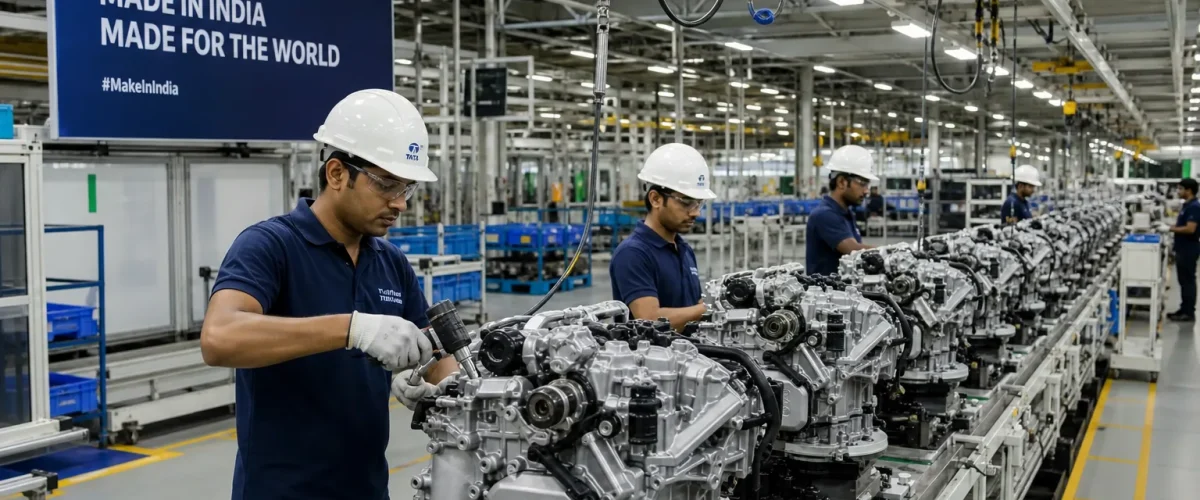
India’s Factory Sector Rebounds Strongly After March Slowdown
India’s manufacturing sector regained momentum in April 2026, with the HSBC India Manufacturing Purchasing Managers’ Index (PMI) rising to 54.7 from 53.9 in March, according to the final data released on Monday, 4 May 2026. The reading, which sits comfortably above the 50.0 threshold separating expansion from contraction, indicates the strongest improvement in overall business conditions in several months and signals that India’s factory sector is on a firmer footing heading into the second quarter of the fiscal year.
The April acceleration follows a period of moderation — March’s 53.9 reading had been the lowest since June 2022, raising concerns about whether the manufacturing-led growth narrative underpinning India’s revised 7.6 per cent GDP growth was sustainable. The April rebound suggests that the March softness was a temporary blip rather than the start of a structural slowdown, providing relief to policymakers and investors alike.
Output, New Orders, and Exports All Accelerate
The PMI improvement was driven by broad-based gains across the index’s five sub-components. Factory output expanded at a pace well above the long-run average, with manufacturers reporting increased production across both intermediate and consumer goods categories. The output sub-index reached levels not seen since early in the fiscal year, indicating that capacity utilisation in India’s manufacturing sector is increasing.
New orders, which carry the highest weightage (30 per cent) in the PMI calculation, showed a healthy pickup. Domestic demand remained the primary driver, with companies reporting increased purchasing activity from clients across automotive, chemicals, pharmaceuticals, and consumer goods sectors. Importantly, the survey noted that firms were adding to inventories in anticipation of continued demand, a forward-looking indicator of confidence.
Export Orders Brighten Despite Global Headwinds
Export orders also grew in April, a notable positive given the challenging global trade environment. The ongoing geopolitical tensions — including the Strait of Hormuz blockade concerns and the UAE’s exit from OPEC disrupting global energy markets — have created uncertainty for trade-dependent economies. Yet Indian manufacturers reported increased orders from key markets including Europe, the Middle East, and Southeast Asia.
This resilience in export demand aligns with India’s broader strategy of positioning itself as a reliable alternative in global supply chains. The government’s production-linked incentive (PLI) schemes across sectors from electronics to textiles are gradually translating into enhanced manufacturing capabilities and international competitiveness. India’s highest-in-the-world salary appraisals reflect the strong economic confidence flowing through the corporate sector.
Employment and Input Costs: A Mixed Picture
The employment sub-index showed moderate gains, with manufacturers adding to headcount in response to increased workloads. While the pace of hiring was not dramatic, the continued job creation is significant for an economy where manufacturing employment is a policy priority. The government’s aim of making India a global manufacturing hub depends critically on the sector’s ability to absorb the millions of young workers entering the job market annually.
On the cost front, input price pressures remained elevated but showed signs of stabilising. Raw material costs, which had been driven higher by crude oil prices crossing $120 per barrel and the broader commodity inflation cycle, moderated slightly in April. However, manufacturers continued to report higher costs for metals, chemicals, and energy — costs that are being partially passed through to output prices.
The suppliers’ delivery times sub-index showed further shortening, indicating improving supply chain conditions. This is a positive development after years of post-pandemic supply disruptions that had constrained manufacturing output globally. The improvement in delivery times suggests that both domestic and international supply chains are functioning more efficiently.
Composite PMI Also Strengthens
The broader HSBC Flash India Composite PMI, which combines manufacturing and services, rose from a final reading of 57.0 in March to 58.3 in April, indicating a sharp rate of growth that was substantial relative to its long-run average. The services sector also showed resilience, with the Services PMI Business Activity Index climbing to 57.9 from 57.5 in March.
This dual-engine growth — with both manufacturing and services expanding simultaneously — reinforces the narrative that India’s economic expansion is becoming more balanced and sustainable. Unlike previous growth cycles that were primarily services-driven, the current expansion has a significant manufacturing component, which is crucial for job creation and export competitiveness.
Implications for RBI Monetary Policy and Markets
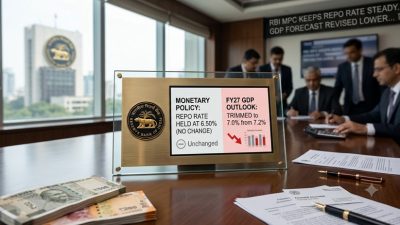
The strong PMI data will factor into the Reserve Bank of India’s monetary policy deliberations. The RBI has been balancing the competing pressures of supporting growth and containing inflation, with crude oil prices being the primary wildcard. The easing of oil prices on Monday — with Brent crude falling to $107.53 — along with the strong manufacturing data, creates a more favourable macro backdrop.
For equity markets, the PMI data adds to the positive sentiment that drove the Sensex up nearly 1,000 points on Monday. Manufacturing-heavy stocks, particularly in the auto, capital goods, and industrial sectors, stand to benefit from the improved outlook. The data also supports the government’s ambitious defence manufacturing and self-reliance (Atmanirbhar Bharat) push, which depends on a vibrant manufacturing ecosystem.
With India maintaining its position as one of the fastest-growing major economies globally, the April PMI data provides fresh evidence that the growth momentum has legs. As the fiscal year progresses and the effects of government spending, private investment, and export diversification compound, India’s manufacturing sector appears well-positioned to sustain its expansion trajectory.