Brent Crude Surges Past 114 Dollars Per Barrel as Iran Attacks UAE Energy Infrastructure and Strait of Hormuz Tensions Intensify

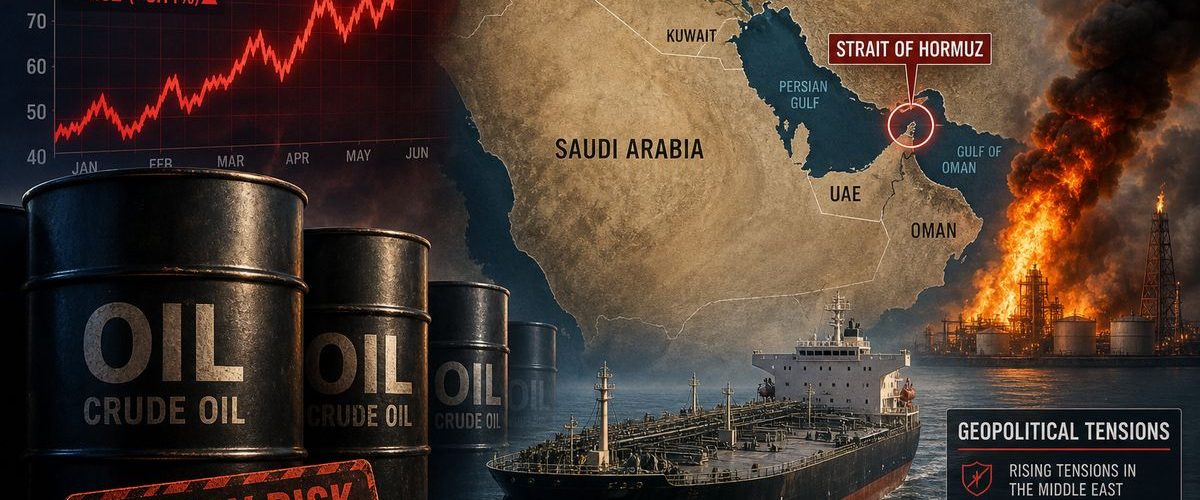
International benchmark Brent crude oil surged more than 5 per cent on Monday, May 4, to trade near $114 per barrel — its highest level since March 2026 — after Iran launched missile and drone strikes on energy infrastructure in the United Arab Emirates (UAE), dramatically escalating the ongoing conflict in the Middle East. West Texas Intermediate (WTI) crude, the US benchmark, climbed in tandem to near $105 per barrel, as traders priced in a significantly higher risk premium for potential supply disruptions through the strategic Strait of Hormuz.
Iran Strikes UAE’s Fujairah Oil Zone
The escalation began on Monday when Iranian forces launched a salvo of cruise missiles and armed drones targeting the Fujairah Oil Industrial Zone on the UAE’s eastern coast. The Fujairah facility is one of the largest oil storage and bunkering hubs in the world, located just outside the Strait of Hormuz, and serves as a critical node in global oil logistics.
The UAE’s Ministry of Defence confirmed that three of four incoming cruise missiles were intercepted by the country’s air defence systems, but one missile struck a storage facility, causing a significant fire that burned for several hours before being contained. Three workers at the facility were hospitalised with injuries. In addition, armed drone strikes targeted oil infrastructure near the port of Fujairah, causing additional damage.
In response, the UAE issued its first civilian missile alerts since the April 8 ceasefire between Iran and the US, instructing residents in the eastern emirates to seek shelter. The move marked a dramatic deterioration in the security situation for a country that has long prided itself on stability and safety.
US Forces Clash with Iran in the Strait
The strikes on the UAE came amid a parallel confrontation between Iranian and American forces in the Strait of Hormuz itself. The US Central Command (CENTCOM) reported that American naval forces engaged and repelled Iranian drones, missiles, and small boats while escorting two US-flagged commercial vessels through the strait.
Iran’s semi-official Fars and Tasnim news agencies responded by claiming that Iranian forces had “fired shots at US Navy ships” and announced that Iran has “redefined the control zone” in the strait — effectively asserting expanded Iranian sovereignty over shipping lanes through which approximately 20 per cent of the world’s daily oil consumption passes.
The fragile four-week ceasefire between the US and Iran, which was brokered in early April through diplomatic efforts, now appears to be on the brink of complete collapse. Former Israeli Prime Minister Naftali Bennett characterised the strikes on the UAE as “a declaration of the renewal of Iran’s war against the allies of the United States and Israel.”
Oil Market Reaction
Oil markets reacted sharply and swiftly to the escalation. Brent crude’s 5 per cent surge on Monday was its largest single-day gain in several weeks, and traders remain positioned for further volatility. Options markets are pricing in a significant probability that Brent could reach $120-125 per barrel if the conflict intensifies further.
The spike comes on top of an already elevated oil price environment. As reported in our coverage of OPEC+’s decision to raise output by 188,000 barrels per day for June, the cartel has been trying to stabilise markets while navigating the dual challenges of the Iran crisis and the UAE’s exit from the OPEC+ alliance.
Energy analysts say the oil market is now caught between two opposing forces: OPEC+’s attempts to increase supply and the growing risk that conflict could physically disrupt oil flows through the Strait of Hormuz. “If the strait is even partially blocked for a few days, we could see oil at $130 or higher,” said Amrita Sen, co-founder of Energy Aspects. “The market is not pricing in a full blockade scenario, and if it happens, the move would be explosive.”
Impact on India
For India, the world’s third-largest oil consumer and importer, the crude price surge is an economic body blow. India imports over 85 per cent of its crude oil requirement, and every $10 increase in the price of Brent crude adds approximately $15 billion to India’s annual import bill.
The direct consequences are already visible. The Indian rupee has weakened to a record low of 95.5 against the US dollar, partly driven by increased dollar demand from oil importers. The government’s fiscal calculations — which assumed an average crude price of $80-85 per barrel for FY27 — are being upended. And the prospect of domestic fuel price increases, which has been looming for weeks, is now more likely than ever.
Indian airlines, which are already grappling with jet fuel prices that are 55-60 per cent higher than last year, have warned the government that continued oil price increases could force them to curtail operations. Aviation turbine fuel (ATF) prices in India are linked to global crude prices, and the recent surge is expected to push ATF to record levels.
Diplomatic Efforts and the Role of China
Against this backdrop, diplomatic efforts to de-escalate the situation are intensifying. China, which has significant economic interests in both Iran and the Gulf states, has entered the diplomatic fray. Reports indicate that senior Chinese and Iranian officials held talks on Tuesday to discuss the reopening of the Strait of Hormuz and a possible ceasefire framework.
The involvement of China is significant for several reasons. First, China is the world’s largest importer of oil and has a direct economic interest in maintaining the flow of oil through the Strait of Hormuz. Second, China has maintained closer diplomatic ties with Iran than any other major power and may have leverage that the US and its allies lack. Third, a successful Chinese-brokered de-escalation would enhance Beijing’s global diplomatic standing — a strategic objective that has been central to Chinese foreign policy.
However, diplomats caution that a resolution is far from certain. “Iran is under enormous pressure — from US sanctions, from the military campaign, and from domestic economic grievances,” said a Gulf-based diplomat. “The UAE strikes may be a signal that Iran is willing to escalate to force a diplomatic opening, or they could be a prelude to further military action. The situation is highly unpredictable.”
What Global Markets Are Saying
Beyond oil, the Iran-UAE escalation has sent ripples through global financial markets. Gold, which has been trading near record highs of $4,600 per ounce, received a further boost from safe-haven demand. US Treasury yields fell as investors moved to the safety of government bonds. And airline stocks globally declined on expectations of higher jet fuel costs.
The MSCI Asia-Pacific index was flat to marginally lower on Tuesday, with export-dependent economies like South Korea and Taiwan showing particular sensitivity to the oil price spike. European markets, which opened after the initial shock was absorbed, traded mixed, with energy companies rising and consumer-facing companies falling.
The Week Ahead
Oil prices are expected to remain volatile throughout the week as traders assess the likelihood of further escalation. Key events to watch include any diplomatic developments from the China-Iran talks, US military deployments in the Gulf, OPEC+ emergency consultations, and Iran’s public response to international pressure.
For oil-importing economies like India, the immediate priority is managing the economic fallout. The RBI’s forex intervention, the government’s fuel pricing decisions, and the overall fiscal strategy will all be shaped by where oil prices settle in the coming weeks. In a globalised economy, events in the Persian Gulf have direct consequences for household budgets and business costs in Mumbai, Delhi, and Chennai.

- Indian Army Gets New Chief as General Dwivedi Hands Over Command Amid Push for Indigenous Defence Tech - July 1, 2026
- Ayodhya Ram Temple Donation Scandal Deepens as Trustees Resign and SIT Arrests Eight - June 29, 2026
- Bengal Seven Weeks On: Modi’s Historic Win and the Questions That Won’t Go Away - June 28, 2026