Commercial LPG Cylinder Price Surges Rs 993 to Record Rs 3,071 in Delhi: Highest Single-Day Hike by Oil Marketing Companies as West Asia Conflict Drives Energy Costs

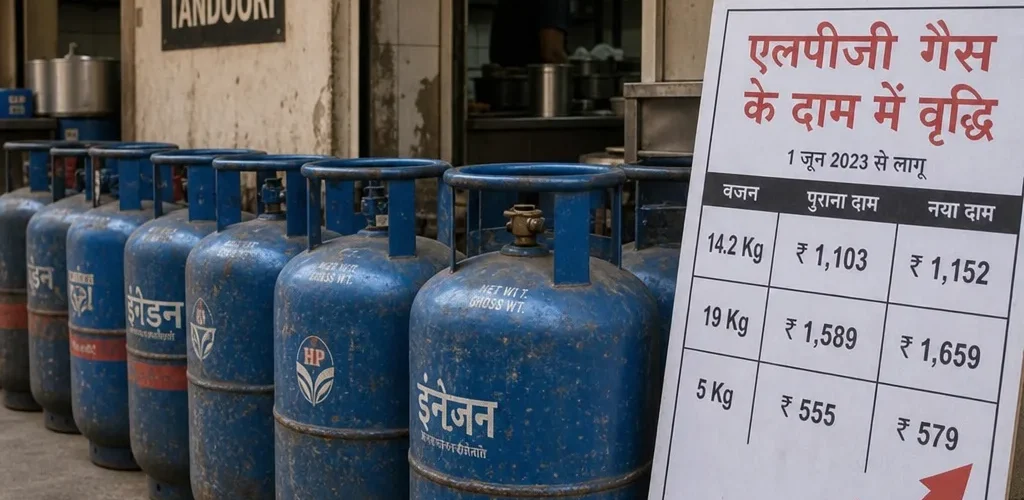
Oil Marketing Companies Announce Record Rs 993 Hike on 19 Kg Commercial LPG Cylinders
Oil marketing companies (OMCs) have raised the price of commercial liquefied petroleum gas (LPG) cylinders by a record Rs 993 per cylinder, effective 1 May 2026. A 19 kg commercial LPG cylinder — widely used by hotels, restaurants, canteens, and other commercial establishments — now costs Rs 3,071.50 in Delhi, up from Rs 2,078.50 earlier. This is the highest single-day price increase ever imposed by oil marketing companies on commercial LPG and the third consecutive monthly increase since the Iran conflict began on 28 February 2026.
The 5 kg Free Trade LPG (FTL) cylinder has also been hiked by Rs 261 per cylinder with immediate effect. However, there has been no change in the price of domestic LPG cylinders used for household cooking, nor in petrol, diesel, or Aviation Turbine Fuel (ATF) prices for domestic airlines. The government’s decision to absorb losses on domestic fuel while passing on costs to the commercial segment reflects the political sensitivity of household energy prices, especially in a year that has already seen multiple state assembly elections.
Why Commercial LPG Prices Are Surging
The primary driver behind the steep hike is the sharp rise in global energy prices triggered by the ongoing military conflict in West Asia. Since the Iran war began in late February 2026, Brent crude oil prices have surged past $120 per barrel, and liquefied petroleum gas contract prices in the international market have climbed in tandem. The UAE’s exit from OPEC and OPEC+ effective 1 May has added further uncertainty to global energy supply dynamics.
Commercial LPG prices in India are revised monthly based on Saudi Aramco Contract Prices (CP) and the prevailing exchange rate. Because the government does not provide a direct subsidy on commercial cylinders, price changes in the international market are passed through to end consumers in India more directly than they are for subsidised domestic cylinders.
The three increases since February have been cumulative and severe. Before the conflict began, a 19 kg commercial cylinder cost approximately Rs 1,850 in Delhi. The price has now risen by more than Rs 1,200 in just three months, representing a 66 per cent increase that has sent shockwaves through India’s hospitality and food service industries.
Impact on Hotels, Restaurants, and Small Businesses
The business and economy implications of the hike are immediate and widespread. The National Restaurant Association of India (NRAI) has warned that the sustained increase in commercial LPG prices is unsustainable for many small and medium-sized restaurants operating on thin margins. Cloud kitchens, dhabas, and street food vendors — which form the backbone of India’s informal food economy — are particularly vulnerable.
Industry bodies estimate that cooking fuel typically accounts for 8 to 12 per cent of operating costs for food service businesses. With the 66 per cent price surge over three months, many establishments are being forced to either raise menu prices or reduce portion sizes, both of which carry the risk of losing customers in a price-sensitive market.
The All India Consumer Products Distributors Federation has noted that the hike will also affect institutional users such as hospitals, hostels, and government canteens that rely on commercial LPG for daily operations. The cascading impact on food inflation is a growing concern among economists, even though the government’s consumer price index basket gives a higher weightage to retail food prices than to commercial fuel costs.
Domestic LPG, Petrol, and Diesel Remain Frozen — For Now
While commercial LPG has seen sharp increases, the government has so far chosen to keep household energy costs steady. Domestic LPG cylinder prices (14.2 kg) remain at the subsidised rate, and petrol and diesel prices have not been revised in nearly four years — the longest freeze in India’s fuel pricing history.
This freeze, however, is coming at a significant cost to the exchequer and to oil marketing companies. Kotak Institutional Equities estimated in April that state-run refiners — Indian Oil Corporation, Bharat Petroleum Corporation Limited, and Hindustan Petroleum Corporation Limited — are absorbing incremental losses of approximately Rs 270 billion per month due to the gap between crude oil costs and frozen retail fuel prices. The government cut excise duty by Rs 10 per litre in March, but analysts described the measure as partial relief rather than a structural solution.
Sources within the Ministry of Petroleum and Natural Gas indicated on 1 May that the government is now considering a calibrated hike of Rs 4 to 5 per litre on petrol and diesel, as well as an increase of Rs 40 to 50 on domestic LPG. A final decision is expected within the next five to seven days, though it will depend on the trajectory of global crude prices and the outcome of ongoing geopolitical tensions in West Asia. The new LPG rules that took effect on 1 May, including OTP-verified delivery and restrictions on dual connections, are part of the government’s broader effort to streamline the domestic LPG distribution system and reduce leakages.
Global Context and Outlook
India imports over 85 per cent of its crude oil and a significant portion of its LPG requirements, making it highly vulnerable to international price shocks. The Iran conflict has disrupted shipping through the Strait of Hormuz, a chokepoint through which approximately 20 per cent of global oil supplies pass. India’s strategic petroleum reserves, currently estimated at approximately 45 days of import cover, provide a limited buffer against prolonged supply disruptions.
The Reserve Bank of India has flagged energy prices as a key risk to its inflation projections for the remainder of FY27. If crude oil remains above $120 per barrel and LPG contract prices stay elevated, further increases in commercial cylinder prices in June and beyond cannot be ruled out. The stock market has already reacted to the energy price shock, with oil marketing company shares under pressure and broader indices showing volatility tied to crude oil movements.
For now, consumers using domestic LPG can take some comfort from the price freeze, but the hospitality industry and commercial users face what analysts describe as the most challenging energy cost environment in over a decade.