India-US Trade Deal Explained: How the Historic 18 Per Cent Tariff Agreement and $500 Billion Commitment Affect Indian Consumers and Businesses

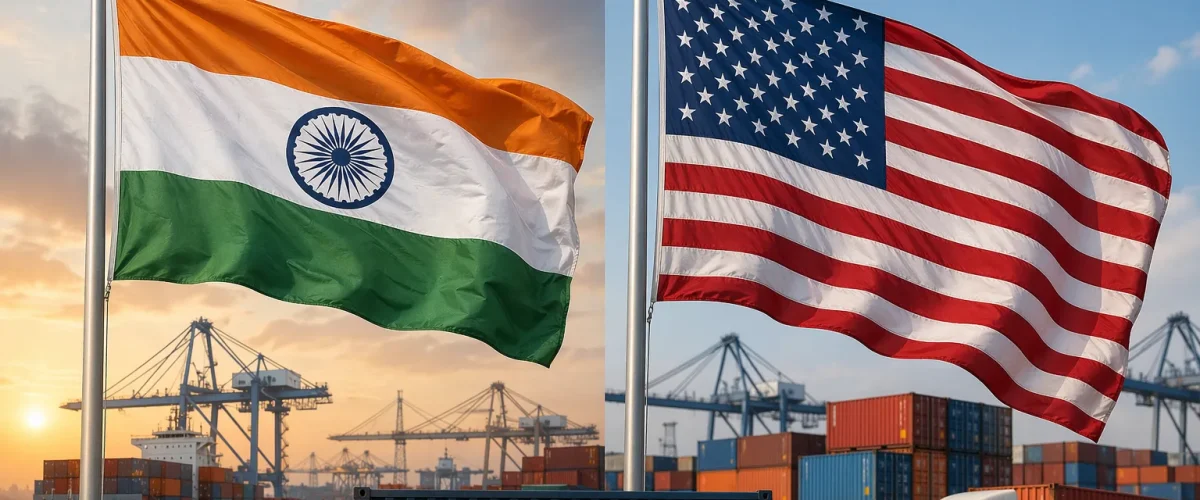
In what has been described as the most consequential bilateral trade agreement since India’s economic liberalisation, the United States and India announced a historic trade deal on 6 February 2026 that fundamentally reshapes the commercial relationship between the world’s largest and fifth-largest economies. The agreement reduces US reciprocal tariffs on Indian goods from 25 per cent to 18 per cent, commits India to purchasing over $500 billion worth of American products across energy, technology, and defence, and requires India to eliminate or reduce tariffs on a wide range of US industrial goods and agricultural products. For Indian consumers, businesses, and investors tracking personal finance and economic developments, understanding this deal is essential because its effects will ripple through everything from grocery prices and fuel costs to stock market performance and job creation.
What the Deal Contains: Key Provisions
The trade deal was announced following a call between President Donald Trump and Prime Minister Narendra Modi, with both sides issuing a joint statement outlining the framework for an interim agreement. The key provisions include several significant concessions from both sides. India will eliminate or reduce tariffs on all US industrial goods and a broad range of food and agricultural products, including dried distillers’ grains, red sorghum, tree nuts, fresh and processed fruit, soybean oil, wine and spirits, and additional products. This represents a significant opening of the Indian market to American agricultural producers.
The United States will apply an 18 per cent reciprocal tariff on select Indian goods, down from the 25 per cent tariff that was in effect. Products covered by the 18 per cent tariff include textiles and apparel, leather and footwear, plastic and rubber, organic chemicals, home décor, artisanal products, and certain machinery. Notably, the US will remove tariffs entirely on generic pharmaceuticals, gems, diamonds, and aircraft parts — sectors where India is a major global supplier.
India committed to stopping purchases of Russian Federation oil as a precondition for the deal, which led President Trump to sign an executive order removing the additional 25 per cent tariff on Indian imports. India also committed to purchasing over $500 billion worth of American energy, information and communication technology, coal, and other products over the agreement period. The deal also addresses non-tariff barriers and establishes rules of origin to ensure benefits flow primarily to the two countries rather than through third-party re-exports.
Impact on Indian Consumers: What Gets Cheaper and Costlier
For Indian households, the deal will have mixed effects. Products that could become cheaper include American agricultural goods — almonds, walnuts, apples, and cherries from the US have historically been expensive in India due to high import duties. Reduced tariffs should bring down prices for these products, benefiting health-conscious consumers and the food processing industry. American wines and spirits will also become more accessible, potentially reshaping the premium beverage market.
Soybean oil imports from the US could put downward pressure on edible oil prices, which is positive for household budgets. American technology products and industrial machinery may see marginal price reductions. On the energy front, increased imports of US liquefied natural gas and coal could help diversify India’s energy sources, though the impact on consumer fuel prices depends on global market dynamics and government pricing policies.
However, the commitment to stop importing Russian oil could push fuel costs higher. Russia has been supplying crude to Indian refiners at significant discounts — sometimes $15 to $20 per barrel below Brent prices. Losing this discount could increase the average cost of India’s crude basket by $5 to $10 per barrel, potentially translating to higher petrol and diesel prices if the government passes the cost through. The overall effect on household budgets will depend on how these opposing forces balance out. For investors, the trade deal intersects with broader personal finance considerations around portfolio allocation and sector-specific opportunities.
Winners and Losers Among Indian Industries
The pharmaceutical sector emerges as a clear winner. The removal of US tariffs on generic drugs preserves India’s position as the pharmacy of the world and could boost exports from companies like Sun Pharma, Dr. Reddy’s, Cipla, and Lupin. The gems and diamonds sector, centred in Surat, similarly benefits from tariff removal, ensuring continued market access for one of India’s most important export categories.
The IT services sector, while not directly tariffed, benefits from the broader improvement in bilateral relations and the technology cooperation framework embedded in the deal. Indian IT companies like TCS, Infosys, and Wipro derive a significant portion of their revenue from US clients, and a stable trade relationship reduces the risk of visa restrictions or regulatory barriers.
Sectors facing pressure include textiles and apparel, which will continue to face an 18 per cent tariff, making Indian exports less competitive compared to countries like Vietnam and Bangladesh that may secure lower tariff rates. Domestic agricultural producers of products like nuts, fruits, and edible oils may face increased competition from cheaper American imports. The automotive sector, not explicitly addressed in the interim agreement, remains subject to ongoing negotiations.
Geopolitical Dimensions: Russia Oil, Defence Ties, and Strategic Alignment
The deal’s requirement for India to cease Russian oil imports is perhaps its most geopolitically significant provision. India had become Russia’s largest oil customer following the 2022 Ukraine invasion, purchasing discounted crude to fuel its refining industry. The commitment to stop these purchases represents a major foreign policy pivot, aligning India more closely with Western sanctions on Russia. The economic cost is real — Indian refiners will lose access to discounted crude — but the strategic benefit is a stronger relationship with the US on trade, technology, and defence.
Defence cooperation is a growing dimension of the relationship. India has been increasing purchases of American military equipment, including aircraft, drones, and naval systems, and the trade deal framework includes provisions for continued expansion. The broader context of the deal aligns with the RBI’s economic projections that factor in trade policy impacts on GDP growth and inflation.
What Comes Next: Implementation and the Full BTA
The February announcement is a framework for an interim agreement, not the final bilateral trade agreement. Detailed negotiations on rules of origin, compliance mechanisms, dispute resolution, and sector-specific schedules are ongoing. The full Bilateral Trade Agreement is expected to take 12 to 18 months to finalise. In the meantime, the tariff reductions and market-opening commitments take effect progressively, with some provisions already implemented and others tied to benchmarks. For Indian businesses and consumers, the next year will bring a gradually shifting trade landscape that requires attention, adaptation, and strategic planning.