Samsung Electronics Workers Union to Stage 18-Day Strike From May 21 After Wage Negotiations Collapse Over Bonus Demands

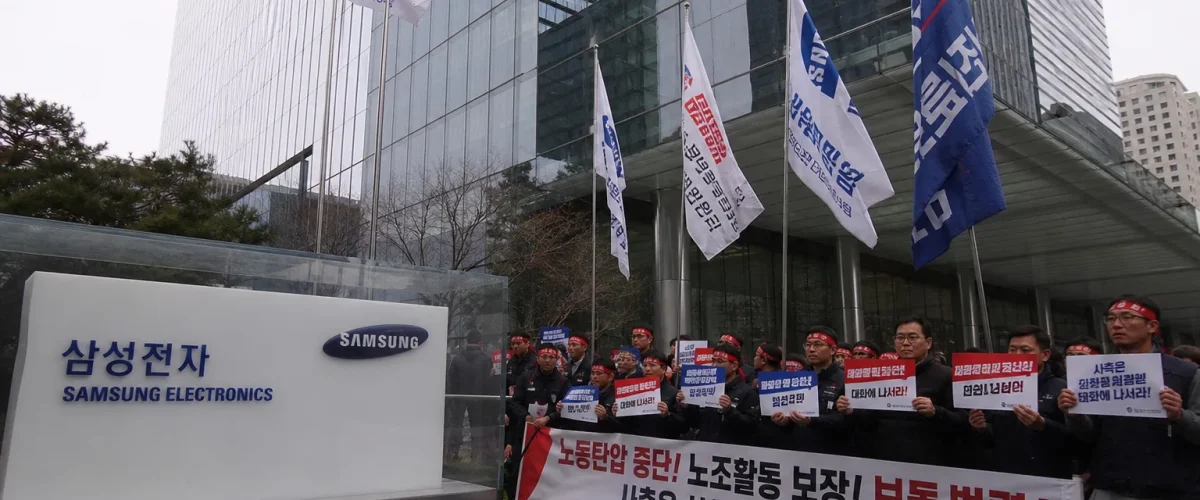
Samsung Electronics, the world’s largest memory chip and smartphone manufacturer, is bracing for its most disruptive labour action in history as its workers’ union confirmed on Saturday that it will proceed with a planned 18-day strike starting May 21, 2026. The announcement came after two rounds of government-mediated negotiations between the union and Samsung management collapsed, with the final session lasting a gruelling 17 hours before ending without agreement in the early hours of Tuesday morning.
Why Samsung Workers Are Striking
The dispute centres on performance bonuses and how Samsung distributes its record earnings during the global artificial intelligence boom. Samsung Electronics reported operating profits of approximately 58 trillion Korean won ($42 billion) for fiscal year 2025, driven by explosive demand for its high-bandwidth memory (HBM) chips used in AI data centres operated by companies like Nvidia, Microsoft, and Google.
The National Samsung Electronics Union (NSEU), which represents over 30,000 of the company’s 120,000-strong workforce in South Korea, has three core demands. First, it wants Samsung to scrap the current cap on performance bonuses, which the union says unfairly limits worker compensation even when the company posts record profits. Second, the union is demanding that 15 per cent of Samsung Electronics’ annual operating profit be allocated to performance bonuses. Third, it wants this profit-sharing formula to be formalised in employment contracts to prevent management from unilaterally changing bonus structures in the future.
Negotiations That Failed
Both sides held two rounds of government-mediated talks on May 11 and 12 under the auspices of South Korea’s Ministry of Employment and Labor. The final session, which began at 10 AM on May 12 and stretched until 3 AM on May 13 — a marathon 17-hour negotiation — ultimately failed to bridge the gap between the two sides.
Samsung management’s counter-proposal offered to allocate 10 per cent of operating profit as bonuses (versus the union’s demand of 15 per cent), along with a one-off special compensation package that the company said exceeds industry standards. Management also maintained that the union’s demands would be “unsustainable in the long term” and could jeopardise the company’s ability to invest in future technologies.
The union leader, speaking to reporters after the breakdown, said management had not meaningfully responded to workers’ demands. “Samsung made record profits on the backs of its workers, yet it refuses to share those profits fairly. The 10 per cent counter-offer is insulting when management bonuses and executive compensation have never been subject to such caps,” the union leader said. “No further talks are being considered before the strike.”
Impact on Global Chip Supply
An 18-day strike at Samsung Electronics could have significant repercussions for the global semiconductor supply chain. Samsung is the world’s largest producer of DRAM and NAND memory chips, controlling approximately 40 per cent of the global DRAM market and 33 per cent of the NAND flash market. The company’s chip fabrication plants in Pyeongtaek, Hwaseong, and Giheung employ thousands of workers represented by the union.
Industry analysts have warned that a prolonged strike could tighten the already constrained supply of HBM chips, which are critical for training and running large AI models. Global technology companies including Nvidia, AMD, and Google are locked in a fierce competition for HBM chip allocations, and any disruption to Samsung’s production could push prices higher and delay product launches.
“A Samsung strike of this duration would be unprecedented and could reduce global DRAM output by 10 to 15 per cent during the strike period. This would likely push memory chip prices up by 5 to 8 per cent in the spot market,” said Kim Young-woo, an analyst at SK Securities in Seoul.
Samsung’s History of Labour Relations
Samsung Electronics has historically been known for its anti-union stance, with the company’s founder Lee Byung-chul famously declaring that he would never allow unions at Samsung. For decades, the conglomerate successfully prevented unionisation through a combination of generous compensation, corporate culture, and — according to critics — systematic suppression of labour organising.
The NSEU was formally established in 2019 and conducted its first-ever strike in 2024, a one-day walkout that had limited impact on production. However, the union has grown significantly in membership and influence since then, and the planned 18-day strike represents a dramatic escalation that reflects deep worker frustration with the company’s bonus policies.
South Korean President Yoon Suk-yeol has urged both sides to return to the negotiating table, warning that a prolonged strike could damage South Korea’s reputation as a reliable supplier of advanced semiconductors. “Samsung Electronics is not just a company — it is a national champion and a pillar of South Korea’s economy. Both management and the union must find a way to resolve this dispute,” Yoon said in a statement.
Global Context: Tech Worker Activism on the Rise
The Samsung strike is part of a broader global trend of increasing worker activism in the technology sector. In 2025, workers at major US tech companies including Amazon, Apple, and Google staged walkouts and unionisation drives over pay, working conditions, and the ethical implications of AI development. The trend reflects a generational shift in attitudes toward corporate loyalty and worker rights in an industry that has traditionally resisted unionisation.
In India, the Samsung factory in Sriperumbudur near Chennai saw a significant labour dispute in 2024 when workers demanded better wages and the right to form a registered union. The 37-day protest was eventually resolved through government mediation, but the episode highlighted the growing assertiveness of tech and manufacturing workers in emerging markets.
What Happens Next
If the strike proceeds as planned on May 21, Samsung is expected to rely on non-unionised workers, management staff, and automation to maintain critical production lines. The company has reportedly been building up chip inventories in anticipation of the walkout and has activated contingency plans at its overseas facilities in Austin, Texas, and Xi’an, China.
The union has indicated it is open to resuming talks if Samsung management agrees to meaningful concessions on the profit-sharing formula. However, with both sides appearing entrenched in their positions, industry observers expect the strike to go ahead barring a last-minute breakthrough.
The outcome of this dispute could set an important precedent for labour relations in the global technology industry, particularly as AI-driven profits continue to surge across the global business landscape and workers across the sector increasingly demand a greater share of the wealth they help create.