Ujjwala Yojana Shock: Government Slashes Subsidised LPG Cylinders from 9 to 4 Per Year — Opposition Cries Betrayal

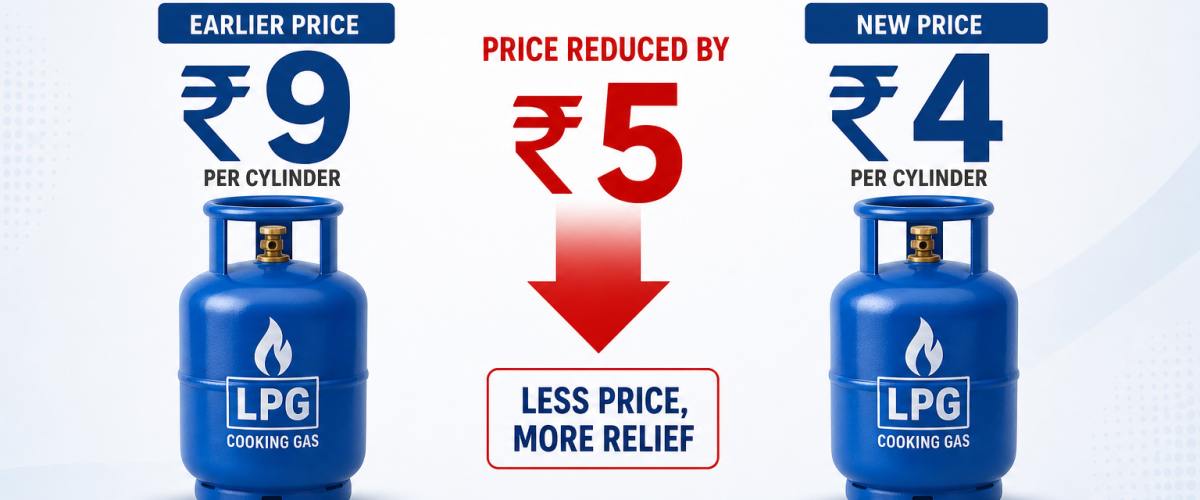
The Union government has dealt a significant blow to millions of poor households by reducing the number of subsidised cooking gas cylinders available annually under the Pradhan Mantri Ujjwala Yojana (PMUY) from nine to just four. The decision, announced on Monday, June 8, 2026, came barely a day after the government raised the price of a standard 14.2 kg LPG cylinder by Rs 29, creating a double impact on the household budgets of India’s most vulnerable families.
The Scale of the Cut
When the Ujjwala Yojana was launched by Prime Minister Narendra Modi in May 2016, it was hailed as a transformative initiative to provide clean cooking fuel to underprivileged households, replacing hazardous fuels like firewood, cow dung, and kerosene. Under the original scheme, beneficiaries were entitled to 12 subsidised 14.2 kg LPG cylinders each year — enough to cover the average cooking needs of a family for the entire year.
The annual quota was quietly reduced to nine cylinders last year, a move that received relatively little public attention. The latest reduction to just four cylinders per year represents a drastic 67 percent cut from the original entitlement and means that subsidised gas will last beneficiary families for only about four months of the year. For the remaining eight months, these families will have to purchase cylinders at full market price or revert to traditional, polluting fuels.
Government’s Justification
At a media briefing, Praveen Mal Khanooja, Additional Secretary in the Ministry of Petroleum and Natural Gas, stated that the revised entitlement “broadly reflects the average annual consumption of LPG by Ujjwala households.” He explained that government data showed many Ujjwala beneficiaries were purchasing only three to five cylinders per year, suggesting that the previous entitlement of nine cylinders was higher than actual usage patterns.
“The government remains committed to providing clean cooking fuel to every household. The adjustment in the subsidised cylinder quota is based on empirical consumption data and ensures that fiscal resources are deployed efficiently,” Khanooja said.
Officials also pointed out that the government provides broader support through subsidised LPG pricing for all consumers, not just Ujjwala beneficiaries, and that the total outlay on LPG subsidies remains substantial. They argued that the reduction in the quota should be seen in the context of the government’s overall fiscal management strategy.
The Impact on Poor Households
Consumer rights groups and economists have sharply contested the government’s reasoning. They argue that low consumption among Ujjwala beneficiaries is not evidence of low demand — rather, it reflects the inability of poor households to afford refills at the current price, even with the subsidy.
A standard 14.2 kg LPG cylinder currently costs approximately Rs 903 for non-subsidised consumers, following the latest price hike. For Ujjwala beneficiaries, the subsidy of Rs 300 per cylinder brings the effective cost down to about Rs 603. With only four subsidised cylinders per year, a beneficiary family will save approximately Rs 1,200 annually through the scheme — a far cry from the Rs 3,600 they would have saved under the original 12-cylinder entitlement.
“The government is essentially telling poor women: we gave you the connection, now figure out how to afford the gas,” said Reetika Khera, an economist at the Indian Institute of Technology Delhi who has extensively studied welfare schemes. “Low consumption is a symptom of unaffordability, not a sign of adequate supply.”
Political Firestorm
The decision has triggered a fierce political backlash. Congress leader Rahul Gandhi attacked the government in a social media post, calling the cut a “betrayal of the promise made to 10 crore women.”
“When Modi ji launched Ujjwala Yojana, he promised clean cooking fuel for every poor family. Now, that promise is being diluted, cylinder by cylinder. First 12, then 9, now 4. What’s next — zero?” Gandhi wrote, adding the hashtag #UjjwalaBetrayal.
Samajwadi Party chief Akhilesh Yadav echoed similar sentiments, calling the reduction “anti-poor and anti-women.” He demanded an immediate rollback of the decision and accused the government of “giving with one hand and taking away with both.”
Even some NDA allies expressed discomfort with the timing and scale of the cut. A senior leader from a key NDA partner party, speaking on condition of anonymity, said, “The optics of this are terrible. You reduce cylinders and raise prices on the same weekend? This gives the opposition a readymade issue.”
Women Bear the Brunt
The impact of the reduction will be disproportionately borne by women in rural India, who are the primary beneficiaries of the Ujjwala Yojana and the ones most affected by decisions about cooking fuel. Health experts have long warned that reverting to biomass fuels causes severe respiratory diseases, with indoor air pollution from traditional cooking methods estimated to cause over 1 million premature deaths annually in India.
“The Ujjwala Yojana was designed to address a genuine public health crisis. Reducing the subsidised cylinder quota undermines that objective and risks pushing millions of women back to cooking with firewood and cow dung — fuels that are literally killing them,” said Dr. Sunita Narain, Director General of the Centre for Science and Environment.
Fiscal Context
The reduction in subsidised cylinders comes against the backdrop of rising international LPG prices, which have increased by approximately 46 percent in the global market. The government’s subsidy bill for LPG has been climbing, creating pressure on fiscal resources at a time when the Centre is trying to maintain its fiscal deficit targets.
However, critics argue that the government could have explored alternative approaches — such as better targeting of subsidies, cross-subsidisation from higher-income consumers, or negotiating better long-term supply contracts — rather than reducing the entitlement for the country’s poorest citizens.
Also Read
- India April CPI Inflation Expected to Rise to 3.8 Percent as LPG Price Hike and Fuel Costs Push Household Budgets Higher Amid Global Energy Crisis
- Trump Pushes to Suspend Federal Gas Tax as Iran War Enters 11th Week and US Fuel Prices Hit Four-Year Highs Amid Strait of Hormuz Disruption
- New LPG Rules From May 1, 2026: No Dual Gas Connections, OTP Delivery, Booking Gap Changes and Price Hike Explained
As the political debate intensifies and social media campaigns gain momentum, the Ujjwala Yojana cylinder reduction is shaping up to be one of the most contentious policy decisions of 2026. For millions of Indian families who depend on subsidised cooking gas, the question is painfully simple: what do they cook with for the eight months when the subsidy runs out?