Raghu Rai Dies at 83: India Mourns the Legendary Magnum Photographer Who Captured the Nation’s Soul for Five Decades

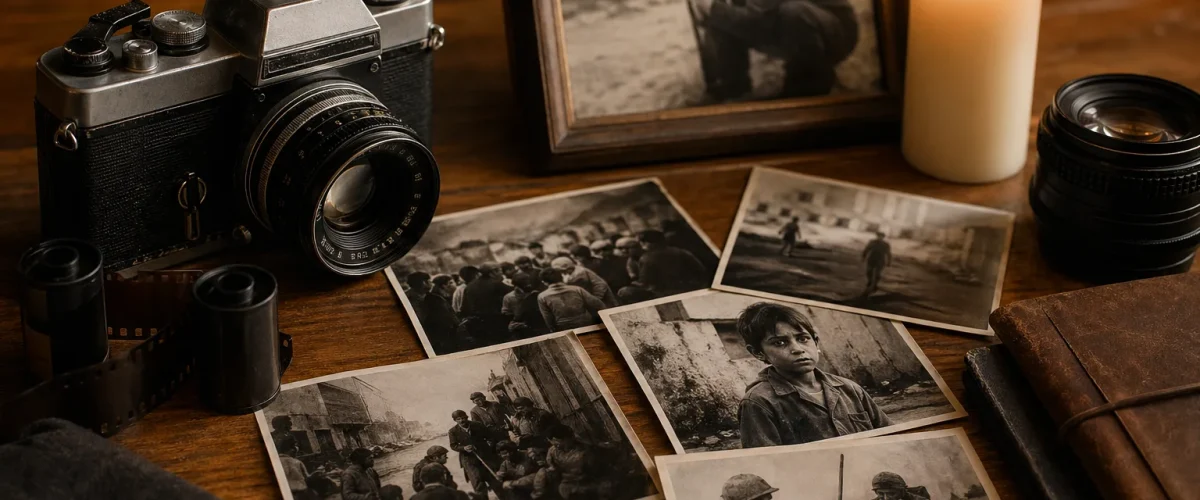
Raghu Rai, one of India’s most celebrated photographers and the only Indian member of the prestigious Magnum Photos agency, died in the early hours of Sunday, 26 April 2026, at a private hospital in New Delhi. He was 83. His family confirmed the news on his Instagram profile, paying tribute to a man whose lens captured India in its many shades for more than five decades.
A Five-Decade Career That Defined Indian Photojournalism
Born on 18 December 1942 in Jhang, Punjab, in what is now Pakistan, Rai was the youngest of four children. His family migrated to India during Partition, an experience that would later inform his deep empathy for displaced communities and human suffering. Rai picked up a camera in his early twenties and never looked down again, building a body of work that stretched from the corridors of power in New Delhi to the devastated streets of Bhopal after the 1984 gas tragedy.
His coverage of the Bhopal gas disaster remains some of the most powerful photojournalism ever produced in India. The image of a father burying his infant child, eyes still open, became an enduring symbol of the world’s worst industrial disaster. Rai returned to Bhopal multiple times over the decades, documenting the ongoing suffering of survivors and holding corporate accountability in the public eye through his photographs.
From Henri Cartier-Bresson’s Protégé to Magnum Legend
Rai’s career received a transformative boost when legendary French photographer Henri Cartier-Bresson saw his work and nominated the young Indian photojournalist for membership in Magnum Photos in 1977. Magnum, founded in 1947 by Cartier-Bresson and Robert Capa among others, is the world’s most prestigious photographic cooperative. Rai remains the only Indian photographer to have been inducted into the agency, a distinction that placed Indian visual storytelling on the global map.
From 1982 until 1992, Rai served as the director of photography for India Today magazine, where he shaped the visual language of Indian news journalism during a pivotal era. His photographs from this period — covering political upheavals, religious festivals, natural disasters, and everyday Indian life — formed an unmatched visual archive of a nation in transition. The cultural preservation efforts in India have drawn heavily on the kind of documentary work Rai pioneered.
His Battle With Cancer
According to his son Nitin Rai, also a photographer, the elder Rai was diagnosed with prostate cancer approximately two years ago. “Dad was diagnosed with prostate cancer two years ago but he was cured. Then it spread to the stomach, that too was cured. Recently the cancer spread to his brain and then there were age-related issues too,” Nitin told PTI. Despite the illness, Rai continued to engage with photography and mentoring younger photographers until his final months.
Awards, Books, and Legacy
Over his career, Rai received the Padma Shri in 1972 — one of the youngest photographers to receive the honour — and numerous international awards for his contributions to photojournalism. He published over a dozen photography books, including celebrated volumes on Mother Teresa, the Taj Mahal, Delhi, and the Ganges. Each work demonstrated his ability to find extraordinary beauty and meaning in the ordinary rhythms of Indian life.
Also Read: Arts & Heritage
His exhibition history spans galleries and museums across the world, from the India Art Fair to international venues in Paris, New York, and Tokyo. Rai’s work has been acquired by major institutions and private collections, ensuring that his visual legacy will endure for generations.
Tributes From India and the World
Tributes poured in throughout Sunday morning from politicians, artists, journalists, and photographers. Prime Minister Narendra Modi described Rai as “a national treasure whose photographs told the story of India with honesty and compassion.” Senior journalists who worked with Rai at India Today recalled his relentless pursuit of the perfect frame and his insistence that photography was not about equipment but about seeing.
The Magnum Photos agency issued a statement calling Rai “one of the great visual chroniclers of the twentieth and twenty-first centuries” and noting that his work “gave the world an intimate, unflinching look at India’s complexity.” Fellow photographers in India described him as the father of modern Indian photojournalism, whose influence extended far beyond his own images to shape how an entire generation of visual storytellers approached their craft. The recent passing of cultural icons like Asha Bhosle has made this a particularly poignant period for Indian art and culture.
Also Read: Social Trends
A Photographer Who Became India’s Memory
In an era increasingly dominated by smartphone cameras and social media, Raghu Rai represented something elemental about the craft of photography: patience, empathy, and the willingness to bear witness. Whether documenting the aftermath of the 1984 anti-Sikh riots, the daily rituals along the Ganges, or the quiet dignity of rural India, he brought a poet’s eye and a journalist’s rigour to every assignment. India has lost not just a photographer but a keeper of its collective memory.