Hajj 2026 Faces Deadly Heat Threat as Climate Change Pushes May Temperatures to Levels Once Seen Only in Summer

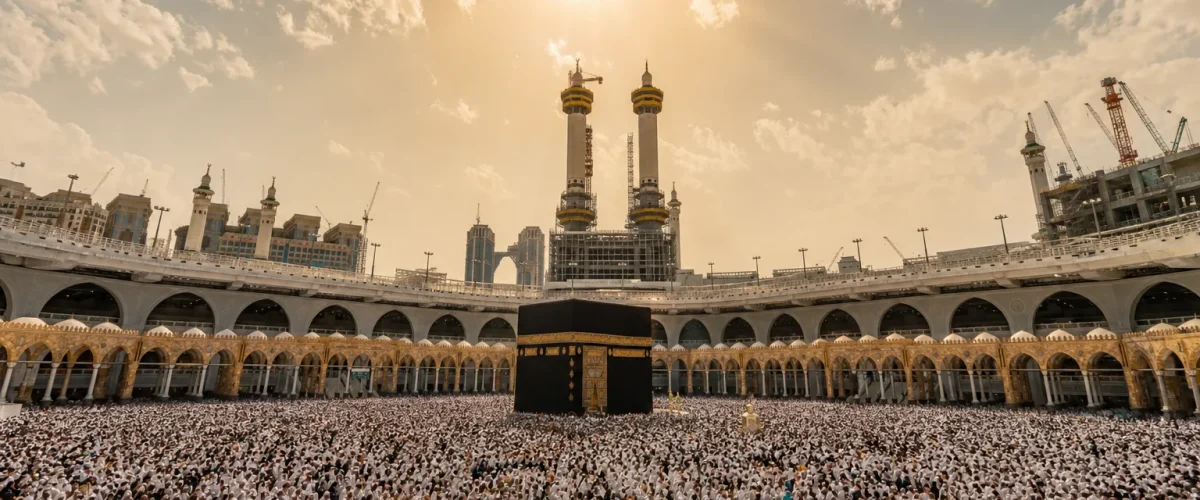
As approximately two million Muslims prepare for the Hajj pilgrimage in Mecca this year, a sobering new study from the World Weather Attribution (WWA) network warns that climate change has fundamentally altered the heat risk facing pilgrims — making temperatures in May, traditionally considered a milder season, reach dangerous levels that were only seen during the scorching June-to-September summer months as recently as the 1960s and 1970s.
The findings arrive with urgency. In 2024, more than 1,300 pilgrims lost their lives during Hajj when temperatures in Mecca soared to 51°C in mid-June. This year, with Hajj falling in late May, authorities and health experts had hoped for somewhat safer conditions. But the WWA study reveals that human-induced global warming has compressed the dangerous heat window, extending extreme risk into spring months that were historically manageable.
What the Study Found — May Is No Longer Safe
The super-rapid assessment conducted by World Weather Attribution researchers analysed temperature trends in Saudi Arabia’s Hejaz region — where Mecca is located — over the past 60 years. The key finding is stark: daytime peak temperatures in May 2026 are now reaching 45-47°C, a range that was characteristic of June-August temperatures in the pre-1980 period. In effect, the entire annual heat curve has shifted forward by approximately six to eight weeks due to global warming.
For pilgrims who spend 20 to 30 hours outdoors during the multi-day rituals — often walking long distances in dense crowds between the Grand Mosque, Mount Arafat, Muzdalifah, and Mina — the risk of heat exhaustion, heat stroke, and dehydration has increased dramatically. The study estimates that the probability of a heat-related fatality for an individual pilgrim performing outdoor rituals in May has roughly doubled compared to the same calendar month 40 years ago.
“Climate change has not just made summers hotter — it has extended summer into spring,” said Dr. Friederike Otto, a lead researcher at WWA and professor at Imperial College London. “For events like Hajj that follow a lunar calendar and rotate through different seasons, this means the window of relative safety is shrinking rapidly.”
India’s Hajj Pilgrims — Among the Most Vulnerable
India sends approximately 175,000 pilgrims annually under the Hajj quota managed by the Haj Committee of India, making it one of the largest contributing countries. Indian pilgrims, particularly those from northern states, face compounded heat risks because many are elderly, have pre-existing health conditions, and may arrive from regions already experiencing extreme heat — India’s record-breaking power demand driven by extreme heat underscores how punishing conditions are at home before pilgrims even depart.
Dr. Sameer Ahmed, a physician who has accompanied Indian Hajj medical missions for eight years, described the challenge in practical terms: “Many of our pilgrims are above 60, fasting during daylight hours, and performing physically demanding rituals in direct sunlight. When ambient temperatures cross 44°C, even healthy young adults face heat stress within 90 minutes of outdoor exposure. For elderly pilgrims with cardiac or respiratory conditions, the margin for error essentially disappears.”
The Haj Committee of India has this year mandated pre-departure health screening for all pilgrims above 65 and has deployed 250 medical professionals to Saudi Arabia, a 40 percent increase over 2025. Heat-specific interventions include distribution of oral rehydration sachets, UV-reflective umbrellas, and wearable temperature monitors for high-risk pilgrims.
Saudi Arabia’s Response — Infrastructure and Cooling Measures
The Saudi General Authority for the Care of the Affairs of the Two Holy Mosques has invested heavily in heat mitigation infrastructure. The Grand Mosque’s expansion, completed in 2024, incorporates climate-controlled corridors and misting systems along key pedestrian routes. Mobile cooling stations have been deployed along the 15-kilometre Mina-Arafat corridor, and free cold water distribution points have been increased from 2,000 to 3,500 locations.
The Kingdom has also expanded its medical capacity, deploying over 30,000 healthcare workers across Hajj sites — the largest medical contingent in the pilgrimage’s history. AI-powered crowd management systems, developed in partnership with Huawei, monitor crowd density and direct pilgrim flow to prevent the dangerous overcrowding that has historically contributed to stampede disasters.
Despite these measures, experts caution that infrastructure can only do so much against rising temperatures. “You cannot air-condition a 15-kilometre outdoor walking route. And the rituals — standing at Arafat from noon to sunset, the overnight stay at Muzdalifah — require prolonged outdoor exposure that no amount of misting can fully mitigate when temperatures are in the mid-40s,” noted Professor Andrew Dessler, a climate scientist at Texas A&M University.
The Broader Climate Crisis — Heat Extremes Intensifying Globally
The Hajj heat threat is one manifestation of a global pattern. With record 150 million hectares burned globally in early 2026 and Delhi recording its warmest May night in 14 years, extreme heat events are becoming more frequent, more intense, and more widespread.
The WWA study specifically attributes the acceleration of Saudi Arabian warming to greenhouse gas emissions. Without human-induced climate change, the researchers calculate, the current May temperature extremes in the Hejaz region would occur approximately once every 50 years. With it, they are now expected once every 5 years — a tenfold increase in frequency.
The Hajj follows a lunar calendar and cycles through all seasons over a 33-year period. In the 2030s, Hajj will fall in March-April, offering a temporary reprieve. But by the 2040s, it will again enter the May-June window — and if current warming trends continue, temperatures by then could reach levels that make outdoor rituals genuinely life-threatening for a significant proportion of pilgrims.
What Needs to Change — Adaptation and Accountability
Islamic scholars and public health experts have begun discussing unprecedented adaptations to the Hajj format, including shifting some daytime rituals to nighttime hours, reducing the total duration of outdoor exposure, and expanding the capacity of climate-controlled facilities to accommodate more of the ritual activities indoors. These proposals are sensitive — the rituals are defined by centuries of religious tradition — but the scale of the health risk is forcing conversations that were previously unthinkable.
As the 2026 Hajj begins, all eyes will be on the weather forecasts, the Saudi medical response capacity, and whether the death toll from 2024 can be avoided. The science is unambiguous: the climate is changing faster than human adaptation can keep pace. For the world’s largest annual gathering, the consequences are measured not in degrees but in lives.