Massive Fire Breaks Out on Delhi-Bound Rajdhani Express in Kota as 68 Passengers Rescued Safely From Burning Coach

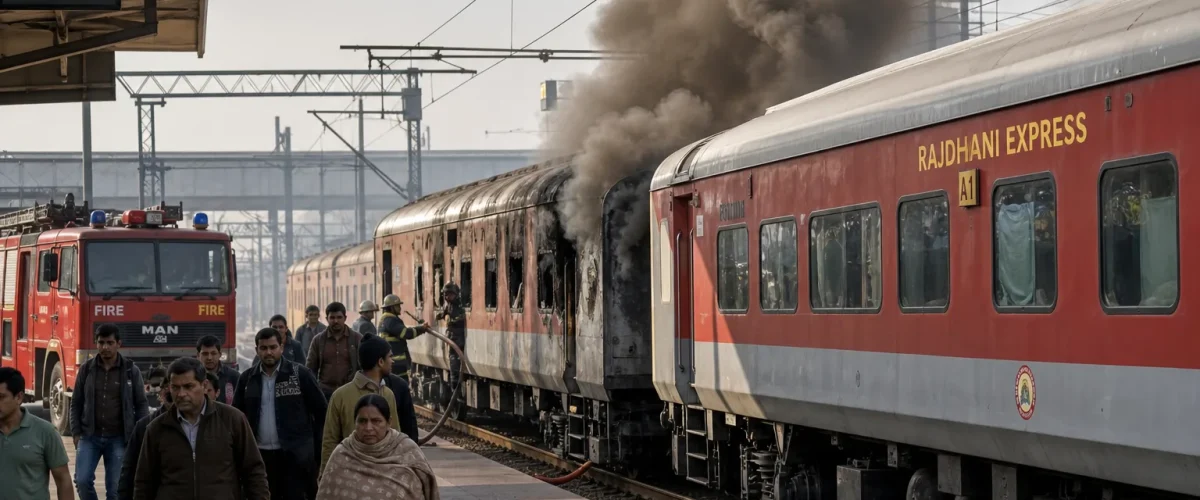
A massive fire broke out in one of the air-conditioned coaches of the Delhi-bound Rajdhani Express in Rajasthan’s Kota early on Saturday morning, triggering a major rescue operation that saw all 68 passengers evacuated safely without a single injury. The incident, which occurred at approximately 5:15 AM near Vikramgarh Alot railway station, sent thick plumes of black smoke billowing into the sky and brought rail traffic on the busy route to a temporary halt.
What Happened: Timeline of the Rajdhani Express Fire
The fire was first detected in the B-1 coach of train number 12431, the Thiruvananthapuram–Hazrat Nizamuddin Rajdhani Express. The train, which had departed from Kerala’s capital on Friday evening, was approximately 450 kilometres from its final destination in Delhi when the blaze erupted.
Railway officials said the fire appeared to originate near the rear SLR (seating-cum-luggage rake) section and quickly spread to the adjacent B-1 coach, which was carrying 68 passengers at the time. Within minutes, the onboard railway staff initiated emergency evacuation protocols, waking sleeping passengers and guiding them out of the burning coach through emergency exits.
“The fire was noticed by the guard and onboard staff around 5:15 AM. Immediate action was taken to alert all passengers and begin evacuation. The train was brought to a controlled stop, and the affected coach was isolated,” a senior official of the West Central Railway zone told reporters at the scene.
Swift Response Prevents Casualties
The speed of the railway staff’s response has been widely credited with preventing what could have been a catastrophic loss of life. Within 15 minutes of the fire being detected, all 68 passengers from the B-1 coach were deboarded and moved to safety on the tracks alongside the train.
The affected coach was then detached from the rest of the rake, and the overhead electric supply (OHE) was promptly switched off in the section to prevent any risk of electrocution. Fire brigade teams from Kota were dispatched to the scene and arrived within 30 minutes, bringing the blaze under control by approximately 6:45 AM.
Videos circulating on social media showed dramatic footage of dense black smoke rising high into the sky from the isolated coach. The fire also spread to some trees near the railway tracks, though this was quickly contained by the fire teams. The images drew immediate comparisons to previous rail and transport disasters in India.
Passengers Accommodated in Other Coaches
Following the evacuation, the Indian Railways made arrangements to accommodate the displaced passengers in other coaches of the same train. The train resumed its journey to Kota station after the affected coach was separated from the formation.
At Kota station, an additional replacement coach was attached to the train to restore full seating capacity for the remaining leg of the journey to Hazrat Nizamuddin. The train, originally scheduled to arrive in Delhi at 12:30 PM, was expected to be delayed by approximately three hours due to the incident.
“All necessary arrangements have been made for the comfort and safety of the passengers. An additional AC coach is being attached at Kota, and refreshments have been provided to those affected,” the railway spokesperson confirmed.
Investigation Underway Into Cause of Fire
The cause of the fire remains under investigation. Railway officials said a preliminary inquiry has been initiated to determine whether the blaze was caused by an electrical fault, a short circuit in the coach’s wiring, or any other technical malfunction.
The Thiruvananthapuram–Hazrat Nizamuddin Rajdhani Express is one of the premier long-distance trains operated by Indian Railways, covering a distance of over 3,000 kilometres. The B-1 coach involved in the incident was a fully air-conditioned three-tier coach, a configuration common on Rajdhani services across the country.
This is not the first fire incident on an Indian train in recent months. In April 2026, a fire broke out in a parcel van of the Howrah-New Delhi Rajdhani Express near Jharkhand’s Dhanbad district, though no passengers were injured in that incident either. Railway safety experts have called for more rigorous maintenance checks on ageing rolling stock, particularly on coaches that have been in service for more than 15 years.
Political Reactions and Safety Concerns
The incident drew swift reactions from political leaders and railway safety advocates. Congress leader Jairam Ramesh posted on social media platform X, calling the fire “yet another reminder that railway safety cannot be an afterthought” and urging the Railway Ministry to release a comprehensive safety audit report.
Railway Minister Ashwini Vaishnaw acknowledged the incident and praised the “exemplary response” of the onboard staff. “Not a single passenger was injured. The immediate action by the guard and train staff saved lives. We are conducting a thorough investigation,” Vaishnaw said in a statement.
The incident also comes at a time when India’s transport infrastructure has been under scrutiny. The government has announced plans to invest over Rs 2.5 lakh crore in railway safety upgrades over the next five years, including the installation of the Kavach automatic train protection system across the entire network by 2028.
Rajdhani Express Route and Service Details
The Thiruvananthapuram–Hazrat Nizamuddin Rajdhani Express (train number 12431) operates three days a week and is one of the most popular premium trains connecting South India to the national capital. The train covers 3,048 kilometres in approximately 30 hours, passing through major stations including Ernakulam, Coimbatore, Palakkad, Mangaluru, Madgaon, Ratnagiri, Panvel, Vadodara, Ratlam, and Kota.
The train typically carries between 800 and 1,000 passengers across its 18 to 20 coaches, making the swift evacuation of the B-1 coach even more remarkable given the early morning timing and the fact that most passengers were asleep when the fire broke out.
Safety Record of Indian Railways
Indian Railways, which operates over 13,000 passenger trains daily and carries more than 23 million passengers each day, has made significant strides in improving its safety record over the past decade. The number of major rail accidents has declined from over 100 per year in the early 2010s to fewer than 30 in 2025-26, according to data from the Commissioner of Railway Safety.
However, fire incidents on trains remain a persistent concern, with the Railway Board recording an average of 12 to 15 coach fires annually over the past three years. Most of these are attributed to electrical faults, though human factors such as passengers carrying inflammable materials and illegal cooking on trains also contribute to the risk.
Passengers aboard the Rajdhani Express on Saturday expressed relief at the safe outcome but also voiced frustration at the recurring nature of such incidents. “We were woken up by staff shouting to evacuate. It was terrifying. The smoke was so thick you could not see anything,” said Priya Menon, a software engineer from Thiruvananthapuram who was travelling to Delhi for a business meeting. “The staff did an incredible job, but this should not be happening on a premier train service like the Rajdhani.”
The railway administration has assured that a detailed report on the incident will be submitted within 72 hours, and any maintenance lapses identified will be addressed with strict disciplinary action against those responsible.

- Indian Army Gets New Chief as General Dwivedi Hands Over Command Amid Push for Indigenous Defence Tech - July 1, 2026
- Ayodhya Ram Temple Donation Scandal Deepens as Trustees Resign and SIT Arrests Eight - June 29, 2026
- Bengal Seven Weeks On: Modi’s Historic Win and the Questions That Won’t Go Away - June 28, 2026