Indian Cargo Ship Haji Ali Sinks After Suspected Drone Strike Off Oman Coast Near Strait of Hormuz as India Calls Attack Deplorable and Unacceptable

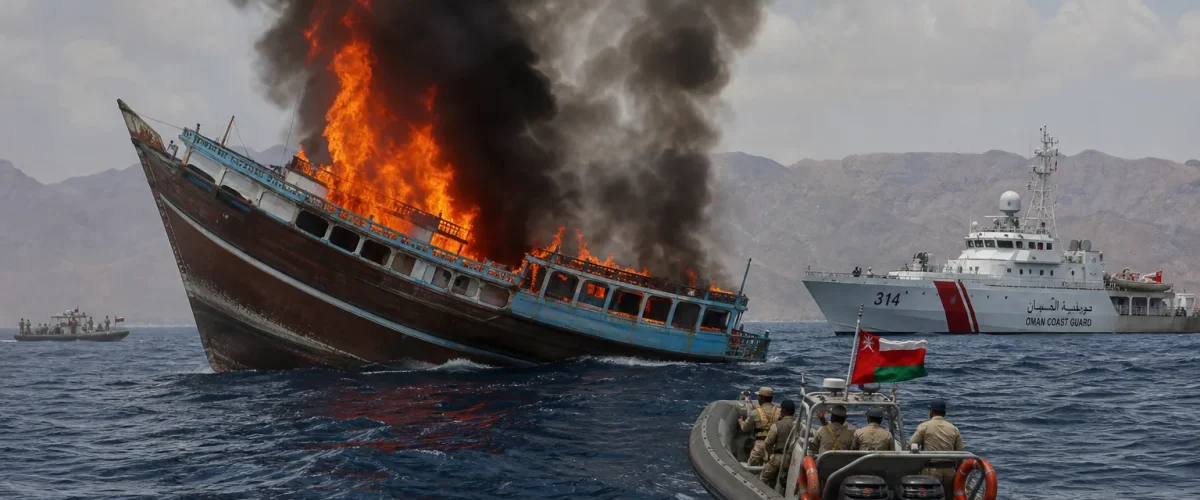
An Indian-flagged cargo ship, MSV Haji Ali, sank off the coast of Oman near the strategically critical Strait of Hormuz on Wednesday, 14 May 2026, after a suspected drone or missile strike triggered a fire on board that caused the vessel to lose stability and eventually go under. All 14 Indian crew members — including one tandel (captain) and 13 sailors — were safely rescued by the Oman Coast Guard and brought to Deeba port, officials confirmed.
India’s Ministry of External Affairs issued a strongly worded statement describing the attack as “unacceptable” and “deplorable.” “The attack on an Indian-flagged ship off the coast of Oman yesterday is unacceptable, and we deplore the fact that commercial shipping and civilian mariners continue to be targeted,” the MEA said, without identifying the party responsible for the strike. “All Indian crew on board are safe, and we thank the Omani authorities for rescuing them.”
How the Attack Unfolded
The Haji Ali, a 57-metre traditional wooden cargo vessel (dhow) registered at Salaya Port in the Devbhoomi Dwarka district of Gujarat, was sailing from Somalia to Sharjah in the United Arab Emirates carrying a cargo of livestock when the incident occurred in the early hours of Wednesday morning. Reports indicate that the ship was passing near Limah, off Oman’s northern coast, at approximately 3:30 am when it was struck by an unidentified explosive object.
The impact triggered an immediate fire on board, causing the vessel to lose stability as flames spread through its wooden structure. The crew acted quickly, sending out a distress signal and evacuating into lifeboats as the fire engulfed the ship. The Oman Coast Guard launched a rescue operation within hours and brought all 14 crew members safely to shore. Ship owner Sultan Ahmed Sanghar later confirmed that all those on board were safe, though several livestock animals being transported were reportedly lost when the ship sank.
London-based maritime security firm Windward confirmed that the vessel had its Automatic Identification System (AIS) turned off during the incident — a common practice among smaller vessels in the region to avoid detection, but one that also makes them more vulnerable as they cannot be tracked by naval escorts. British maritime risk management group Vanguard assessed that the explosion was “likely caused by a drone or missile,” consistent with the pattern of attacks seen in the waterway since the US-Iran conflict began.
Second Indian Vessel Lost in the Conflict
The sinking of the Haji Ali marks the second Indian vessel lost in the Strait of Hormuz region since the US-Iran war erupted on 28 February 2026. Earlier, another Gujarat-linked vessel from Salaya, the Al Faiz Noor Suleimani-1, reportedly sank in the strait after being caught in crossfire linked to the ongoing regional conflict. At least two other Indian-flagged ships have been attacked in the waterway during this period, highlighting the growing threat to India’s maritime interests in the Gulf.
The Strait of Hormuz is one of the most critical chokepoints in global shipping, with approximately 20 per cent of the world’s oil supply and a significant volume of non-oil cargo passing through its narrow waters. The ongoing conflict has left hundreds of ships stranded and an estimated 20,000 seafarers unable to navigate the strait safely. India, which imports roughly 85 per cent of its crude oil through Gulf shipping routes, has been particularly affected by the disruption.
Diplomatic Sensitivity: Attack Coincides With Iranian FM’s Visit
The timing of the attack added a layer of diplomatic complexity, as it occurred while Iranian Foreign Minister Abbas Araghchi was in New Delhi attending the BRICS Foreign Ministers’ meeting chaired by External Affairs Minister S. Jaishankar. The MEA statement conspicuously avoided naming any party responsible for the strike — a diplomatic decision that reflects India’s carefully calibrated position of maintaining ties with both the United States and Iran while protecting its maritime and energy interests.
India has consistently called for restraint and de-escalation in the West Asia conflict while emphasising the importance of freedom of navigation in international waterways. The sinking of the Haji Ali is likely to intensify calls within the Indian strategic establishment for a more assertive naval presence in the Gulf of Oman and the Strait of Hormuz to protect Indian commercial vessels.
The Indian Navy has already deployed additional warships and aircraft to the Arabian Sea and Gulf of Oman since the conflict began, escorting Indian-flagged oil tankers through the most dangerous stretches of the waterway. However, smaller vessels like the Haji Ali — traditional dhows that form the backbone of India’s coastal trading community — are harder to protect, as they often operate outside the established convoy routes used by larger commercial ships.
Impact on India’s Gujarat Sailing Community
The sinking has sent shockwaves through Gujarat’s traditional sailing community, which has centuries-old trading links with the Gulf states, East Africa and the Horn of Africa. Hundreds of wooden dhows registered at ports like Salaya, Mandvi, Porbandar and Veraval operate regular cargo routes across the Arabian Sea, carrying livestock, food items and general merchandise. These vessels — typically crewed by experienced sailors from Gujarat’s coastal communities — have been operating in increasingly dangerous waters since the conflict began.
The Indian Sailing Vessels Association confirmed that all sailors from the Haji Ali were safe and their documents had been secured by Omani authorities. However, the association called on the Indian government to provide enhanced security and insurance support for dhow crews operating in the Gulf region. “Our sailors are risking their lives every day to maintain India’s centuries-old trading connections,” said a senior association official. “The government must ensure their safety and provide compensation when vessels are lost to acts of war.”
The loss of the Haji Ali also raises insurance and financial questions for the ship owners. Maritime insurance premiums for vessels transiting the Strait of Hormuz have skyrocketed since the conflict began, and many smaller dhow operators — who operate on thin margins — have found it increasingly difficult to afford adequate coverage. The Indian government may face pressure to establish a war risk insurance pool or provide subsidised coverage for smaller Indian vessels operating in conflict-affected waters.
Global Shipping Remains Under Threat
The Haji Ali incident is part of a broader pattern of attacks on commercial shipping in the Gulf region that has disrupted global trade and contributed to the surge in energy prices that forced India to hike petrol and diesel rates on the same day. The combination of maritime insecurity, supply chain disruption and rising crude oil prices is creating a compounding economic challenge for India and other oil-importing nations.
As diplomatic efforts to end the US-Iran conflict continue — including the ongoing Trump-Xi summit in Beijing and BRICS discussions in New Delhi — the safety of commercial shipping through the Strait of Hormuz remains one of the most pressing concerns for the global economy. For India’s Gujarat sailing community, the sinking of the Haji Ali is a painful reminder that their livelihoods are now caught in the crossfire of a conflict far beyond their control.

- Indian Army Gets New Chief as General Dwivedi Hands Over Command Amid Push for Indigenous Defence Tech - July 1, 2026
- Ayodhya Ram Temple Donation Scandal Deepens as Trustees Resign and SIT Arrests Eight - June 29, 2026
- Bengal Seven Weeks On: Modi’s Historic Win and the Questions That Won’t Go Away - June 28, 2026