International Labour Day 2026: History, India’s Workers’ Rights Journey, and Why May 1 Still Matters

May Day 2026: The World Marks International Workers’ Day as India Honours Its 50-Crore Workforce
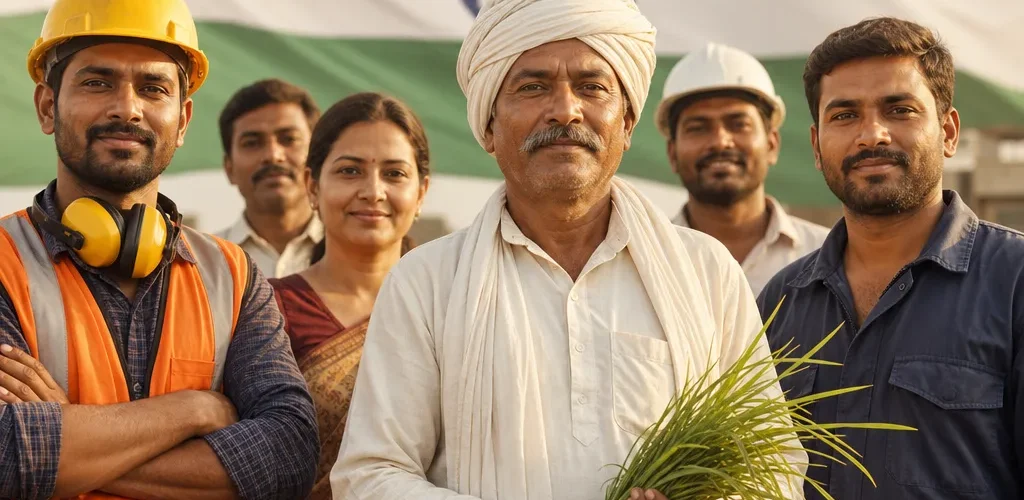
International Labour Day, observed on May 1 every year, is being celebrated across India and the world on Friday, 2026, as a tribute to the contributions and sacrifices of workers in building modern societies. Also known as May Day, International Workers’ Day, and Antarrashtriya Shramik Diwas in India, the day is a gazetted public holiday and one of the most widely observed labour commemorations globally.
In India, where the workforce exceeds 50 crore people across agriculture, manufacturing, services, and the gig economy, Labour Day carries particular significance. The day has been trending on social media with hashtags including #LabourDay, #MayDay, and #WorkersDay, as trade unions, political parties, and workers’ organisations hold rallies, conferences, and awareness programmes. Prime Minister Narendra Modi and leaders across the political spectrum have shared messages acknowledging the vital role of workers in India’s economic growth story.
The History of May Day: From Chicago to the World
The origins of International Labour Day trace back to the labour movement of the late 19th century in the United States. On May 1, 1886, workers across America launched a massive strike demanding an eight-hour workday, a radical demand at a time when 12 to 16-hour shifts were standard. The movement centred on Chicago, where hundreds of thousands of workers walked off their jobs.
The peaceful protests turned violent on May 4, 1886, when a bomb exploded during a rally at Haymarket Square in Chicago, killing several police officers and civilians. The ensuing crackdown and the controversial trial of labour leaders — known as the Haymarket Affair — became a defining moment in the global labour movement. Several labour leaders were sentenced to death, despite questionable evidence, turning them into martyrs for the workers’ rights cause.
In 1889, the Second International, a congress of socialist and labour parties in Paris, declared May 1 as International Workers’ Day to honour the Haymarket martyrs and to continue the fight for workers’ rights globally. Since then, May Day has been observed in virtually every country, though the United States and Canada celebrate Labour Day in September instead.
Labour Day in India: A History of Struggle and Progress
India’s first May Day celebration was organised on May 1, 1923, in Madras (now Chennai) by the Labour Kisan Party of Hindustan, led by Singaravelar Chettiar. The event is considered a landmark in India’s labour history, and Tamil Nadu still observes May 1 as the state’s foundation day alongside Labour Day. This dual significance gives the day an especially prominent place in Tamil Nadu’s cultural and political calendar.
Since independence, India has built an extensive framework of labour laws designed to protect workers’ rights. Key milestones include:
- Factories Act, 1948 — established regulations for working conditions, safety, and health in factories
- Minimum Wages Act, 1948 — mandated minimum wages across scheduled employments
- Employees’ Provident Fund Act, 1952 — created the EPF retirement savings scheme
- Employees’ State Insurance Act, 1948 — provided health insurance to industrial workers
- Payment of Gratuity Act, 1972 — ensured gratuity payments for long-serving employees
- Equal Remuneration Act, 1976 — prohibited wage discrimination based on gender
These laws formed the backbone of India’s social security architecture for formal sector workers. However, the majority of India’s workforce — employed in agriculture, construction, domestic work, and the informal economy — remained outside the ambit of these protections for decades. The ongoing 8th Pay Commission discussions continue to shape the conversation around fair compensation for government employees.
The 2020 Labour Code Reforms and Their 2026 Status
In 2020, the Indian Parliament passed four new labour codes that aimed to consolidate and simplify 29 existing labour laws into a modern framework:
- Code on Wages, 2019
- Industrial Relations Code, 2020
- Code on Social Security, 2020
- Occupational Safety, Health and Working Conditions Code, 2020
These codes were designed to make compliance easier for employers, extend social security benefits to gig and platform workers, create a universal minimum wage floor, and modernise industrial dispute resolution. However, their implementation has been uneven. As of 2026, most states have notified the rules under the new codes, but enforcement varies significantly across jurisdictions.
One of the most significant provisions is the extension of social security coverage to gig economy workers, including delivery drivers, ride-hailing operators, and platform-based service providers. With India’s gig economy employing an estimated 1.5 crore workers and growing rapidly, this provision has the potential to transform the social safety net for millions of young Indians who work outside traditional employment structures.
Challenges Facing Indian Workers in 2026
Despite legislative progress, Indian workers face several ongoing challenges:
Informal Employment
Approximately 90 per cent of India’s workforce remains in the informal sector, without written contracts, social security benefits, or legal protections. Agriculture alone employs over 42 per cent of the workforce but contributes less than 18 per cent to GDP, highlighting the productivity and income gap that millions of farming families endure.
Rising Cost of Living
While India’s GDP growth remains robust at 7.6 per cent, the benefits of growth have not been evenly distributed. Rising food prices, fuel costs driven by the Iran-US conflict, and housing inflation in urban centres have eroded purchasing power for lower-income workers. The gap between headline economic growth and the lived reality of working families remains a central challenge.
Workplace Safety
Industrial accidents, heat-related fatalities among outdoor workers, and unsafe working conditions in construction and mining continue to claim lives. The 2026 heatwave season has been particularly brutal, with IMD warnings covering multiple states and outdoor workers facing extreme risk. Trade unions have demanded that employers provide mandatory rest periods, hydration stations, and heat-stress insurance for workers exposed to extreme temperatures.
Gig Economy Rights
While the labour codes promise social security for gig workers, the actual rollout of benefits has been slow. Platform companies and the government are still negotiating the structure of social security funds, contribution rates, and grievance mechanisms. Gig workers’ collectives have staged protests in several cities demanding faster implementation and meaningful corporate accountability from platform companies whose quarterly earnings continue to grow while worker wages stagnate.
How India Celebrates Labour Day 2026
Across the country, trade unions affiliated with various political parties are organising rallies, marches, and public meetings. In Kerala, which has one of the most active labour movements in India, massive processions take place in Thiruvananthapuram, Kochi, and Kozhikode. In West Bengal, the left parties organise rallies despite their reduced political presence. In Tamil Nadu, the celebrations carry a dual character — honouring workers and celebrating the state’s foundation day.
Many companies and organisations also use Labour Day as an occasion to recognise outstanding employees, announce workplace welfare improvements, and engage with their workforce on issues of mutual concern. The day serves as a reminder that economic progress must be inclusive and that the dignity of every worker is non-negotiable.
Explore more on Social Trends and Economy at DailyTips.in.