8th Pay Commission: NC-JCM Proposes ₹69,000 Minimum Basic Pay With 3.83 Fitment Factor — Memorandum Submission by April 30 Could Benefit 1.05 Crore Employees and Pensioners

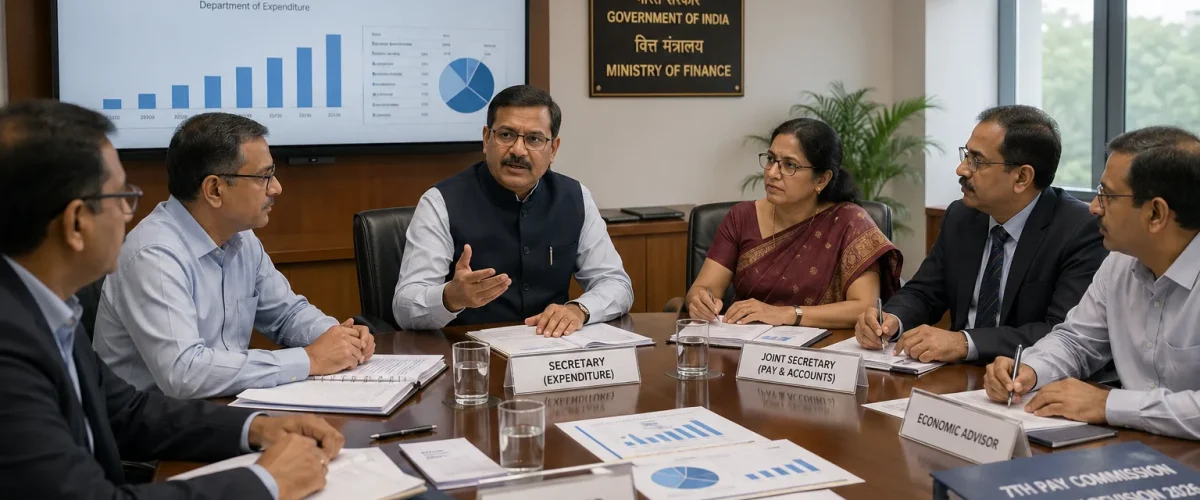
The National Council of Joint Consultative Machinery (NC-JCM), the official body responsible for dialogue between the Central Government and its employees, has proposed a minimum basic pay of ₹69,000 with a fitment factor of 3.833 for the 8th Central Pay Commission. The recommendation, finalised at the drafting committee’s meeting on 13 April 2026, is part of a comprehensive 51-page memorandum that is scheduled for formal submission to the Pay Commission by 30 April 2026. If accepted, the proposals would affect approximately 4.5 million central government employees and 6 million pensioners across the country.
The 8th Pay Commission was formally constituted by the Government of India on 3 November 2025, and is currently in its consultation stage, gathering inputs from stakeholders before issuing final recommendations on salary, pension, and allowances. The NC-JCM’s memorandum represents the most significant staff-side input the commission has received, and its proposals are being closely watched by government employees nationwide.
How the ₹69,000 Minimum Pay Was Calculated
The NC-JCM Staff Side has arrived at the ₹69,000 minimum basic pay figure using a family-unit model of five members — the employee, a spouse, and three dependents — which is an increase from the three-unit family model used by the 7th Pay Commission. The shift to a five-unit model reflects the NC-JCM’s argument that the actual cost of maintaining a government employee’s household has risen substantially and that the previous model underestimated real-world expenses.
The calculation factors in average retail prices of essential food items, clothing costs, housing expenses (allocated at 7.5 per cent of total expenditure), fuel and electricity costs (20 per cent), water charges, skill development expenditure (25 per cent), and additional expenses related to marriage, recreation, and festivals (25 per cent). These percentages follow established norms used by previous pay commissions but have been updated to reflect 2025-26 price levels.
The proposed fitment factor of 3.833 is the multiplier that would be applied to the current minimum basic pay to arrive at the revised figure. Under the 7th Pay Commission, the fitment factor was 2.57, which raised the minimum basic pay from ₹7,000 to ₹18,000. The significantly higher fitment factor proposed for the 8th Pay Commission reflects both accumulated inflation since 2016 and the staff side’s argument that previous revisions did not adequately compensate for rising living costs.
Key Proposals in the 51-Page Memorandum
The NC-JCM’s memorandum covers eight major thematic areas and includes several proposals that, if accepted, would represent significant changes to the central government pay structure. Key recommendations include an increase in the annual increment rate from the current 3 per cent to 6 per cent, a revision of House Rent Allowance (HRA) to 40 per cent, 35 per cent, and 30 per cent for X, Y, and Z category cities respectively, and the guarantee of five assured promotions over a 30-year career.
The memorandum also proposes the merger of certain pay levels in the existing pay matrix to simplify the structure. For instance, it recommends merging Level 2 with Level 3, arguing that the distinction between these levels creates unnecessary complexity without meaningful differentiation in job responsibilities. The staff side has also called for the restoration of the Old Pension Scheme (OPS) at 67 per cent of last drawn pay, a demand that has gained significant political traction across states in recent years. For more details, read about sensex falls 750 points as it stocks crash and iran ceasefire doubts rock dalal street.
On Dearness Allowance, the memorandum notes that the Union Cabinet recently approved an additional 2 per cent DA and Dearness Relief, effective from 1 January 2026, raising the rate from 58 per cent to 60 per cent of basic pay. The NC-JCM has proposed that the method of calculating DA be revised to better reflect actual cost-of-living increases experienced by employees, particularly in metropolitan areas where housing and transportation costs have soared.
Impact on 4.5 Million Employees and 6 Million Pensioners
The proposed pay revision would have far-reaching implications for central government finances and the broader economy. At a minimum basic pay of ₹69,000 and a fitment factor of 3.833, the total additional salary bill is estimated to run into tens of thousands of crores annually. The government will need to balance the fiscal impact of any pay revision against other expenditure priorities, including defence, infrastructure, and social welfare programmes.
For individual employees, the revision promises substantial improvements in take-home pay. A Level 1 employee currently earning a basic pay of ₹18,000 would see their salary jump to approximately ₹69,000 — a nearly four-fold increase before allowances. At higher levels, the absolute increase would be proportionally larger, with senior officers potentially seeing basic pay increases of several lakh rupees per month.
Pensioners, who make up a significant portion of the affected population, would benefit from the fitment factor being applied to their pension calculations as well. The proposal to restore OPS at 67 per cent of last drawn pay is particularly significant for this group, though it remains politically contentious given the fiscal implications for both central and state governments.
Timeline and What Comes Next
The formal submission of the NC-JCM memorandum by 30 April 2026 marks the beginning of a process that is likely to take several months — potentially a year or more — before final recommendations are issued. The 8th Pay Commission will consider inputs from multiple stakeholders, including state governments, other employee associations, and economic experts, before arriving at its final proposals.
Historically, pay commission recommendations have been implemented from 1 January of a designated year, with arrears paid for any delay between the effective date and the date of actual implementation. The 7th Pay Commission’s recommendations were implemented from 1 January 2016. If the 8th Pay Commission follows a similar timeline, implementation could begin from 1 January 2026 or 1 January 2027, though the actual date will depend on when the commission submits its report and the government’s acceptance timeline.
Government employee unions have indicated that they will push for early implementation and have not ruled out agitation if the process is unduly delayed. The NC-JCM has also demanded that interim relief — typically 10 to 15 per cent of basic pay — be granted to employees while the commission deliberates, a request that has been made in previous pay revision cycles but rarely granted in full.

- Fentanyl Vaccine Breakthrough: Scripps Research Develops Shot That Blocks Deadly Overdoses Before They Reach the Brain - June 13, 2026
- Nipah Virus Returns to Kerala — First Case of 2026 Confirmed, State Declares High Alert - June 12, 2026
- Jill Biden Reveals She Wanted to Keep PM Modi’s 7.5-Carat Diamond Gift but Returned It After State Department Valued It at $20,000 - June 8, 2026