K Kavitha Launches New Political Party in Telangana With Telangana First Agenda

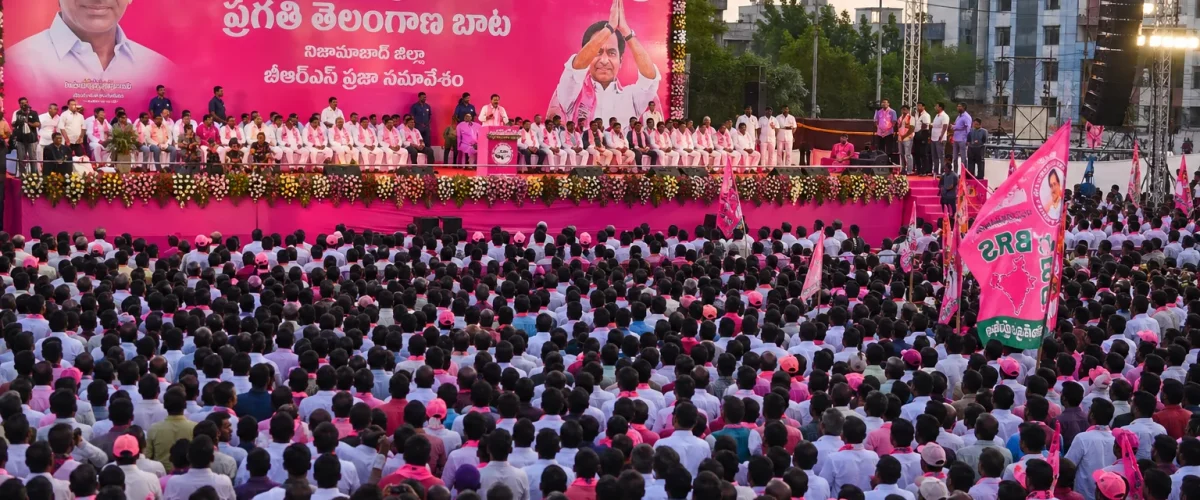
Kalvakuntla Kavitha, the daughter of former Telangana Chief Minister K. Chandrashekar Rao and founder of the Telangana Jagruthi cultural organisation, launched her new political party in Hyderabad on 25 April 2026. The party, which carries the slogan “Telangana First,” positions itself as a grassroots alternative to both the ruling Congress and the opposition Bharat Rashtra Samithi (BRS), the party her father founded and continues to lead.
The launch event, held in a large convention centre in central Hyderabad, drew thousands of supporters. Kavitha outlined a vision centred on governance that reaches the grassroots level, resolution of public grievances at the local level, and an identity-based political platform that champions Telangana’s interests above national party considerations.
Why Kavitha Left BRS
Kavitha’s decision to float a separate political entity represents one of the most significant splits in Telangana’s young political history. The state, carved out of Andhra Pradesh in 2014, has been dominated by the KCR-led BRS (formerly Telangana Rashtra Samithi or TRS), which ruled from the state’s inception until its defeat in the 2023 Assembly elections at the hands of the Congress party.
The reasons behind Kavitha’s split from her father’s party are widely debated. Political observers point to her arrest in 2024 by the Enforcement Directorate in connection with the Delhi liquor policy case — an episode that reportedly strained her relationship with the BRS leadership, which she felt did not support her sufficiently during the legal proceedings.
In February 2026, Kavitha publicly announced her intention to launch a new party, telling reporters in Tirupati that the party’s name would include “Telangana” and that she would contest the next state assembly elections from either the Siddipet or Bodhan constituency. Both seats hold deep significance — Siddipet is her father’s political stronghold, while Bodhan represents her own electoral history. These developments add to the broader pattern of political realignment across Indian states in 2026.
The Telangana First Platform
Kavitha’s “Telangana First” slogan deliberately echoes the statehood movement’s emphasis on regional identity and self-determination. Her party’s platform includes several key planks: ensuring that government contracts and employment opportunities prioritise Telangana residents, protecting the state’s water and natural resources from inter-state disputes, reviving the agricultural welfare programmes that were a hallmark of BRS governance, and implementing digital governance solutions to reduce corruption at the lower bureaucratic levels.
“The aim is to take governance closer to the people and resolve issues at the grassroots,” Kavitha said in her March announcement. “The party would serve people irrespective of caste, religion, or community.” She has explicitly positioned the party as inclusive, seeking to attract voters across Telangana’s diverse social spectrum, including OBC communities, Dalits, and urban middle-class voters disillusioned with both Congress and BRS.
Electoral Implications
The immediate question is whether Kavitha’s party will split the anti-Congress vote in Telangana, effectively helping the ruling Congress retain power, or whether it will carve out a distinct voter base that erodes support from both existing parties.
Kavitha has announced that the party’s official symbol will be ready in time for the Greater Hyderabad Municipal Corporation (GHMC) elections, which are expected later this year. The GHMC elections, which cover the state capital and its sprawling suburbs, will serve as the party’s first electoral test and a key indicator of its support base.
For the BRS, Kavitha’s departure is a significant blow. The party, already weakened by its 2023 electoral defeat and the loss of several MLAs to the Congress, now faces the prospect of family-driven factionalism — a dynamic that has destroyed political parties across India’s history. KCR has not publicly responded to his daughter’s decision, though party insiders describe the relationship as “strained but not broken.”
The launch comes at a time when political realignment is sweeping across India, from the BJP-engineered leadership transition in Bihar to the AAP-BJP Rajya Sabha merger announced just days ago. Kavitha’s bet is that Telangana voters are ready for a fresh political option — one that combines regional pride with modern governance.
Challenges and Opportunities
Building a new political party from scratch is one of the most difficult undertakings in Indian democracy. Kavitha has name recognition, inherited political networks, and the financial resources of one of Telangana’s most prominent families. However, she faces formidable challenges: the Congress government in Telangana controls the state machinery, the BRS retains significant rural support, and the BJP is investing heavily in expanding its Southern footprint.
Her legal troubles also remain a shadow. While Kavitha is currently on bail in the Delhi liquor policy case, the proceedings continue, and any adverse legal development could derail her political plans. The broader push for women’s political representation in India could work in her favour, as voters increasingly look for female leadership at the state level.
What works in Kavitha’s favour is the deep cultural pride in Telangana identity, which transcends party lines. If she can successfully position her party as the authentic voice of Telangana — distinct from BRS’s association with dynastic politics and Congress’s association with Delhi-centric governance — she may find a receptive audience.
The party’s formal registration with the Election Commission of India is expected to be filed within weeks. Kavitha has indicated that booth-level committees will be established across all 119 assembly constituencies by the end of 2026, giving the party a full year of organisational work before the next state election cycle.