Mumbai Faces 10 Percent Water Supply Cut From May 15 as BMC Warns Reservoir Levels Drop to 23 Percent Amid El Nino Below-Normal Monsoon Forecast

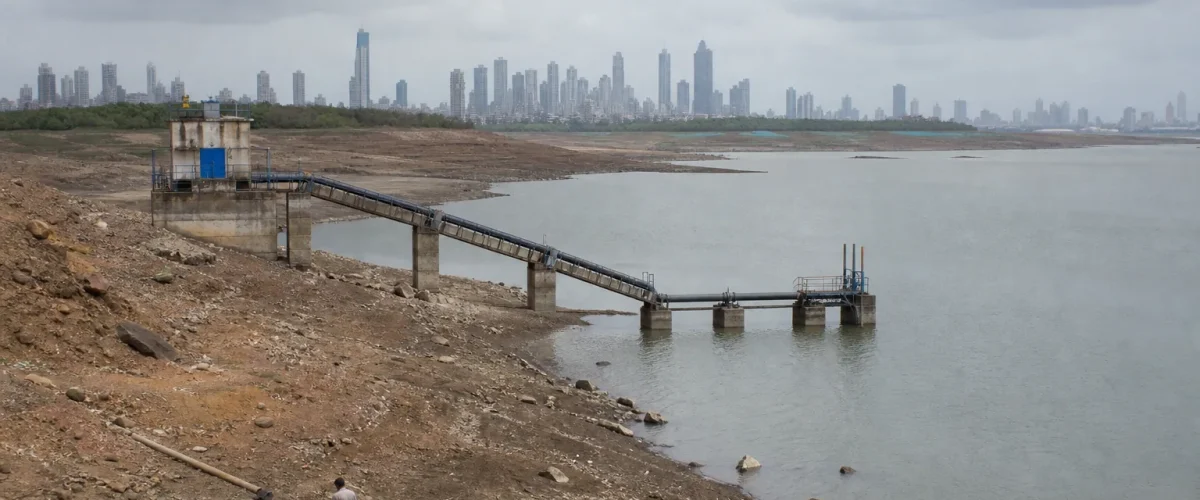
The Brihanmumbai Municipal Corporation (BMC) has imposed a 10 per cent reduction in water supply across Mumbai starting Friday, 15 May 2026, as the city’s reservoir levels dropped to a critically low 23.5 per cent of annual requirements and weather forecasters warned that El Nino conditions could deliver a below-normal monsoon this year. The precautionary measure, which also affects water supply to neighbouring Thane, Bhiwandi-Nizampur and surrounding villages, is expected to remain in place until rainfall improves reservoir levels to safer thresholds.
According to BMC data, Mumbai’s seven lakes — Tulsi, Vihar, Upper Vaitarna, Modak Sagar, Tansa, Middle Vaitarna and Bhatsa — currently hold a combined 340,399 million litres of water, against the city’s annual requirement of over 1.4 million million litres. The rapid drawdown of water stocks, combined with pessimistic monsoon forecasts, has forced the civic body to act pre-emptively rather than risk severe shortages later in the summer.
Why BMC Is Cutting Water Now
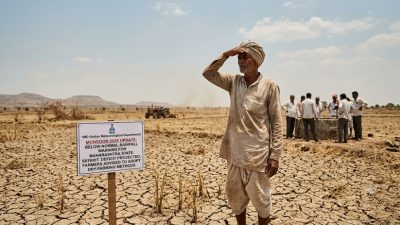
The decision is driven by a convergence of unfavourable factors. The Indian Meteorological Department (IMD) has forecast below-normal monsoon rainfall for the 2026 season, citing the persistence of El Nino conditions in the Pacific Ocean. El Nino — a cyclical warming of ocean surface temperatures — typically weakens the Indian monsoon, reducing rainfall across western India, the Deccan Plateau and parts of central India. The Indian Ocean Dipole (IOD), another oceanic phenomenon that can influence monsoon strength, is also expected to remain neutral to negative, offering no compensating boost to rainfall.
BMC officials explained that the water cut is designed to ensure Mumbai has sufficient supply through the critical June-July period, when the monsoon’s arrival and early performance are uncertain. “We are closely monitoring the situation every day and taking preventive steps early so that the city does not face severe shortages later,” a senior BMC official said. “The 10 per cent cut is a precautionary measure — if the monsoon arrives on time and performs adequately, we will restore full supply.”
The IMD had earlier confirmed that the southwest monsoon was set for an early arrival over the Andaman and Nicobar Islands, but the monsoon’s progression over the Indian mainland — and particularly its intensity over the Western Ghats, which feed Mumbai’s reservoirs — remains uncertain. Climate models suggest that while the monsoon may arrive broadly on schedule, its overall quantum could be 5-10 per cent below the long-period average, with western India being more affected than other regions.
How the Water Cut Affects Daily Life
Mumbai receives approximately 3,900 million litres of water per day from its seven lakes, distributed through a vast network of pipes, pumping stations and local storage tanks. The 10 per cent cut will reduce daily supply by approximately 390 million litres — equivalent to the water consumption of roughly 2 million people. In practical terms, residents can expect reduced water pressure during peak hours, shorter supply windows in some areas, and possible interruptions in areas that already face intermittent supply.
The impact will be felt most acutely in Mumbai’s western and eastern suburbs, where water distribution infrastructure is older and less efficient than in the island city. Slum areas and informal settlements — which house approximately 40 per cent of Mumbai’s population — are particularly vulnerable, as they often receive water through shared taps and tankers rather than individual household connections.
BMC has urged residents to conserve water and avoid wastage. The civic body has also announced that additional water reserves will be released from the Bhatsa and Upper Vaitarna dams: approximately 147,092 million litres from Bhatsa Dam and 90,000 million litres from Upper Vaitarna. These supplementary releases are intended to cushion the impact of the cut and extend the available supply through the pre-monsoon period.
Historical Context: Mumbai’s Recurring Water Crisis
Mumbai’s water challenges are not new. The city has faced periodic water cuts in years when monsoon rainfall has been below normal, most notably in 2009, 2014, 2019 and 2023. The fundamental problem is one of infrastructure and demand — Mumbai’s water supply system was designed for a city of about 10 million people but now serves an estimated 21 million residents plus a floating population of millions more who commute to the city daily for work.
Despite decades of investment in new dams, pipeline expansion and desalination feasibility studies, Mumbai’s water supply infrastructure has not kept pace with population growth and urban expansion. The ongoing Middle Vaitarna and Gargai dam projects, which are expected to add approximately 440 million litres per day to Mumbai’s supply when completed, have been delayed by land acquisition disputes, environmental clearance issues and cost overruns.
Water conservation and recycling — which could significantly reduce demand on freshwater sources — remain underdeveloped in Mumbai. While the BMC has mandated rainwater harvesting for new buildings, enforcement has been inconsistent, and large-scale greywater recycling programmes have not been implemented. Environmental scientists estimate that effective rainwater harvesting and water recycling could reduce Mumbai’s dependence on dam-sourced water by 15-20 per cent.
El Nino and Climate Change: The Bigger Picture
The current water cut highlights the growing vulnerability of Indian cities to climate variability. El Nino events, which have become more frequent and intense in recent decades, create significant uncertainty in monsoon rainfall patterns — the primary source of freshwater recharge for India’s reservoirs, aquifers and rivers. With climate change intensifying the El Nino-monsoon interaction, Indian cities face a growing risk of water shortages that could become more frequent and severe over time.
Mumbai’s situation is particularly precarious because the city relies almost entirely on surface water from its seven lakes, with virtually no groundwater resources or desalination capacity to fall back on. This single-source dependence makes the city’s water supply highly sensitive to monsoon performance — a vulnerability that climate scientists have warned about for years but that remains unaddressed at the infrastructure level.
The BMC has stated that the 10 per cent cut should be sufficient to manage the situation through the pre-monsoon period if conditions follow historical patterns. However, if the monsoon is significantly delayed or delivers substantially below-normal rainfall over the Western Ghats, the cut could be extended or deepened. “We are planning for multiple scenarios,” the BMC official said. “Our modelling suggests that the current cut, combined with dam reserve releases, can sustain supply until approximately July 6 under normal conditions. If we implement further conservation measures, we can extend that window to August 17.”
For Mumbai’s 21 million residents, the water cut is a reminder that the city’s essential services operate on thin margins, and that the intersection of climate variability, infrastructure limitations and population pressure creates recurring vulnerabilities that require both immediate management and long-term strategic solutions. As India faces multiple simultaneous challenges — from rising fuel costs to extreme weather events — the pressure on urban infrastructure and essential services is likely to intensify in the months ahead.