Supreme Court Refuses to Stay NEET Retest on June 21, Defers Hearing to July — 22 Lakh Students in Limbo

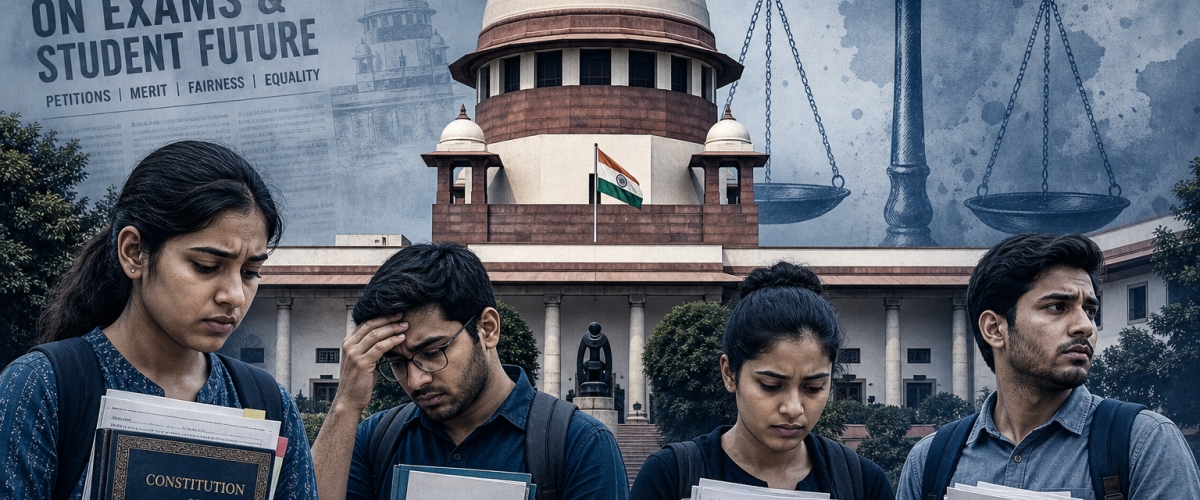
The Supreme Court of India on Wednesday refused to stay the June 21 NEET-UG 2026 re-examination and deferred the hearing of a petition challenging the National Testing Agency’s (NTA) decision to cancel and re-conduct the exam to July, leaving approximately 22 lakh medical aspirants in a state of uncertainty about the exam’s long-term legal status even as they prepare for this weekend’s retest.
The petition, which sought an interim stay on the NTA’s decision and a direction restraining authorities from proceeding with the re-examination, argued that the cancellation of the original exam and the decision to re-conduct it were arbitrary, disproportionate, and violated the rights of students who had prepared extensively for the original date. The Court, while declining immediate relief, indicated that the larger questions raised by the petition warranted detailed examination — hence the referral to a larger bench in July.
The NEET 2026 Controversy: A Timeline
The NEET-UG 2026 examination has been mired in controversy since the original exam was conducted earlier this year. The NTA’s decision to cancel and re-conduct the exam was triggered by allegations of paper leaks and irregularities — echoes of the NEET 2024 crisis that led to nationwide protests, Supreme Court intervention, and a fundamental re-examination of India’s testing infrastructure.
The key events in the NEET 2026 saga include:
Paper Leak Allegations: Following the original exam, reports emerged that question papers had been circulated on messaging platforms, including Telegram, prior to the exam. The allegations prompted an investigation and ultimately the NTA’s decision to cancel the results and schedule a re-test.
Telegram Ban: In an unprecedented move, the Indian government temporarily banned access to Telegram across the country until June 22, citing the need to prevent paper leaks during the re-examination. The ban has itself become a legal battleground, with the Delhi High Court questioning its proportionality.
Student Protests: Medical aspirants across India have expressed frustration at the disruption, with many arguing that honest students are being penalised for the actions of a few. The financial and emotional burden of preparing for a second exam, travelling to exam centres, and living with uncertainty about results has taken a significant toll.
What the Supreme Court Said
The Supreme Court’s decision to refuse an immediate stay while referring the matter to a larger bench reflects the judicial complexity of the situation. On one hand, staying the re-examination would leave India without a valid NEET result for 2026, potentially delaying medical admissions across the country and disrupting the academic calendar. On the other hand, the Court acknowledged that the petition raises important questions about the NTA’s processes, accountability, and the rights of students.
An earlier bench had also observed that the NTA “is already faced with too many problems” due to the re-conduct of the exam, suggesting judicial awareness of the institutional challenges facing India’s testing infrastructure.
The Broader Testing Crisis
The NEET 2026 controversy is the latest chapter in what has become a systemic crisis in India’s examination system. NEET 2024 faced similar allegations, leading to Supreme Court-monitored reforms that were supposed to prevent recurrences. The fact that similar problems have emerged just two years later raises fundamental questions about whether the reforms were adequate and whether the NTA, in its current form, is capable of conducting examinations at the scale and security level that India’s competitive exam ecosystem demands.
For the 22 lakh students preparing for Saturday’s retest, the immediate priority is practical: revise, manage anxiety, and perform. The legal and institutional questions will be addressed in July, when the larger bench takes up the petition. But the emotional and financial toll of the controversy — the lost preparation time, the travel costs, the uncertainty — is a burden that no court order can fully remedy.
India’s medical education system produces the largest number of doctors in the world, and the integrity of the selection process is fundamental to the quality of healthcare the country provides. Getting NEET right is not just an administrative challenge — it is a question of national importance.
Also Read
- NEET 2026: Lakhs of Students Set to Appear for Medical Entrance Exam on May 3 Under AI Surveillance and Zero Leak Policy as NTA Deploys Unprecedented Security
- NEET UG 2026 Paper Leak — Supreme Court Slams NTA, Says ‘Lessons Not Learnt’ as Re-Exam Set for June 21
- NEET 2026 Re-Exam Confirmed for June 21 in Pen-and-Paper Format — Supreme Court Rejects CBT Plea as CBI Probe Into Paper Leak Continues
- NEET 2026 Paper Leak: Cockroach Janta Party Protests at Jantar Mantar Demanding Education Minister Dharmendra Pradhan Resignation
- Supreme Court Raps NTA Over NEET-UG 2026 Cancellation — Says Agency Has Not Learnt Its Lesson from 2024 Paper Leak