NEET 2026: Lakhs of Students Set to Appear for Medical Entrance Exam on May 3 Under AI Surveillance and Zero Leak Policy as NTA Deploys Unprecedented Security

NTA Announces Unprecedented Security Measures for NEET UG 2026 Exam on 3 May
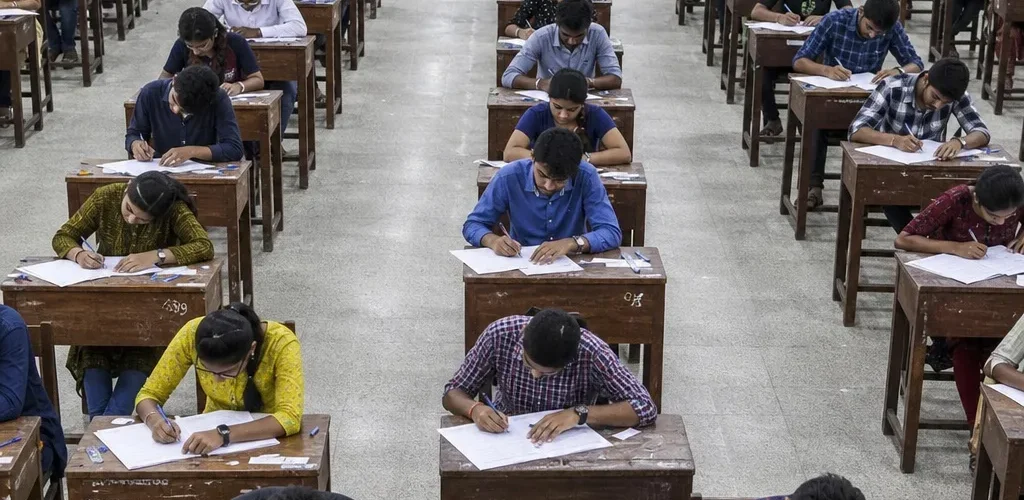
Lakhs of aspiring medical students across India will sit for the National Eligibility cum Entrance Test (NEET) UG 2026 on Saturday, 3 May 2026, in what the National Testing Agency (NTA) has described as the most secure administration of the exam in its history. The test will be conducted in a single shift from 2:00 PM to 5:00 PM across approximately 566 cities nationwide, with the NTA deploying artificial intelligence-based surveillance, signal jammers, Aadhaar authentication, and biometric verification at exam centres to ensure fair conduct.
The exam is the gateway to undergraduate medical education at all medical institutions across India, including MBBS, BDS, AYUSH, and nursing programmes. It is among the most competitive examinations in the country, with millions of candidates competing for a limited number of seats in government and private medical colleges.
Zero Leak Policy and Multi-Layer Security
The NTA has implemented what it calls a “Zero Leak Policy” for NEET 2026, a direct response to the controversies and allegations of paper leaks that plagued the examination in previous years. In 2024, the NEET exam was rocked by widespread allegations of question paper leaks, with the matter reaching the Supreme Court of India and leading to a CBI investigation. The fallout from that controversy forced the NTA to completely overhaul its exam security protocols.
For NEET 2026, the security framework includes multiple layers. Question papers have been transported to exam centres under armed escort with GPS-tracked vehicles, and their safe arrival has been confirmed by the NTA through official statements. The papers are stored in secure rooms at each centre and will only be opened in the presence of invigilators and observers at the designated time.
At the exam centres themselves, signal jammers will be deployed to prevent any mobile phone or electronic communication within and around the premises. AI-powered CCTV surveillance will monitor all examination halls in real time, with algorithms designed to flag suspicious behaviour such as unusual movement patterns or attempts at communication between candidates. Frisking at entry points will be thorough, with candidates required to undergo multiple checks before being allowed into the examination hall.
Aadhaar Authentication and Biometric Verification
In a new measure for 2026, the NTA has introduced Aadhaar-based authentication at exam centres. Candidates will have their identity verified against the Aadhaar database upon entry, adding an additional layer of protection against impersonation — a tactic that has been reported in competitive exams in the past. Biometric exceptions have been made for candidates with disabilities, for whom alternative verification methods have been arranged.
Candidates have been advised to carry their NEET admit card, which was released on 26 April 2026, along with a mandatory self-declaration form and a valid photo identity document. The NTA has issued an advisory asking candidates to arrive at their exam centres well before the gates open at 11:00 AM and not to rely on Google Maps for directions to centres, as some centres may be in newly constructed buildings that are not yet accurately reflected on mapping applications.
Exam Day Guidelines for Candidates
The NTA has published detailed guidelines for exam day. Gates at examination centres will open at 11:00 AM, with the last entry permitted at 1:30 PM. Candidates will be seated by 1:15 PM, and invigilators will announce important instructions between 1:15 PM and 1:30 PM. Test booklets will be distributed at 1:45 PM, and candidates will write their particulars on the booklets at 1:50 PM. The examination begins at 2:00 PM and ends at 5:00 PM.
The dress code advisory has been reinforced, with candidates instructed to wear light-coloured clothing without large buttons, brooches, or any metallic items. Shoes and footwear with thick soles are not permitted, and candidates have been asked to wear sandals or slippers. The strict dress code is designed to prevent the concealment of electronic devices or cheat sheets.
Items expressly prohibited at exam centres include mobile phones, smart watches, Bluetooth devices, calculators, wallets, handbags, and any stationery other than the pen provided by the NTA. Candidates found carrying prohibited items will be barred from the examination, and their candidature may be cancelled.
State-Level Preparations and Candidate Numbers
Individual states have reported detailed preparations for the exam. Haryana has confirmed that 65,300 candidates will appear for the exam across the state. Gurugram alone will have 18 exam centres accommodating 6,875 candidates. The Deputy Commissioner of Gurugram has arranged for dedicated parking, drinking water, toilets, and traffic management around exam centres to ensure smooth conduct.
In Jharkhand’s East Singhbhum district, 4,231 candidates will appear at 8 centres. Similar preparations have been reported from states across the country, with district administrations coordinating with the NTA on logistics, security, and emergency arrangements. Last year’s exam was conducted at approximately 5,453 centres, and a similar or larger number is expected for 2026 given the growing pool of aspirants.
The CBSE Class 12 results for 2026 are expected in the third week of May, and the ICSE/ISC results are also awaited. For many students appearing for NEET tomorrow, board exam results and medical entrance performance will together determine the trajectory of their academic careers.
NEET 2026 Pattern and What to Expect
The NEET UG 2026 exam paper consists of 200 questions from physics, chemistry, and biology (botany and zoology), of which candidates must answer 180 questions. Each subject has two sections — Section A with 35 mandatory questions and Section B with 15 questions of which 10 must be attempted. The marking scheme awards 4 marks for each correct answer and deducts 1 mark for each incorrect answer, with a maximum possible score of 720.
Medical education experts have advised candidates to focus on time management, to attempt questions they are confident about first, and to be mindful of the negative marking scheme. The competition for government medical college seats remains intense, with cutoff scores rising year on year in line with the increasing number of well-prepared candidates.
With the exam just hours away, the focus now shifts to the lakhs of young aspirants who have spent months — in many cases years — preparing for this single three-hour examination that will shape their futures in medicine.