Digital Arrest Scams in India Crash 86 Per Cent in 2025 as MHA’s Cyber Crime Crackdown Shows Results — But Rs 644 Crore Still Lost


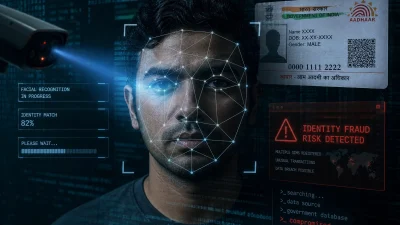
India’s most feared cybercrime category — digital arrest scams, where criminals impersonate law enforcement officers via video calls and hold victims under virtual arrest for hours or days while extorting money — saw a dramatic 86 per cent decline in 2025 compared to the previous year. According to data compiled by the Ministry of Home Affairs’ Indian Cyber Crime Coordination Centre, cases fell from a staggering 1,23,672 in 2024 to 17,264 in 2025, while financial losses dropped from Rs 1,918 crore to Rs 644 crore — a 66.4 per cent reduction. The decline follows an aggressive crackdown involving technology platforms, banking systems, and public awareness campaigns, but experts warn that the threat is evolving rather than disappearing. For those following financial technology and digital payment developments in India, the story of digital arrest scams is a cautionary tale about the dark side of the country’s rapid digitisation.
How Digital Arrest Scams Work
The digital arrest scam exploits India’s deep-rooted fear of authority and legal consequences. In a typical scenario, a victim receives a phone call or video call from someone claiming to be a police officer, CBI agent, customs official, or judge. The caller informs the victim that their identity has been linked to drug trafficking, money laundering, tax evasion, or another serious crime. The victim is told they are under digital arrest and must not disconnect the video call, leave their home, or contact anyone — under threat of immediate physical arrest.
Over the course of hours — sometimes days — the scammers psychologically manipulate the victim into transferring money to specified bank accounts, purchasing gift cards, or making cryptocurrency transfers, ostensibly as bail deposits, investigation fees, or proof of legitimacy. The scams are sophisticated: fake police station backgrounds appear on video calls, official-sounding case numbers are provided, and multiple callers pose as different officials to create an illusion of institutional involvement. Victims have included doctors, engineers, retired government officials, and business professionals — education and social status provide no protection against the psychological pressure tactics employed.
The 2022-2024 Explosion: A 465 Per Cent Surge in Losses
Official data presented to Parliament reveals the terrifying acceleration of these scams before the crackdown took effect. In 2022, authorities recorded 39,925 cases involving losses of Rs 91 crore. By 2023, cases rose 52 per cent to 60,676 with losses surging 272 per cent to Rs 339 crore. Then came 2024 — cases more than doubled to 1,23,672, and financial losses exploded by 465 per cent to Rs 1,918 crore. The average loss per victim rose nearly sevenfold from 2022 levels, indicating that scammers were becoming more efficient at extracting larger sums from individual targets.
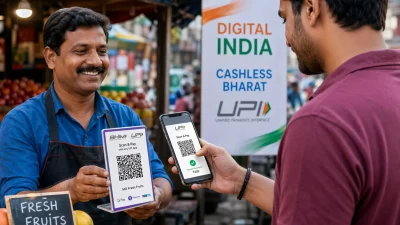
The explosion was fuelled by several factors: the widespread adoption of video calling through platforms like WhatsApp and Google Meet, the availability of cheap international calling services from fraud hubs in Southeast Asia (particularly Myanmar, Cambodia, and Laos), and the sheer scale of India’s digitally connected population. India’s digital payments revolution through UPI paradoxically made it easier for victims to transfer money instantly, giving them no cooling-off period to reconsider.
What Caused the 2025 Decline
The 86 per cent drop in 2025 is attributed to a multi-pronged crackdown. The Indian Cyber Crime Coordination Centre deployed the Citizen Financial Cyber Fraud Reporting and Management System, which allows victims to report fraud immediately through the 1930 helpline. The system interfaces directly with banks and payment platforms, enabling rapid freezing of accounts where stolen money has been transferred. In 2025, the I4C reported that over Rs 3,431 crore was saved through timely intervention — money that would otherwise have been lost to scammers.
Banking sector cooperation has been critical. The RBI mandated enhanced transaction monitoring for suspicious patterns associated with digital arrest scams — such as large transfers to newly opened accounts, multiple transfers within a short time window, and transfers to accounts flagged in previous fraud cases. Banks have implemented AI-powered fraud detection systems that flag transactions matching scam profiles and delay transfers pending verification. The coordination between financial systems and India’s evolving UPI security framework has been instrumental in reducing successful fraud.
Public awareness campaigns by the MHA, state police departments, and technology companies have also made a difference. Union Home Minister Amit Shah stated at a recent event that the government’s strategy combines prevention, detection, and prosecution. Social media campaigns, newspaper advertisements, and television public service announcements have educated millions about the scam — critically, the message that no legitimate law enforcement agency in India conducts arrests or investigations via video call.
The Threat Is Evolving, Not Disappearing
Despite the encouraging decline, cybersecurity experts warn against complacency. The Rs 644 crore lost in 2025 still represents enormous suffering for thousands of victims, and early 2026 data for January and February showed 17,718 cases with Rs 210 crore in losses — a run rate that, if sustained, would match 2025 levels but not continue the decline. Scammers are adapting their tactics: using AI-generated voices to clone legitimate officials, creating deepfake video backgrounds, and shifting to less-traceable cryptocurrency payments.
The Cyber Cell’s warning in April 2026 about new phishing attack vectors suggests that while digital arrest scams may be declining, overall cyber fraud is morphing into new forms. Investment scams, fake loan apps, and romance fraud are all growing categories. The regulatory framework for AI content is expected to address some of these emerging threats, particularly the use of deepfakes in fraud schemes.
Protecting Yourself: Key Takeaways
The most important defence against digital arrest scams remains awareness. No police officer, CBI agent, customs official, or judge will ever conduct an arrest or investigation through a video call. No legitimate authority will demand money transfers as bail or investigation fees. If you receive such a call, disconnect immediately, call the 1930 cybercrime helpline, and contact your local police station. Never share OTPs, bank details, or make transfers under pressure. India’s digital economy creates enormous opportunities, but those opportunities come with risks that every citizen must understand and guard against.