Surya Chauhan Murder Case — Main Accused Killed in Police Encounter, House Gets Demolition Notice

17-Year-Old Student’s Murder Shakes Ghaziabad
The murder of 17-year-old Class 11 student Surya Chauhan in Ghaziabad has taken a dramatic turn with the main accused, identified as Asad, being killed in a police encounter, followed by authorities serving a demolition notice on his residence. The rapid sequence of events has drawn both praise for swift police action and criticism from civil liberties groups questioning the use of extrajudicial force.
Surya Chauhan, a school student from the Khoda area of Ghaziabad in Uttar Pradesh, was allegedly murdered in what police initially described as a case linked to a personal dispute. The brutal nature of the crime — details of which are being withheld to protect the victim’s family’s dignity — sent shockwaves through the community and triggered widespread outrage on social media.
The Police Encounter
Uttar Pradesh Police carried out an encounter operation in Ghaziabad in which Asad, identified as the primary accused in Surya’s murder, was shot dead. According to the official police account, Asad was intercepted by a Special Operations Group (SOG) team when he allegedly opened fire on officers and attempted to flee. Police returned fire, fatally injuring the suspect, who was declared dead at a local hospital.
A pistol, ammunition, and a mobile phone were reportedly recovered from the encounter site. Senior Superintendent of Police (SSP) Ghaziabad told reporters that Asad had a prior criminal record with multiple cases registered against him, including charges of assault and intimidation.
“The accused was a habitual offender who posed a danger to society. When cornered, he chose to fire at police personnel, and the officers responded in self-defence,” the SSP stated at a press conference. “We are committed to ensuring that perpetrators of heinous crimes face the full force of the law.”
Demolition Notice Adds Another Dimension
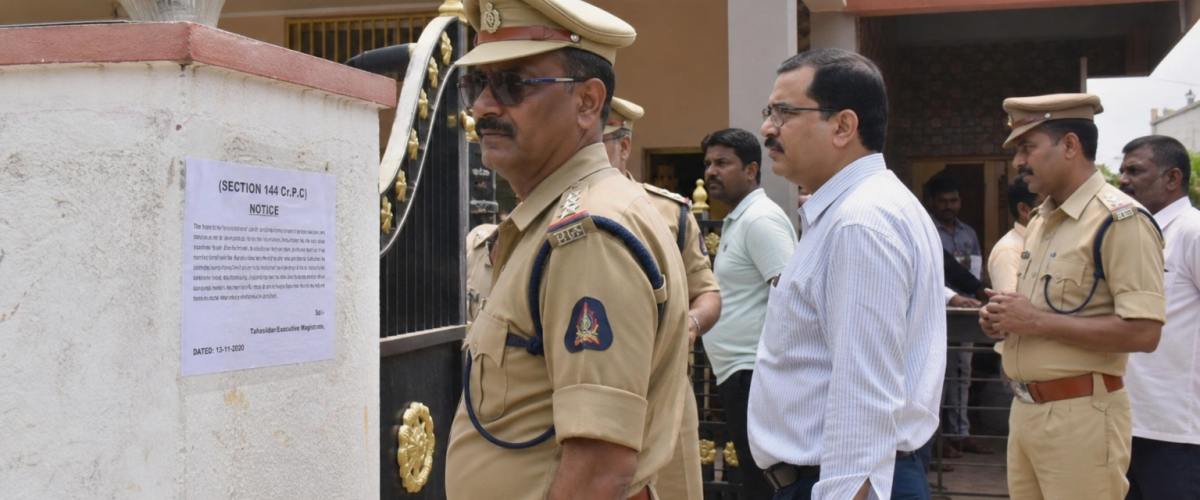
In a development that has become increasingly common in Uttar Pradesh’s approach to crime, authorities have pasted a demolition notice outside Asad’s residence in Khoda, declaring the property an illegal encroachment on government land. The notice, issued by the office of the Sub-Divisional Magistrate (SDM), directs the occupants to remove the structure within 15 days or face legal action.
The demolition was announced with considerable public ceremony. Officials arrived at the property with drums — a traditional method of public proclamation in parts of India — to announce the notice, a scene that was widely shared on social media and television news channels.
The practice of demolishing properties linked to accused persons, often referred to as “bulldozer justice,” has been a hallmark of the Uttar Pradesh government’s approach to law enforcement. Proponents argue it sends a strong deterrent message, while critics say it amounts to collective punishment, violates due process, and disproportionately targets specific communities.
Legal Questions and Civil Liberties Concerns
The Supreme Court of India has been critical of what it has called “bulldozer action” taken without following proper legal procedures. In a landmark ruling in November 2024, the court laid down guidelines requiring authorities to follow due process before demolishing any property, including proper notice, opportunity to respond, and judicial oversight.
Civil liberties organisations have raised questions about whether the demolition notice in this case follows those guidelines. “The property being declared an encroachment conveniently after the accused is killed in an encounter raises obvious questions about motive and due process,” said Vrinda Grover, a Supreme Court advocate specialising in human rights cases. “Was this property identified as an illegal encroachment before the murder case? If not, the timing is suspicious.”
Legal experts also point out that even if a property is an illegal encroachment, demolition should follow established procedures under local municipal laws, not be used as an extra-judicial punishment linked to a criminal case. The family members of the accused, who may have had no involvement in the crime, also have constitutional rights that must be protected.
The Encounter Debate
Police encounters remain one of the most contentious aspects of Indian law enforcement. Uttar Pradesh has seen a significant increase in encounter killings under the current state government, with official data showing over 180 encounter deaths since 2017. The state government has consistently defended encounters as a necessary tool against hardened criminals.
The National Human Rights Commission (NHRC) has mandated that all encounter deaths must be independently investigated. In this case, a magisterial inquiry has been ordered, as is standard procedure. However, rights groups argue that such inquiries rarely result in accountability for police officers.
“Every encounter killing deserves scrutiny, regardless of who the accused is or what crime they allegedly committed,” said retired Justice Madan Lokur, former Supreme Court judge. “The rule of law requires that even the worst criminals be brought to justice through courts, not through bullets.”
Community Response
The reaction in Ghaziabad has been mixed. Many residents and family members of Surya Chauhan expressed satisfaction with the swift police action. “He killed our child. He deserved what he got,” Surya’s uncle told reporters outside the family home. The sentiment was echoed by many in the neighbourhood, where anger over the murder has been intense.
However, Asad’s family has disputed the police account. Relatives claim he was picked up by police from his home before the encounter and that the official version of events does not match the circumstances. “He was already in their custody. How can they say he fired at them?” one family member alleged, though police have categorically denied this.
A Pattern in Uttar Pradesh
The Surya Chauhan case follows a familiar pattern in Uttar Pradesh: a heinous crime generates public outrage, police conduct an encounter killing the accused, and authorities follow up with property demolition. This sequence of events has been repeated dozens of times across the state, creating what critics call an “encounter culture” that prioritises spectacle over systematic justice.
Supporters of the approach argue that India’s overburdened court system — where cases can take years or even decades to reach conclusion — fails to deliver timely justice, and that encounters serve as both punishment and deterrent. The debate over this approach goes to the heart of fundamental questions about justice, rights, and the rule of law in India.
The magisterial inquiry into the encounter is expected to submit its report within 90 days. Whether the Surya Chauhan case becomes another statistic in UP’s encounter records or prompts a deeper examination of policing practices remains to be seen. For the family of a 17-year-old student who will never come home, the debate over methods may feel secondary to the raw grief of loss.