Earth Likely to Break Heat Records Before 2030 as WMO Report Warns of Persistent 1.5 Degree Breach

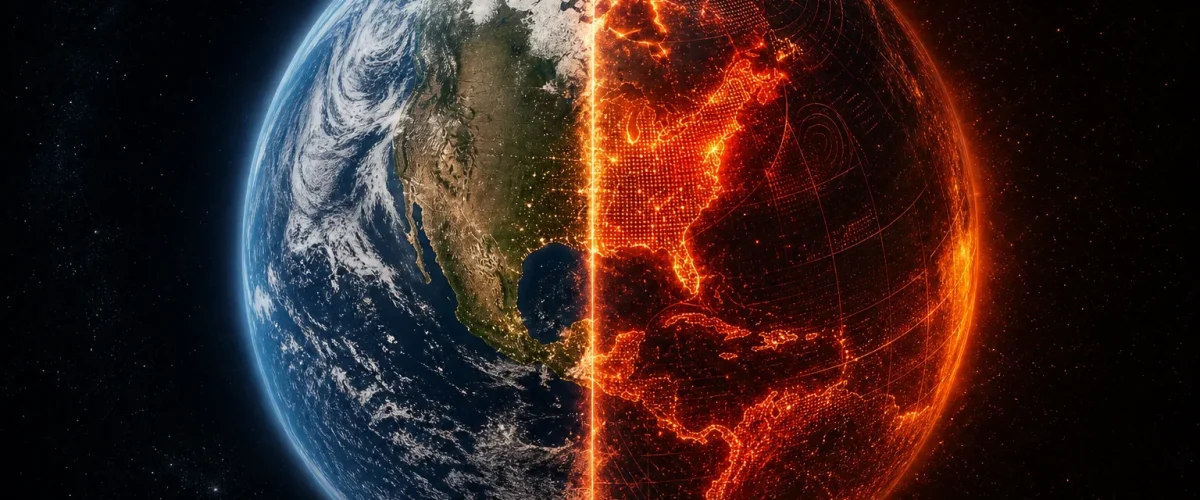
Global average temperatures are virtually certain to remain at or near record levels through 2030, with an 86 percent probability that at least one year in the 2026-2030 window will surpass 2024 as the warmest year ever recorded, according to a landmark report published on 28 May by the World Meteorological Organization (WMO). The Global Annual-to-Decadal Update, produced by the UK’s Met Office, paints an unambiguous picture: the 1.5°C warming threshold set by the Paris Agreement is being breached with increasing regularity, and the chance of a persistent breach is climbing.
The report projects that annual global mean near-surface temperatures between 2026 and 2030 will range between 1.3°C and 1.9°C above the 1850-1900 pre-industrial average. This means that even in the most optimistic scenario, the planet will remain well above 1°C of warming — and in a significant portion of possible outcomes, will approach 2°C, the upper guardrail beyond which climate scientists warn of irreversible tipping points.
Key Findings — The Numbers That Matter
The report’s headline statistics are striking in their precision and implications. There is an 86 percent likelihood that at least one year between 2026 and 2030 will exceed 2024 as the warmest on record — 2024 itself recorded a global mean temperature of approximately 1.55°C above pre-industrial levels, making it the hottest year in at least 175 years of instrumental records.
The probability that global mean near-surface temperature will temporarily exceed 1.5°C above pre-industrial levels for at least one year during the period is 91 percent — described as “very likely” in WMO’s calibrated uncertainty language. This 1.5°C level was already temporarily exceeded in 2024, but the new report suggests such exceedances will become more frequent rather than remaining exceptional events.
Perhaps most significantly, there is a 75 percent probability that the five-year average for 2026-2030 will exceed 1.5°C. If this materialises, it would represent the first time a multi-year average breaches this threshold — a qualitatively different and more alarming development than single-year exceedances, as it would indicate a sustained shift in the climate baseline rather than a temporary spike.
On the positive side — if it can be called that — the report assesses it as “exceptionally unlikely” (less than 1 percent probability) that any individual year during 2026-2030 will exceed 1.5°C as a long-term climate average, which is the metric used by the Paris Agreement. The distinction between a single-year exceedance and a long-term average breach is scientifically important, even if it offers limited comfort to communities already experiencing devastating climate impacts.
Regional Projections — The Arctic and India at Particular Risk
The report emphasises that warming is not uniform across the globe. Arctic temperature anomalies are expected to continue running at roughly three times the global mean, with some models projecting summer sea ice extents approaching zero by the late 2020s. This Arctic amplification drives permafrost thawing, methane release, and disruption of the jet stream — all of which have cascading effects on weather patterns in mid-latitudes including India and Europe.
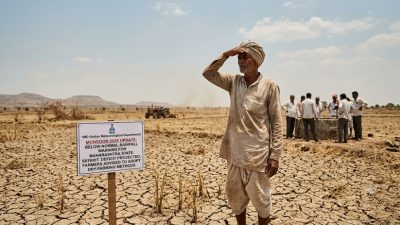
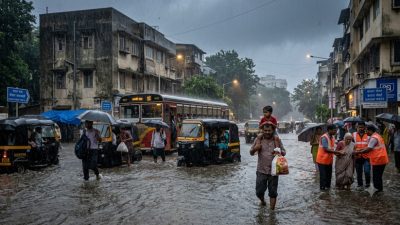
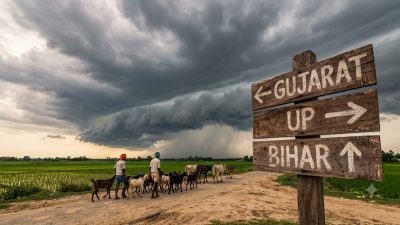
For India, the implications are particularly acute. The report’s regional analysis suggests that South Asian monsoon precipitation patterns will become more erratic, with higher peak rainfall intensities but shorter overall monsoon durations. This aligns with India’s monsoon forecast dropping to 90% of normal for 2026, driven partly by El Niño conditions that the WMO identifies as a key near-term climate modifier.
The connection between rising global temperatures and extreme weather events is already being felt in real time. The record-breaking wildfire season in the first four months of 2026, which saw 150 million hectares burned globally, is precisely the type of climate impact that the WMO report projects will intensify as baseline temperatures continue rising.
The 1.5°C Target — What It Means and Whether It Is Already Lost
The Paris Agreement’s 1.5°C target, agreed by 196 nations in 2015, was intended as a guardrail against the most dangerous consequences of climate change. The scientific consensus, synthesised in the IPCC’s Special Report on 1.5°C, is that beyond this threshold, risks of coral reef die-offs, extreme heat events, sea-level rise, and food system disruption increase sharply and non-linearly.
The WMO report stops short of declaring the 1.5°C target dead, but the numbers speak loudly. When the probability of a five-year average exceeding 1.5°C reaches 75 percent, the window for preventing a sustained breach is closing rapidly. Current global emissions trajectories — despite significant renewable energy deployment growth — are not declining fast enough to bend the temperature curve within the remaining carbon budget.
WMO Secretary-General Celeste Saulo stated: “These figures are not just statistics — they represent a fundamental shift in the Earth’s energy balance. Every fraction of a degree matters, and the difference between 1.5 and 2 degrees is measured in hundreds of millions of people exposed to extreme heat, water stress, and food insecurity.”
What This Means for Policy and Action
The report is timed to inform the UN Climate Change Conference (COP31) scheduled for November 2026 in Sydney, Australia, where countries will be expected to submit updated Nationally Determined Contributions (NDCs) with more ambitious emissions reduction targets. Climate diplomats acknowledge privately that the WMO’s findings create pressure for commitments that go significantly beyond current pledges.
For developing nations like India — which faces the twin challenge of meeting growing energy demand while reducing emissions intensity — the report underscores the need for accelerated transition to clean energy. India’s demographic transition driven by economic and social changes may eventually moderate per-capita energy demand growth, but the near-term trajectory remains upward.
The scientific community’s message is consistent and urgent: the physics of climate change does not negotiate, it does not wait for political consensus, and it does not respect national boundaries. The WMO report is, in effect, a five-year weather forecast for the planet — and the forecast is for conditions that previous generations would have considered unimaginable.