Monsoon Alarm: India Faces 40% Rainfall Deficit as Southwest Monsoon Stalls

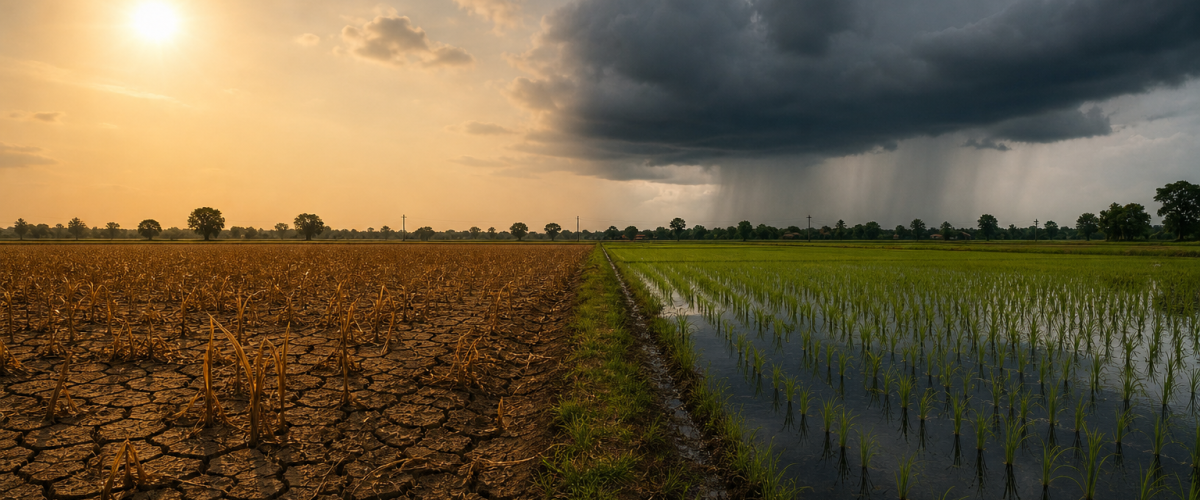
The India Meteorological Department (IMD) has confirmed that the southwest monsoon has significantly slowed down, with the country recording a 40% overall rainfall deficit since the monsoon’s onset over Kerala on June 4. The stagnation — caused by unusual upper atmospheric wind patterns disrupting the monsoon’s rain-bearing circulation — has raised alarm among agricultural scientists, water resource managers, and policymakers who depend on timely monsoon rainfall for India’s food security and water supply.
Between June 4 and June 15, the deficit was a staggering 64%, and while subsequent rainfall has narrowed the gap, the current 40% deficit remains well above the threshold that triggers concern about kharif sowing schedules, reservoir levels, and potential drought conditions in rain-dependent regions.
What’s Causing the Stall
The monsoon’s slowdown is attributable to several interconnected meteorological factors:
Upper Atmospheric Disruption: Unusual wind patterns in the upper atmosphere — at altitudes of 5-10 km — have disrupted the low-level westerly winds that drive the monsoon’s moisture transport from the Arabian Sea into the Indian subcontinent. These upper-level winds have effectively created a “lid” that prevents the deep convection necessary for sustained monsoon rainfall.
Weak Cross-Equatorial Flow: The monsoon’s strength depends on the cross-equatorial flow of moisture-laden winds from the southern hemisphere. This flow has been weaker than normal in June 2026, reducing the moisture supply available for rainfall over India.
El Niño Remnants: While the previous El Niño event has officially ended, its residual effects on sea surface temperatures and atmospheric circulation patterns may be contributing to the monsoon’s sluggish start. Transitional ENSO phases historically produce more variable monsoon behaviour.
Impact Assessment
The 40% deficit has already produced visible consequences across multiple sectors:
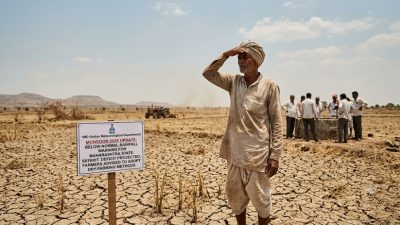
Agriculture: Kharif sowing — which depends on monsoon rainfall for soil moisture — has been delayed in several major agricultural states. Soybean, cotton, rice, and pulses are the crops most immediately affected. Farmers in Maharashtra, Madhya Pradesh, and Rajasthan have reported delaying sowing by one to two weeks, waiting for sustained rainfall before committing seeds to dry soil.
Water Supply: Reservoir levels across India are below the 10-year average. Major reservoirs in Maharashtra — including those supplying Mumbai’s water — are filling at rates significantly below what is expected by late June. Several cities have implemented or are considering water rationing measures.
Power Demand: The delayed monsoon has prolonged the summer heat in northern and central India, keeping power demand elevated. Air conditioning loads remain at near-peak levels, straining the electricity grid and increasing coal consumption at thermal power plants.
IMD’s Forecast
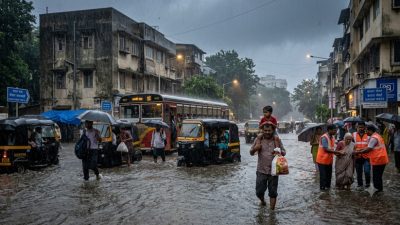
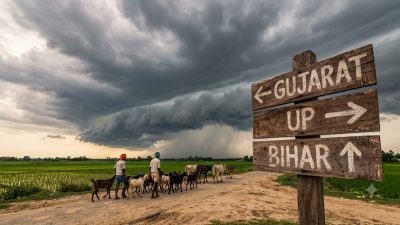
Despite the current deficit, the IMD maintains its seasonal forecast of above-normal monsoon rainfall for the June-September period. The department’s models suggest that the current stall is temporary and that a rapid acceleration of the monsoon is expected in the last week of June, with Maharashtra, Bihar, Jharkhand, and Odisha likely to receive sustained rainfall by June 23-25.
Historically, monsoon stalls in mid-June are not uncommon and do not necessarily predict a poor overall season. The 2023 monsoon, for example, experienced a similar early stall before delivering above-normal rainfall in July and August. However, the 40% deficit is at the higher end of historical mid-June deficits, warranting close monitoring.
What to Watch
The next five to seven days will be critical in determining whether the 2026 monsoon recovers or deepens into a genuinely deficient season. If the IMD’s forecast of rapid advancement materialises, the deficit could narrow significantly by the end of June. If the stall persists beyond June 25, the agricultural and water security implications will escalate, potentially requiring government intervention through crop insurance activation, emergency water releases from reservoirs, and revisions to food grain production estimates.
Also Read
- Super El Nino 2026 Threatens India Southwest Monsoon as IMD Forecasts Below-Normal Rainfall and Drought Risk Looms Over 60 Percent Farmers
- Southwest Monsoon Advances Rapidly: IMD Forecasts Above-Normal Rainfall for Most of India in Coming Weeks
- India’s Monsoon 2026 Forecast Drops to 90% of Normal — El Niño Threatens Agriculture and Economy as IMD Issues Below-Normal Warning
- Southwest Monsoon 2026 May Be India’s Weakest in 11 Years — IMD Issues Heavy Rain Alerts Across 8 States
- Southwest Monsoon 2026 Advances Rapidly — IMD Predicts Heavy Rain Across Southern and Central India