BCCI Plans to Field Two India T20I Teams Simultaneously as Asian Games Cricket Clashes With West Indies Series

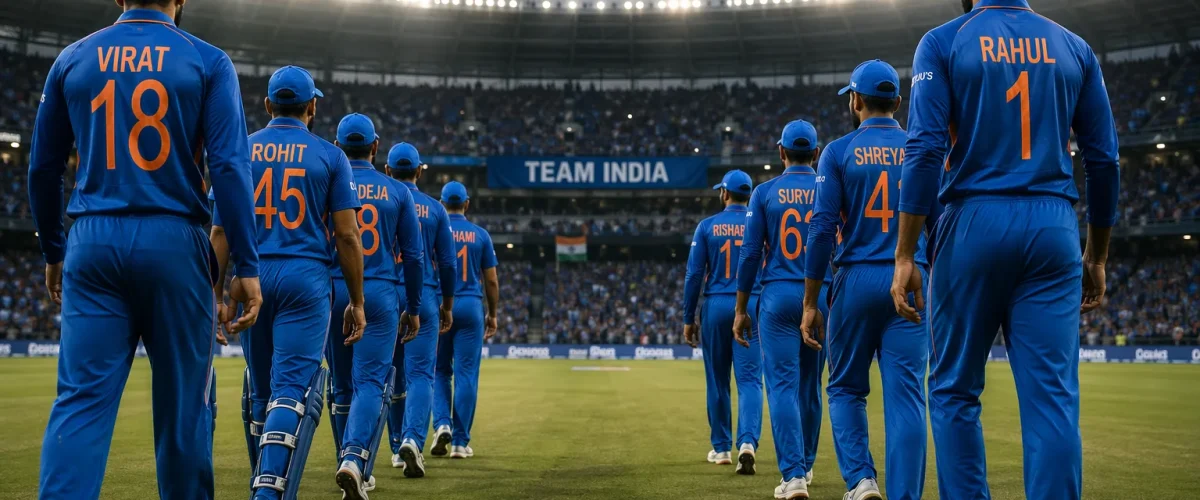
In a groundbreaking move for Indian cricket, the Board of Control for Cricket in India (BCCI) is preparing to field two separate India T20I teams simultaneously later this year. The plan, revealed exclusively by NDTV on April 20, is driven by a scheduling clash between the 2026 Asian Games cricket tournament in Japan and a five-match T20I series against the West Indies at home. With cricket now part of the 2028 Los Angeles Olympics, this strategy marks a fundamental shift in how India manages its cricketing talent.
Why Two Teams? The Scheduling Clash Explained
The root cause is simple: India cannot be in two places at once. The 2026 Asian Games, hosted by Aichi-Nagoya in Japan, will see the men’s cricket tournament run from September 24 to October 3 at Korogi Athletic Park. India enters the competition as defending gold medallists from the 2023 Hangzhou Asian Games. The tournament also serves as the Asian qualifiers for the 2028 Los Angeles Olympics, making it impossible for India to skip.
Simultaneously, the West Indies tour of India begins on September 27 with a three-match ODI series, followed by a five-match T20I series running from October 6 to October 17. While the ODI series and Asian Games overlap directly, the T20I series follows closely behind, making it impractical to use the same set of players for both commitments given travel schedules, recovery time, and match preparation.
A BCCI official confirmed the approach to NDTV: “The Asian Games and India vs West Indies T20 Series are going to be at the same time. So we have to look at two T20 teams playing. It is important from now to have a pool of 30-35 cricketers who can be called up for international assignments.”
Building a 30-35 Player T20 Pool
The BCCI’s solution is ambitious: create a massive pool of 30 to 35 T20-ready players capable of forming two competitive, independent squads. This is not just about filling two teams but about building genuine depth where either squad could hold its own in international cricket.
The ongoing IPL 2026 playoff race heating up with thrilling performances is serving as the primary talent identification ground for selectors. Young batters who have impressed include Vaibhav Sooryavanshi, Yashasvi Jaiswal, Priyansh Arya, and Angkrish Raghuvanshi — all of whom have shown fearless, match-winning ability in the tournament. Experienced middle-order options like Rajat Patidar and Ayush Badoni are also being closely monitored.
In the all-rounder department, Shashank Singh and Anukul Roy have emerged as strong contenders who can contribute with both bat and ball. The bowling attack for the expanded pool could include spinners like Ravi Bishnoi alongside fast bowlers such as Prasidh Krishna, Khaleel Ahmed, Kartik Tyagi, and Ashok Sharma. Behind the stumps, Dhruv Jurel is leading the race for the wicketkeeping spot in the second team.
Shreyas Iyer: The Leading Candidate to Captain the Second Team
Perhaps the most significant development in this plan is around captaincy. According to NDTV’s exclusive report, Shreyas Iyer is the frontrunner to lead one of the two T20I squads. The Punjab Kings captain has been in exceptional form during IPL 2026, guiding his franchise to the top of the points table with his composed leadership and consistent batting.
Iyer’s credentials for the role are strong. He has previous international captaincy experience, having led India in ODIs and was named in the T20I squad as a replacement during the New Zealand series in January 2026. His tactical acumen in the IPL, combined with his ability to handle pressure situations, has impressed the national selectors.
The current T20I captain, Suryakumar Yadav, is expected to continue leading the primary T20I squad, while Shubman Gill handles Test and ODI captaincy duties. This effectively creates a three-captain structure across formats — a model that mirrors how other leading cricket nations manage workload across a packed calendar.
Ireland Tour: The Testing Ground Begins in June
The BCCI’s experiment will officially begin with India’s tour of Ireland in June 2026. The two-match T20I series, scheduled for June 26 and June 28 in Belfast, marks India’s first visit to Ireland since 2007 and their first T20I assignment after their T20 World Cup 2026 triumph.
The BCCI plans to send a larger-than-usual squad to Ireland, mixing established players with new faces from the expanded pool. This approach serves multiple purposes: it tests untried players in international conditions, experiments with leadership combinations, and begins the process of building team cohesion for the Asian Games squad.
The Ireland tour comes right after India’s ODI series against Afghanistan, which concludes on June 20. Following Ireland, India’s packed schedule continues with a tour of England starting July 1. The tight turnaround between assignments is precisely why the BCCI believes a deep, versatile player pool is essential.
Two Coaching Setups: Gambhir and Laxman
Fielding two simultaneous squads also means two separate coaching setups. Head coach Gautam Gambhir is expected to travel with the primary squad, while VVS Laxman, currently the Head of Cricket at the BCCI Centre of Excellence in Bengaluru, is the likely choice for the second team. Laxman has previously stepped in as acting head coach on multiple occasions — including during India’s T20I tours when Rahul Dravid was unavailable, and more recently during the South Africa T20I series in late 2024.
This dual-coaching model is not entirely new for India. The BCCI has deployed Laxman as a parallel coach during scheduling overlaps before, most notably when India’s Test and T20I commitments clashed. However, the scale of this operation — with two fully independent, equally competitive squads — would be unprecedented in Indian cricket history.
The Olympic Vision: Why This Plan Goes Beyond 2026
While the immediate trigger is the Asian Games-West Indies scheduling conflict, the BCCI’s long-term vision extends to the 2028 Los Angeles Olympics, where T20 cricket will feature for the first time since the sport’s brief appearance at the 1900 Paris Games. The Asian Games cricket tournament specifically serves as the Asian qualifying event for the Olympics, making India’s participation non-negotiable.
The BCCI recognises that cricket’s inclusion in multi-sport events fundamentally changes how national teams must be managed. Unlike bilateral series where scheduling can be negotiated, the Olympics and Asian Games have fixed dates that cannot be moved. This makes a large, multi-squad system a necessity rather than a luxury.
Beyond the Olympics, cricket’s growing presence in multi-discipline sporting events means India could face similar scheduling overlaps regularly in the coming years. Building the infrastructure — both in terms of players and coaching staff — to handle parallel assignments is an investment in India’s cricketing future. As the IPL 2026 mid-season controversies and phone scandal have shown, the talent pool is deep enough to support such ambitions.
IPL 2026: The Talent Factory Powering This Revolution
None of this would be possible without the Indian Premier League. The IPL has transformed from a domestic franchise tournament into India’s primary talent identification and development pipeline. Selectors are watching the ongoing season with particular intensity, tracking not just runs and wickets but leadership qualities, temperament under pressure, and adaptability.
The emergence of young players like Sooryavanshi and Raghuvanshi — who are barely out of their teens but already performing at the highest level of franchise cricket — gives the BCCI confidence that a 35-player national pool is not just feasible but overdue. India’s bench strength in T20 cricket is arguably the deepest in world cricket, and the BCCI is determined to leverage it fully.
For Indian cricket news and updates, this represents a watershed moment. The days of India fielding weakened squads for secondary tournaments could be over, replaced by a system where every India team that takes the field is genuinely competitive.
What Fans Can Expect: Schedule at a Glance
Here is the timeline of key events in this unfolding plan:
- June 26–28: India tour of Ireland (2 T20Is in Belfast) — first test of expanded squad
- September 17–October 3: Asian Games cricket in Aichi-Nagoya, Japan — India defending gold
- September 27–October 3: India vs West Indies ODI series (Thiruvananthapuram, Guwahati, Chandigarh)
- October 6–17: India vs West Indies T20I series (Lucknow, Ranchi, Indore, Hyderabad, Bengaluru)
With India’s athletes preparing for major international events across multiple sports this year, the BCCI’s two-team strategy reflects a broader shift in Indian sport — where depth, planning, and parallel execution are becoming the hallmarks of a maturing sporting superpower.
For the latest sports coverage, stay tuned as the BCCI finalises its expanded player pool and the selectors begin shaping two squads that could redefine how India approaches the sport of cricket on the global stage.
Also read: Sunrisers Hyderabad vs Mumbai Indians: Complete IPL Timeline

- India’s Startup Funding Crosses $7.2 Billion in H1 2026 - July 1, 2026
- After Ireland Shock, India’s T20I Side Faces Bigger Test - July 1, 2026
- Ireland Stun World Champions India 2-0 in Belfast, Sooryavanshi Debate Rages On - June 29, 2026