India Wins 17 Medals at 2026 Asian Wrestling Championships in Bishkek — Aman Sehrawat Bags Silver, Iran Tops Medal Tally

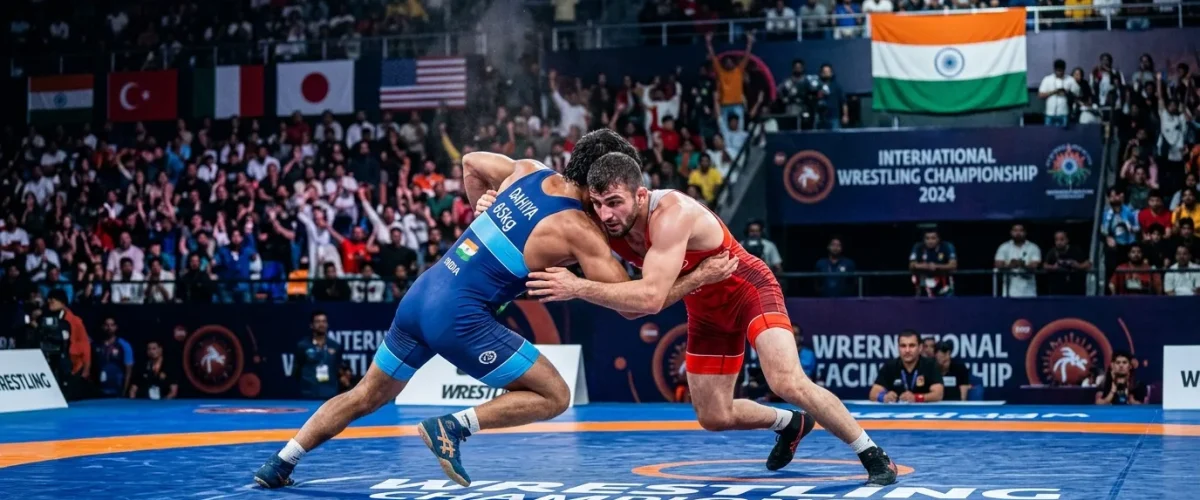
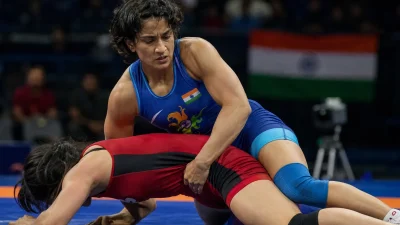
India’s wrestling contingent returned from the 2026 Asian Wrestling Championships in Bishkek, Kyrgyzstan, with an impressive haul of 17 medals — 2 gold, 6 silver, and 9 bronze — finishing fifth in the overall medal tally. The championships, held from 6 to 11 April 2026 under the auspices of United World Wrestling (UWW), saw fierce competition across men’s freestyle, women’s freestyle, and Greco-Roman categories, with Iran dominating the event by topping the standings with 6 gold medals and 18 medals overall.
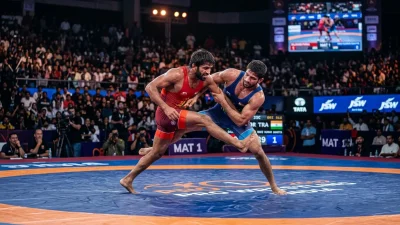
The tournament, staged at the Kozhomkul Sports Palace in the Kyrgyz capital, attracted over 400 wrestlers from 25 Asian nations. For India, the campaign was a mixed bag — marked by several near-misses in finals but bolstered by strong performances in the lower weight classes. Olympic bronze medallist Aman Sehrawat, competing in the men’s freestyle 61 kg category, was one of India’s standout performers, securing a silver medal after a hard-fought final against North Korea’s Kim Kwang-myong.
India’s Medal Tally: A Breakdown by Discipline
India’s 17 medals were spread across all three disciplines, reflecting the depth of the country’s wrestling programme. In men’s freestyle, Indian grapplers won 1 gold, 3 silver, and 4 bronze medals. The lone gold in this category was a significant achievement, while Aman Sehrawat’s silver at 61 kg underlined his credentials as one of Asia’s premier lightweight wrestlers. Other notable performances included India’s combat sports surge in 2026, with the country’s wrestlers following the example set by the boxing team at the Asian Boxing Championships weeks earlier.
In women’s freestyle, India added 1 gold, 2 silver, and 3 bronze medals. The gold medal came in a dominant display in the lower weight divisions, while the silver and bronze medallists showed marked improvement from the 2024 edition. Indian women’s wrestling has gained significant momentum since the Paris 2024 Olympics, and the Bishkek results suggest the programme is on an upward trajectory.
Greco-Roman wrestling contributed 1 silver and 2 bronze medals. Historically India’s weakest discipline on the mat, the improvement in Greco-Roman is a direct result of the Wrestling Federation of India’s (WFI) investment in foreign coaching staff and exposure trips that began in 2024.
Aman Sehrawat: From Olympic Bronze to Asian Silver
The 22-year-old Sehrawat, who made history at the Paris 2024 Olympics by winning India’s first wrestling medal since Sakshi Malik’s bronze in 2016, entered the wrestling championships as one of the favourites in the 61 kg freestyle division. After comfortable victories in the early rounds — including a 10-0 technical superiority win in the quarter-finals — Sehrawat faced a stiff challenge in the semi-final against Iran’s Ahmad Javan before prevailing 4-2 on points.
The final against Kim Kwang-myong proved to be a tactical battle. The North Korean wrestler, who had arrived in Bishkek with a string of strong results on the Asian circuit, controlled the pace of the bout and built an early 4-0 lead through a combination of leg attacks and exposure points. Sehrawat mounted a late comeback, scoring a takedown and a step-out to close the gap to 4-3, but ran out of time. Despite the silver, Sehrawat’s consistency at the highest level bodes well for India’s prospects at the 2028 Los Angeles Olympics.
Key Performers and Standout Bouts
Beyond Sehrawat, several Indian wrestlers delivered memorable performances in Bishkek. Ankush, competing at 57 kg in men’s freestyle, earned a bronze medal despite drawing a tough bracket that included Iran’s formidable Milad Valizadeh, who went on to win gold. In the 86 kg category, Mukul Dahiya pushed Kazakhstan’s Bolat Sakayev hard in the semi-final before going down 6-2, eventually settling for bronze after winning his repechage bout.
India’s women grapplers also made headlines. The squad, which included several wrestlers under the age of 23, demonstrated tactical maturity beyond their years. The gold medallist in the women’s division showcased India’s growing strength in lighter weight classes — a category that has historically been dominated by Japan and China.
In the 125 kg heavyweight category, India’s Dinesh faced Bahrain’s Shamil Sharipov in the semi-final but was pinned in just 41 seconds. The result highlighted the continuing challenge India faces in the heavier weight classes, where physical size and strength remain barriers compared to Central Asian and West Asian competitors.
Iran Dominates, Japan and China Close Behind
The overall medal tally was headed by Iran with 6 gold, 6 silver, and 6 bronze (18 total), followed by Japan with 6 gold, 5 silver, and 4 bronze (15 total). China finished third with 5 gold and 14 medals total, while hosts Kyrgyzstan secured fourth place with 5 gold and 12 medals. India’s 17 medals placed them fifth — a respectable finish, though the gap in gold medals compared to the top four nations remains a concern for the WFI.
The championships also featured strong showings from Uzbekistan (11 medals), Mongolia (8 medals), and North Korea (4 medals). Kazakhstan, traditionally a powerhouse, had a relatively subdued campaign with just 1 gold and 7 medals. The depth of competition across the continent is a testament to the growing investment in sports infrastructure across Asia.
What the Results Mean for Indian Wrestling
India’s performance in Bishkek must be viewed in the context of the broader rebuilding effort underway since the tumultuous events of 2023, when the WFI was suspended by UWW amid governance controversies. Under the reconstituted federation, India has steadily improved its standing on the Asian circuit. The 17-medal haul in Bishkek represents a slight improvement over the 2024 Asian Championships in Bishkek, where India won 15 medals.
However, the gold medal deficit remains the primary area of concern. India’s 2 gold medals in Bishkek are significantly fewer than the 5 gold won at the 2023 Asian Championships in New Delhi, where home advantage played a role. Converting silver and bronze medals into gold will be the key focus as India prepares for the 2026 World Championships in Zagreb, Croatia, and the long road to the 2028 Los Angeles Olympics where India aims for a broader multi-sport medal haul.
The growing professionalism across Indian sport, from kabaddi and hockey to boxing and wrestling, suggests that the infrastructure is in place for further improvement. With several young wrestlers in the squad gaining valuable international experience, India’s wrestling programme appears well positioned for the future — even if the immediate challenge of closing the gold medal gap with Iran and Japan remains daunting.
Road Ahead: World Championships and Olympic Qualification
The next major test for Indian wrestlers will be the 2026 World Wrestling Championships, scheduled for September in Zagreb. Qualification standards for the 2028 Los Angeles Olympics will begin to crystallise over the next 12 months, making consistent performances at continental and world-level events essential. For athletes like Aman Sehrawat, the Bishkek campaign — while ending in silver — represents another step in a career trajectory that has already included Olympic hardware.
The Wrestling Federation of India has announced plans to hold national selection trials in June 2026, with the top performers in each weight class earning spots in the World Championships squad. With the sport’s profile in India at an all-time high following the drama and debate of recent years, the pressure on India’s wrestlers to deliver gold at the global level has never been greater.

- Fentanyl Vaccine Breakthrough: Scripps Research Develops Shot That Blocks Deadly Overdoses Before They Reach the Brain - June 13, 2026
- Nipah Virus Returns to Kerala — First Case of 2026 Confirmed, State Declares High Alert - June 12, 2026
- Jill Biden Reveals She Wanted to Keep PM Modi’s 7.5-Carat Diamond Gift but Returned It After State Department Valued It at $20,000 - June 8, 2026