G7 AI Summit: Sam Altman, Dario Amodei, Demis Hassabis Join World Leaders for Landmark Lunch in Évian

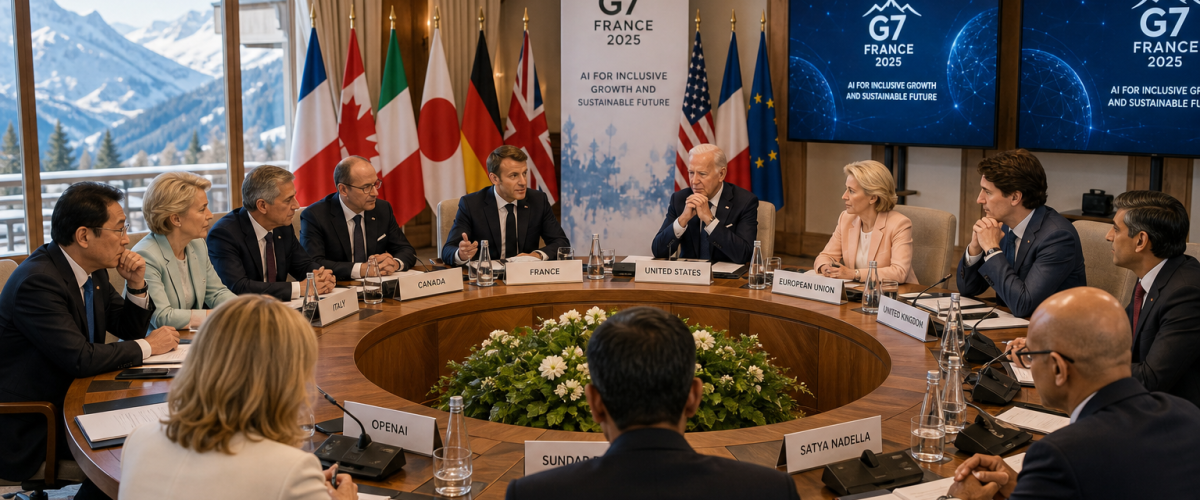
In an unprecedented display of the technology industry’s growing geopolitical influence, the CEOs of the world’s most powerful AI companies sat down with G7 heads of state for a working lunch at the summit in Évian-les-Bains, France on Wednesday — a meeting that underscored how artificial intelligence has moved from the margins to the very centre of international diplomacy.
The guest list read like a who’s who of the AI revolution: Sam Altman (OpenAI), Dario Amodei (Anthropic), Demis Hassabis (Google DeepMind), Arthur Mensch (Mistral), Aidan Gomez (Cohere), Marc Benioff (Salesforce), and representatives from Italy’s Domyn, UK-based Synthesia, Germany’s Black Forest Labs, and Japan’s Sakana. Notably, the founders of India’s Sarvam AI — fresh from achieving unicorn status — were also at the table, reflecting India’s growing weight in the global AI ecosystem.
What Was Discussed
The working lunch focused on several critical themes at the intersection of AI technology and global governance:
Frontier AI Risks: The rapid advancement of AI capabilities — including models that can write code, generate images, conduct research, and engage in complex reasoning — has raised concerns about misuse, from disinformation and cyberattacks to biological weapon design. G7 leaders and AI CEOs discussed frameworks for managing these risks while preserving the benefits of innovation.
Related: HCLTech Invests ₹1,270 Crore in Sarvam AI — India Gets Its Newest AI Unicorn at $1.5 Billion
AI Infrastructure and Sovereignty: The question of who controls the computing infrastructure needed to train and deploy AI models has become a geopolitical issue. The discussion touched on the concentration of AI compute in a handful of companies, the need for diverse and distributed infrastructure, and the concept of “sovereign AI” — the idea that nations should develop domestic AI capabilities rather than depending entirely on foreign providers.
Children’s Safety: The Élysée Palace highlighted children’s safety in the digital space as a significant focus of the discussion. The rise of AI-generated content — including deepfakes and synthetic media — poses new challenges for protecting minors online, and G7 leaders are seeking industry commitments on safeguards.
AI Governance Frameworks: The G7 has been developing voluntary AI governance frameworks since the Hiroshima Process in 2023. The Évian lunch built on this work, with discussions about moving from voluntary commitments to more structured international cooperation on AI standards, testing, and accountability.
The Power Dynamic
The scene at Évian — tech CEOs dining with world leaders as equals — reflects a fundamental shift in the global power structure. The companies represented at the lunch collectively control the development of AI systems that will shape economics, security, education, healthcare, and culture for decades to come. Their decisions about what to build, how to deploy it, and who gets access carry implications that rival those of government policy.
Related: G7 Summit 2026 Opens in Évian-les-Bains — PM Modi Joins World Leaders, Trump Bilateral Expected
This reality has not gone unnoticed by critics. Just days before the G7 lunch, the US government ordered Anthropic to disable access to its most advanced AI models from foreign nationals, citing national security concerns — a reminder that the relationship between AI companies and governments is not simply collaborative but also contested.
Oxfam International Executive Director Amitabh Behar described the G7 as “a club of the super-rich super-elites” and criticised the summit’s focus on business at the expense of humanitarian priorities. The presence of tech billionaires at the G7 lunch reinforced this critique, highlighting the tension between the AI industry’s commercial interests and the broader public good.
India’s Seat at the Table
The inclusion of Sarvam AI’s founders at the G7 AI lunch is a significant milestone for India’s technology ecosystem. Sarvam AI, which recently achieved unicorn status with backing from HCLTech and other investors, is developing multilingual AI models that serve India’s linguistically diverse population — an approach that aligns with the global push for AI systems that work for all people, not just English speakers.
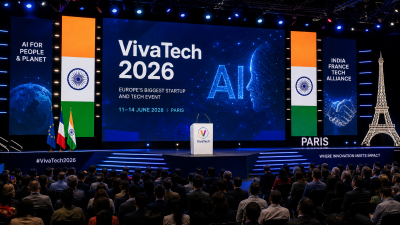
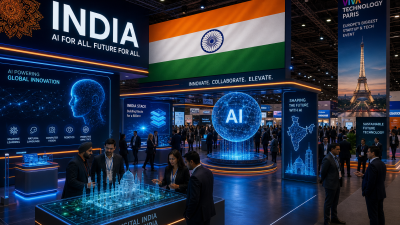
India’s representation at the table reflects the country’s growing AI capabilities and its diplomatic positioning at VivaTech 2026, where PM Modi declared that “for India, AI means All Inclusive.” The convergence of diplomatic messaging and commercial achievement strengthens India’s claim to be a leading voice in global AI governance.
What Comes Next
The G7 AI lunch is a beginning, not an end. The challenges of AI governance — managing risks, ensuring equitable access, preventing monopolisation, and protecting democratic values — will require sustained engagement between governments, companies, civil society, and international institutions. The question is whether the goodwill and dialogue on display at Évian can translate into binding commitments and effective governance structures — or whether it remains, as critics suggest, a photo opportunity for the powerful.
Also Read
- India Orders OpenAI and Google to Accept AI Copyright Royalty Framework Within 30 Days as Anthropic Opens Bengaluru Office
- Jury Rules Against Elon Musk in Landmark OpenAI Lawsuit Finding He Waited Too Long to Sue as Sam Altman and Company Cleared of All Claims
- Anthropic and OpenAI Launch AI Services Companies Backed by Wall Street Giants, Pose Direct Challenge to TCS, Infosys and Wipro
- Elon Musk vs Sam Altman: $134 Billion OpenAI Trial Begins in Oakland as World’s Richest Man Takes AI Rival to Federal Court
- India Tightens AI Regulation With Mandatory Content Labelling as OpenAI and Google Expand Operations Across the Country