Apple Races to Shift All US-Bound iPhone Production to India by Late 2026 as Foxconn and Tata Plants Expand

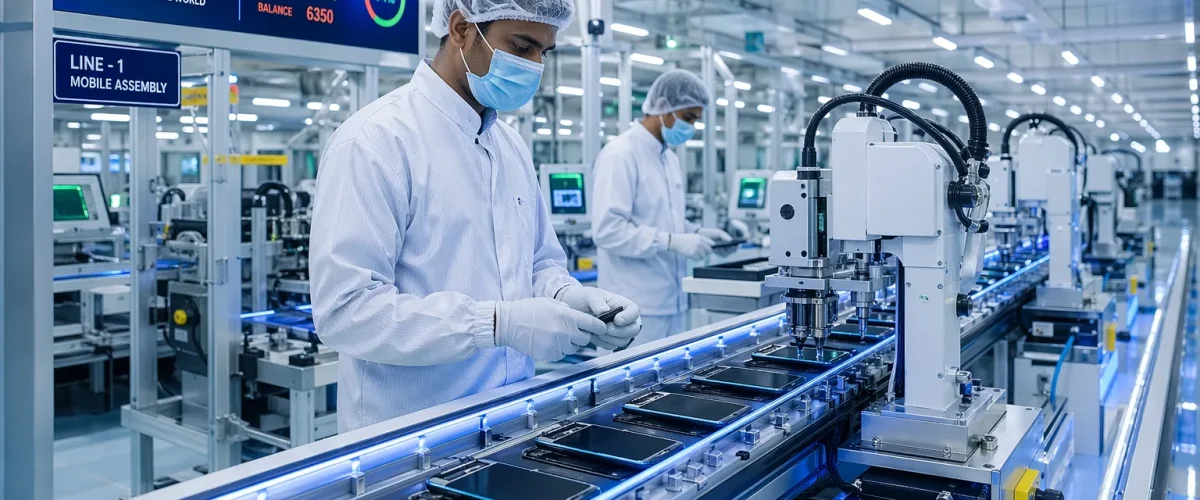
Apple is executing what may be the most ambitious supply chain shift in consumer electronics history — moving production of all iPhones sold in the United States from China to India by the end of 2026. According to reports from the Financial Times and multiple industry sources, the Cupertino giant is doubling its annual iPhone output in India to more than 80 million units, transforming the country from a secondary manufacturing hub into the primary production base for the world’s most valuable smartphone. For anyone following India’s technology and gadget ecosystem, this shift represents a seismic moment for the country’s electronics manufacturing ambitions.
Foxconn’s $2.6 Billion Bengaluru Megafactory Takes Shape
At the centre of Apple’s India strategy is a massive new facility being built by Taiwan’s Foxconn in Bengaluru, Karnataka. The plant, representing an investment of approximately $2.6 billion, began initial operations in late April 2025 with a single assembly line producing iPhone 16 and 16e models at a capacity of 300 to 500 units per hour. When construction is fully completed by December 2027, the factory is expected to create 50,000 direct jobs — making it one of the largest single-site employers in India’s electronics sector.
The Bengaluru plant is designed to be a state-of-the-art facility matching the precision and output quality of Foxconn’s legendary Zhengzhou campus in China, which currently produces the majority of the world’s iPhones. The plant features clean room environments, automated testing equipment, and a trained workforce that has been recruited and trained over the past 18 months. Karnataka’s electronics policy, which offers land at subsidised rates and streamlined regulatory approvals, played a significant role in attracting the investment.
Tata Electronics Emerges as Apple’s Indian Champion
Foxconn is not alone in this expansion. Tata Electronics, the Tata Group’s electronics manufacturing subsidiary, has started production at a new plant in Hosur, Tamil Nadu. The facility initially began with older iPhone models on a single assembly line but is expected to scale rapidly. Tata’s entry into iPhone manufacturing is historically significant — it makes Tata the first Indian-owned company to produce iPhones, breaking the monopoly of Taiwanese and Chinese contract manufacturers.
Tata acquired the former Wistron iPhone plant in Karnataka in 2023 and has since invested heavily in upgrading its capabilities. The company now operates two iPhone manufacturing facilities in India, with plans for expansion. Tata’s involvement brings additional supply chain benefits — the conglomerate’s existing presence in electronics components, semiconductor assembly (through its partnership with PSMC), and logistics infrastructure creates the foundation for a more vertically integrated Indian supply chain. This development complements India’s broader semiconductor manufacturing push, which aims to build an end-to-end electronics ecosystem.
Why Apple Is Moving Now: Tariffs, Geopolitics, and Risk
The urgency behind Apple’s India pivot is driven by multiple converging factors. The most immediate is tariff risk. US-China trade tensions have intensified since 2018, and while Apple has historically received exemptions on iPhones, the threat of tariffs of 25 per cent or more on Chinese-assembled electronics remains. By manufacturing in India, Apple can ship iPhones to the US market under the India-US trade framework, which currently carries an 18 per cent reciprocal tariff on select goods — significantly lower than potential China tariffs.
Geopolitical diversification is equally important. Apple’s concentration of over 75 per cent of iPhone production in China represents a single point of failure that investors and board members have long flagged. COVID-19 lockdowns in China in 2022 disrupted iPhone production for weeks, and ongoing tensions over Taiwan — where Apple’s key suppliers TSMC and Foxconn are headquartered — add further risk. India offers a large, English-speaking workforce, democratic governance, and a government that is actively courting foreign electronics manufacturers.
India currently accounts for approximately 18 per cent of global iPhone production, according to Counterpoint Research. Doubling this to handle all US-bound units would push India’s share to approximately 30 to 35 per cent, fundamentally altering the global iPhone supply map. The target of completing this shift by late 2026 is aggressive but reflects Apple’s willingness to invest billions in accelerating timelines. Those following India’s booming smartphone market will note that domestic manufacturing also positions Apple better for price competition in India itself.
What This Means for India’s Economy and Jobs
The economic implications for India are substantial. Apple’s India manufacturing ecosystem already employs approximately 150,000 workers across Foxconn, Tata, and component suppliers. The expansion could push this number past 300,000 direct jobs by 2028, with multiplier effects in logistics, services, and component manufacturing adding several hundred thousand more. India’s electronics exports, which crossed $30 billion in FY26 with iPhones as the single largest category, could double within two to three years.
The Make in India programme, the Production Linked Incentive scheme for electronics, and state-level industrial policies have all played critical roles in creating the conditions for this shift. The PLI scheme alone has disbursed thousands of crores in incentives to Apple’s manufacturing partners. The challenge now is building out the component supply chain — India still imports the majority of iPhone components from China, Vietnam, Japan, and South Korea. Developing domestic capabilities in display assembly, camera modules, and battery cells would capture more value within India’s borders.
Apple’s bet on India is not just a manufacturing story — it is a validation of the country’s position as the next great frontier for global electronics production. If the late-2026 timeline holds, India will have accomplished in five years what took China two decades to build. The implications extend far beyond Apple, signalling to every global electronics company that India is ready for world-class, high-volume manufacturing at scale.

- Fentanyl Vaccine Breakthrough: Scripps Research Develops Shot That Blocks Deadly Overdoses Before They Reach the Brain - June 13, 2026
- Nipah Virus Returns to Kerala — First Case of 2026 Confirmed, State Declares High Alert - June 12, 2026
- Jill Biden Reveals She Wanted to Keep PM Modi’s 7.5-Carat Diamond Gift but Returned It After State Department Valued It at $20,000 - June 8, 2026