Sensex Rallies 1,200 Points as West Asia De-escalation Hopes Lift Indian Markets Ahead of RBI April Policy

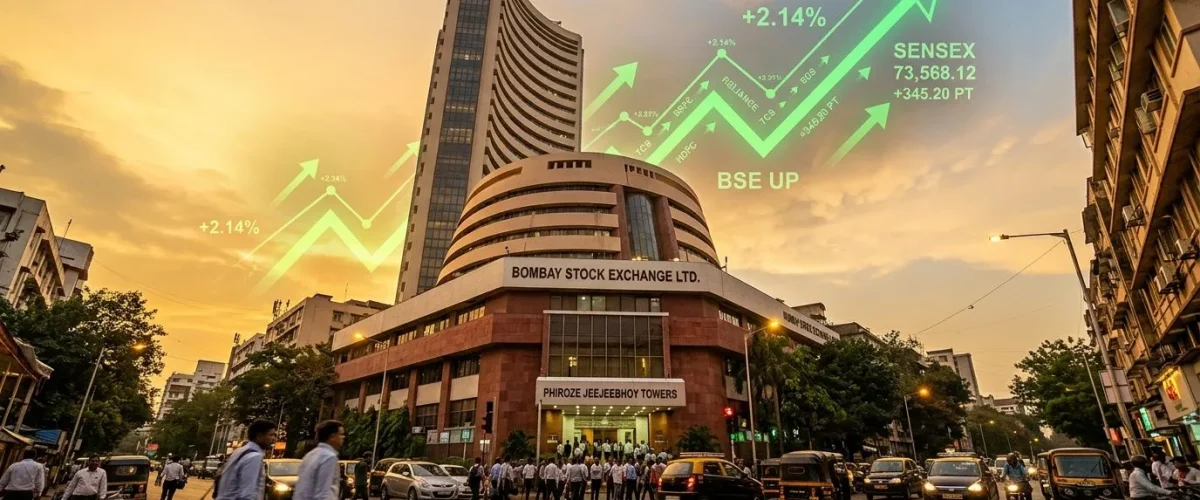
The BSE Sensex surged 1,186.77 points, or 1.65 per cent, to close at 73,134.32 on Wednesday, 1 April 2026, as Indian equity markets rallied sharply on growing hopes of a diplomatic resolution to the West Asia conflict. The NSE Nifty50 rose 348 points, or 1.56 per cent, to settle at 22,679.40. The rally came after weeks of volatility driven by geopolitical tensions following the outbreak of the Iran war on 28 February 2026.
What Drove the Market Rally on 1 April
Intraday, the Sensex touched a high of 73,964.58 — a gain of over 2,000 points — before profit-booking trimmed some gains by the close. The Nifty50 hit an intraday high of 22,941.30. Traders and institutional investors responded to overnight reports suggesting back-channel diplomatic talks between key West Asian nations, raising hopes that the conflict could move toward de-escalation.
On the BSE, Trent, IndiGo, Adani Ports, and State Bank of India led the gainers. UltraTech Cement, Power Grid, NTPC, and Sun Pharma were among the few laggards. All sectoral indices ended in the green except Nifty Pharma. Nifty Media and PSU Bank each gained roughly 3 per cent. The India VIX, a measure of near-term market volatility, fell 10.31 per cent to 25.01, signalling reduced fear among investors.
Broader markets outperformed benchmarks. The Nifty Midcap 100 index climbed 2.22 per cent, while the Smallcap index rallied 3.33 per cent, reflecting improved risk appetite across the board. Analysts said the breadth of the rally suggested this was not merely short-covering but a genuine shift in sentiment.
Oil Prices and the Rupee Remain Key Risks
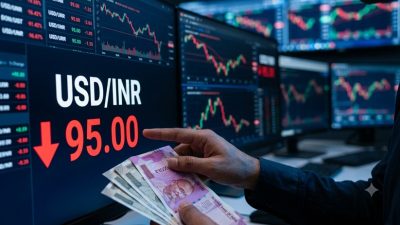
Despite the single-day relief rally, structural concerns persist. Brent crude oil prices surged from $60.75 per barrel on 1 January 2026 to $105.32 by 27 March — a 73.4 per cent jump — largely driven by supply fears around the Strait of Hormuz disruption. Over the same period, the Indian rupee weakened from 89.96 to 94.59 per US dollar, a fall of roughly 5.1 per cent.
This combination of elevated crude prices and a sliding rupee has pushed up India’s import bill significantly. Higher energy costs feed directly into headline inflation, which the Ministry of Statistics reported at 3.21 per cent for February 2026 — still within the Reserve Bank of India’s comfort zone but trending upward from the sub-2 per cent levels seen in late 2025.
RBI April Policy Meeting in Focus
Attention now turns to the RBI Monetary Policy Committee (MPC) meeting scheduled for the week of 6 to 10 April. The central bank held the repo rate steady at 5.25 per cent at its February review, after cutting a cumulative 125 basis points since February 2025. With India’s broader economic outlook clouded by the West Asia crisis, analysts are divided on whether the RBI will hold rates again or signal a potential pause in its easing cycle.
Market participants are pricing in the risk of cumulative rate hikes exceeding 100 basis points if inflation spikes further. Bond yields remain elevated, and any hawkish commentary from the RBI could weigh on equity sentiment. However, food inflation has remained relatively contained, giving the central bank some room to wait for more data before acting.
What Investors Should Watch Next Week
Beyond the RBI decision, markets will track services PMI data, global cues including US growth figures, and developments in the West Asia conflict. The recent Sensex run above 95,000 earlier in 2026 feels distant now, with indices having corrected sharply since the Iran war began. Foreign institutional investor (FII) flows, which turned negative in March, will be a critical indicator. Meanwhile, the oil price surge that tested Indian market resilience in Q1 continues to shape the investment landscape.
For personal finance and investment decisions, analysts recommend caution. Equity markets may remain volatile until there is clarity on both geopolitics and monetary policy. Diversification across asset classes and a focus on fundamentally strong stocks remain the prudent approach in this environment.