Petrol and Diesel Prices Hiked Again by 90 Paise Per Litre Across India in Second Fuel Price Increase Within Five Days as Oil Crisis Deepens

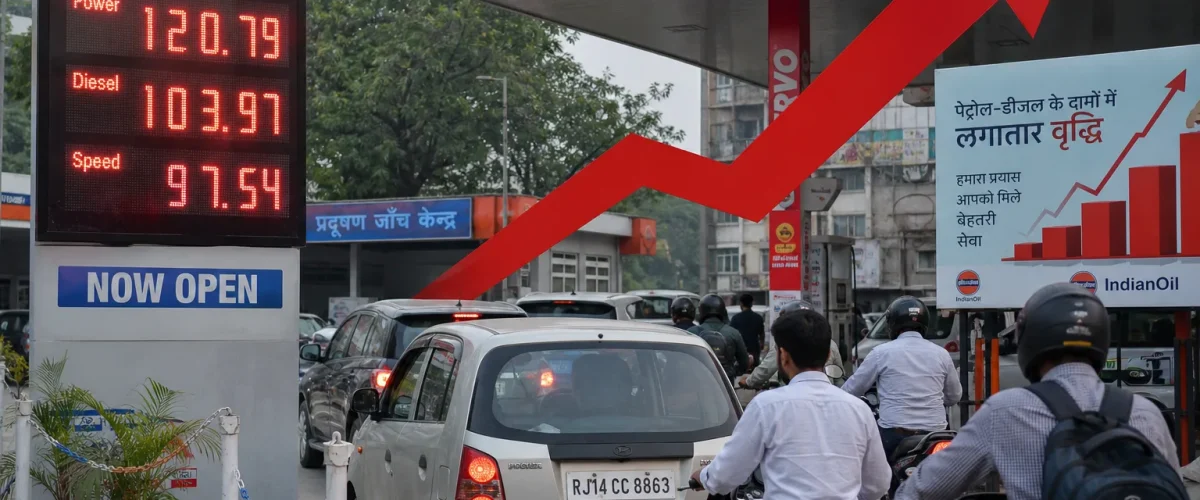
Petrol and diesel prices have been raised by approximately 90 paise per litre across major Indian cities on Monday, May 19, marking the second fuel price hike in just five days as state-run oil marketing companies struggle to cope with elevated global crude oil prices driven by the ongoing West Asia crisis. The latest revision has pushed petrol closer to the Rs 100-per-litre mark in the national capital and above Rs 107 per litre in Mumbai, adding to the financial strain on households and transporters already grappling with rising costs.
How Much Have Petrol and Diesel Prices Increased?
In New Delhi, petrol prices climbed by 87 paise to Rs 98.64 per litre from Rs 97.77, while diesel went up by 91 paise to Rs 91.58 per litre from Rs 90.67. In Mumbai, petrol now costs Rs 107.59 per litre and diesel stands at Rs 94.08 per litre after similar increases. Among the four metro cities, Kolkata registered the sharpest jump, with petrol rising by 96 paise to Rs 109.70 per litre and diesel increasing by 94 paise to Rs 96.07 per litre. In Chennai, petrol became costlier by 82 paise, reaching Rs 104.49 per litre, while diesel was raised by 86 paise to Rs 96.11 per litre.
The latest revision follows the Rs 3 per litre hike in petrol and diesel prices announced just last Friday, May 15, which was the first fuel price increase in four years. Together, the two revisions have made petrol costlier by nearly Rs 4 per litre and diesel by over Rs 3.90 per litre in less than a week — a significant jump that has revived memories of the 2022-style pattern of small, frequent fuel price hikes that lasted for over two weeks.
Why Are Fuel Prices Rising Again?
The primary driver behind the successive fuel price hikes is the sustained surge in global crude oil prices, which have remained above $100 per barrel since the escalation of the West Asia conflict involving the United States and Iran earlier this year. The disruption of shipping routes near the Strait of Hormuz — one of the world’s most critical oil chokepoints — has created persistent supply anxieties in global energy markets, pushing benchmark Brent crude to levels not seen since 2022.
Indian state-run oil marketing companies — Indian Oil Corporation (IOC), Bharat Petroleum Corporation Limited (BPCL), and Hindustan Petroleum Corporation Limited (HPCL) — had absorbed significant under-recoveries for months by keeping retail prices frozen despite rising input costs. The RBI Governor had warned earlier this month that fuel price hikes were inevitable if crude oil prices remained elevated, and the dam has now broken with two revisions in quick succession.
Market watchers believe this 90-paise hike may not be the last if crude oil prices remain elevated and the West Asia situation continues to affect global energy supply chains. The 2022 experience — when fuel prices were revised upward by 80 paise to Rs 1 per litre every day for 16 consecutive days — has become a reference point for analysts tracking the current cycle.
Impact on Consumers, Transport and Inflation
The cumulative impact of nearly Rs 4 per litre in fuel price increases within a week is expected to have cascading effects across the economy. Transport operators have warned that freight costs will rise by 5 to 8 per cent, which will inevitably be passed on to consumers through higher prices of essential goods including food, vegetables and daily necessities.
Auto-rickshaw and taxi unions in Delhi, Mumbai and Kolkata have demanded immediate fare revisions, while truck operators’ associations have called for emergency meetings to discuss the impact on logistics costs. The All India Motor Transport Congress (AIMTC) said in a statement that the successive hikes would add approximately Rs 2,500 to Rs 3,000 per trip for long-haul trucks, making transportation of goods significantly more expensive.
For the average household, the combined effect of higher fuel prices, the recent CNG price increase to Rs 87 per kg in Delhi, and the milk price hike by Amul and Mother Dairy is squeezing disposable incomes at a time when rural consumption was just beginning to show signs of recovery.
Political Reactions and Opposition Criticism
The Congress party launched a sharp attack on the Modi government, with former party president Rahul Gandhi posting on X that the BJP government had burdened the common man with Rs 4 in fuel price hikes in just five days while the Prime Minister was busy collecting international awards abroad. Congress spokesperson Jairam Ramesh called the successive hikes a betrayal of the common citizen and demanded an immediate rollback.
The Aam Aadmi Party’s Arvind Kejriwal also criticised the central government, saying the fuel price hikes would devastate the already-stressed household budgets of middle-class families across India. The TMC, DMK and other opposition parties echoed similar sentiments, demanding that the government absorb the cost increase rather than passing it on to consumers.
Union Petroleum Minister Hardeep Singh Puri defended the hikes, stating that the government had absorbed Rs 22,000 crore in under-recoveries before allowing the price revisions. He said the hikes were necessitated by global factors beyond India’s control and reiterated that the government would continue to monitor the situation and take steps to minimise the impact on consumers.
Will More Hikes Follow?
Energy analysts believe the current hikes are just the beginning of a longer price correction cycle. With global crude oil still trading above $100 per barrel and no immediate resolution to the West Asia conflict in sight, oil marketing companies are estimated to still be under-recovering Rs 8 to Rs 10 per litre on petrol and Rs 6 to Rs 8 per litre on diesel even after the latest revisions.
ICRA’s oil and gas research head Prashant Vasisht told reporters that if crude prices remain above $100, consumers should expect further revisions of 50 paise to Rs 1 per litre at regular intervals over the next two to three weeks. The pattern closely mirrors the daily revision approach adopted in March-April 2022, though this time the geopolitical situation — particularly the US military posture in the Gulf region — adds an additional layer of uncertainty.
The government’s austerity measures, including PM Modi’s appeal for work from home and fuel conservation, suggest that the administration expects the elevated price environment to persist for the medium term. As India navigates this energy price shock, the coming weeks will be critical in determining whether the government opts for further gradual hikes or a single large revision to bridge the gap between domestic and international prices.
For consumers, the message is clear: fuel prices are on an upward trajectory, and the only question is how quickly the gap between Indian retail prices and global benchmarks will be closed. With the monsoon season approaching and its potential impact on agricultural supply chains and food prices, the inflationary pressures from higher fuel costs could compound into a broader economic challenge for the government in the months ahead.