India Stock Market Endures Wildest April in Five Years as Iran-US War Oil Shock and Ceasefire Drama Dominate Dalal Street

India’s Stock Market Endures Wildest April in Five Years as Iran-US War, Oil Shock and Ceasefire Drama Dominate
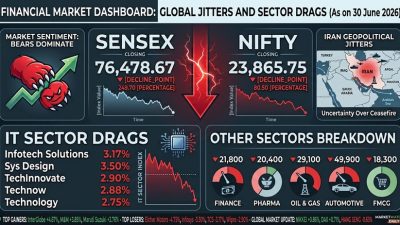
Indian equity markets experienced their most volatile April in half a decade during the first two weeks of 2026, with the Sensex swinging nearly 5,000 points between its intraday lows and highs as the Iran-US military conflict, gyrating crude oil prices and aggressive foreign fund outflows created a perfect storm of uncertainty for investors on Dalal Street.
The Nifty 50 ended the fiscal year 2025-26 in the red, declining roughly 5 per cent and shedding around 1,200 points, while the BSE Sensex registered a steeper 7 per cent fall, losing 5,467 points over the year. This marked the weakest fiscal year performance for Indian equities since the pandemic-hit FY20, as escalating Middle East tensions overshadowed improving domestic fundamentals.
How the Iran-US Conflict Shook Investor Confidence
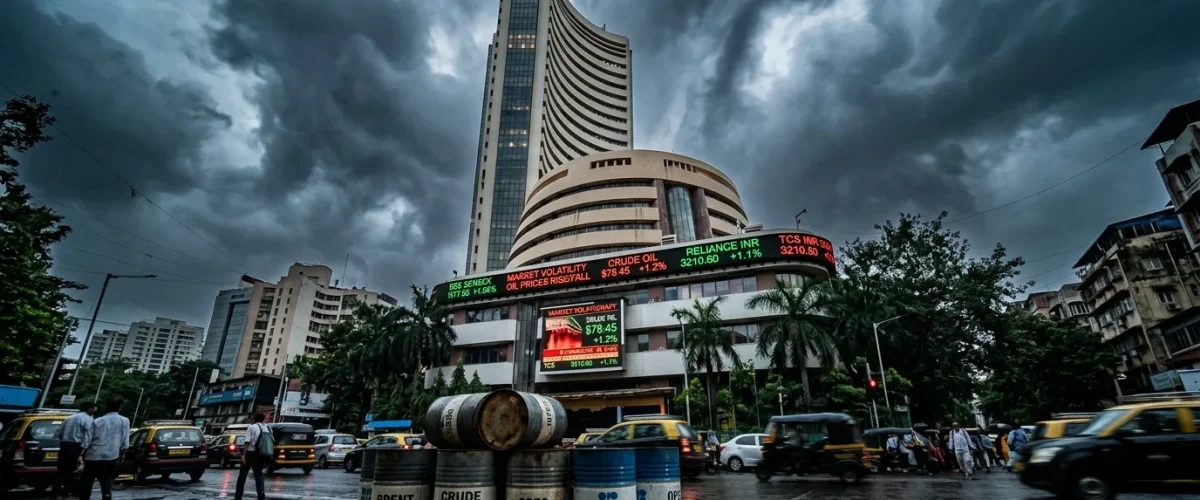
The Strait of Hormuz, through which roughly one-fifth of the world’s oil supply passes, was partially shut down in March 2026 following direct military confrontation between the United States and Iran. The closure pushed Brent crude above the $100 per barrel mark for the first time since 2022, triggering a chain reaction across global financial markets. Indian equities, heavily sensitive to oil price movements given the country’s dependence on crude imports, bore the brunt of the sell-off.
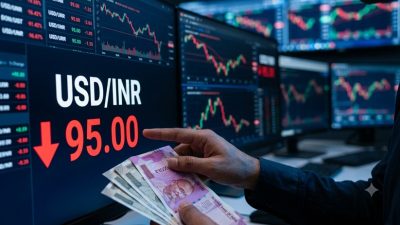
The Nifty slipped below 22,500 in late March as selling pressure intensified. Foreign portfolio investors pulled billions from Indian markets, the rupee weakened past the critical 95 mark against the US dollar, and bond yields spiked on inflation fears. Market breadth deteriorated sharply, with defensive sectors offering little refuge as even traditionally safe havens came under pressure.
However, markets staged a dramatic reversal in early April when US President Donald Trump indicated a willingness to halt military operations against Iran. On 1 April 2026, the BSE Sensex surged 1,187 points, or 1.65 per cent, to close at 73,134, snapping a two-session losing streak. The Nifty advanced 348 points to settle at 22,679, as broad-based buying lifted all sectors.
Ceasefire Sparks Five-Day Rally Then Fades
The announcement of a formal two-week ceasefire between the US and Iran on 8 April triggered the most powerful single-day rally in five years. The Nifty 50 surged 873 points, or 3.78 per cent, to close at 23,997, while the Sensex jumped 2,946 points, or 3.95 per cent, to finish at 77,563. The rally extended to five consecutive sessions as oil prices retreated from their peaks and global risk appetite improved.
By 10 April, the Nifty had reclaimed the 24,000 level, ending at 24,051, with the Sensex at 77,550. The Indian rupee recovered to 92.45 against the dollar following Reserve Bank of India interventions that included restricting banks from offering rupee non-deliverable forwards and curbing companies from rebooking cancelled forward contracts.
The relief proved short-lived. On 9 April, renewed tensions surfaced when Iran accused both Israel and the US of breaching ceasefire terms, with Israel continuing parallel operations in Lebanon. The Sensex snapped its five-day winning streak, tanking 931 points as oil prices shot back above $95. India VIX, the volatility gauge, rose more than 1 per cent after having dropped approximately 20 per cent in the previous session.
Oil Above $100 Again Sends Markets Into Tailspin
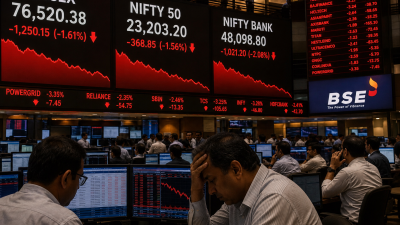
By 13 April, investor sentiment deteriorated further as fading ceasefire hopes pushed oil back above $100 per barrel. The Sensex crashed nearly 1,700 points intraday to 75,868 before recovering somewhat to close down 703 points at 76,847. The Nifty dropped to an intraday low below 23,600 before settling at 23,843, down 208 points.
The broader economic implications of sustained high oil prices weighed on sentiment. India, which imports more than 85 per cent of its crude oil requirements, faces a significant fiscal and inflationary challenge when Brent crude stays above $100. Analysts noted that every $10 per barrel increase in oil prices widens India’s current account deficit by approximately 0.3 per cent of GDP and adds 20 to 30 basis points to wholesale price inflation.
Markets remained closed on 14 April for Dr Ambedkar Jayanti, giving investors a brief respite before what many expected to be another turbulent trading week.
Foreign Funds Continue April Sell-Off
Foreign portfolio investors remained net sellers throughout early April, extending a trend that has persisted since the geopolitical crisis intensified. FPI outflows from Indian equities have accelerated as global fund managers shifted allocations toward safer assets, including US Treasuries and gold, amid the uncertainty surrounding the Gulf conflict.
The selling pressure from foreign funds was partially offset by domestic institutional investors, including mutual funds and insurance companies, that continued to deploy capital at lower levels. Systematic investment plan flows into equity mutual funds have remained robust, providing a floor of support even during the sharpest sell-offs.
Sectoral Performance and Outlook
Banking, IT and metals led gains during the relief rallies, while energy and automobile stocks bore the brunt of the sell-offs. The Nifty IT index was the top sectoral loser on several down days, reflecting concerns about the global economic impact of the conflict. Conversely, the Nifty Metal index gained on some sessions, benefiting from supply disruption premiums on certain commodities.
Defence stocks, including Garden Reach Shipbuilders, surged on strong earnings. GRSE shares jumped over 16 per cent after reporting its highest-ever annual turnover of Rs 6,400 crore for FY 2025-26, a 26 per cent increase year on year. Companies with strong domestic fundamentals outperformed those with greater global exposure.
Looking ahead, analysts expect volatility to remain elevated as markets react to every development in the Gulf conflict. The RBI’s monetary policy decisions, upcoming Q4 FY26 corporate earnings and the trajectory of oil prices will be the key triggers for direction. While some believe current valuations offer buying opportunities after the correction, others warn that the geopolitical overhang could persist, keeping a lid on any sustained recovery.
For investors, the message from April 2026 is clear: diversification, disciplined investing through SIPs, and a focus on quality stocks with strong fundamentals remain the best strategies in a world where geopolitical shocks can reshape market dynamics overnight.