GalaxEye Launches Mission Drishti: World’s First OptoSAR Satellite Built by Private Indian Company Reaches Orbit Aboard SpaceX Falcon 9

India’s Largest Privately Built Satellite Reaches Orbit in Historic Mission
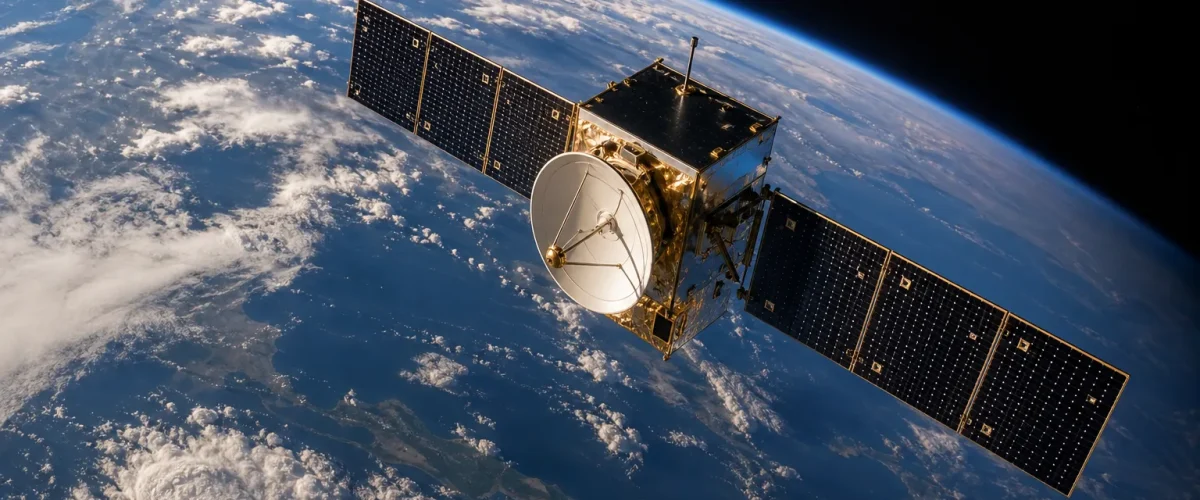
Bengaluru-based space startup GalaxEye Space achieved a major milestone on Sunday, 3 May 2026, when its Mission Drishti satellite successfully reached orbit aboard a SpaceX Falcon 9 rocket launched from Space Launch Complex 4E (SLC-4E) at Vandenberg Space Force Base in California. The launch, which took place at 12:30 PM IST, marks the debut of the world’s first OptoSAR (Optical + Synthetic Aperture Radar) imaging satellite and establishes GalaxEye as a pioneer in next-generation Earth observation technology.
At approximately 190 kilograms, Mission Drishti is the largest satellite ever built by a private Indian company, surpassing previous records held by other Indian space startups. The satellite has been placed in a 500 km sun-synchronous orbit and will deliver high-resolution, all-weather Earth imagery by combining multi-spectral imaging (MSI) and synthetic aperture radar (SAR) on a single platform — a capability that no other satellite in orbit currently offers.
What Makes OptoSAR Technology Revolutionary
Traditional Earth observation satellites typically carry either optical cameras, which capture high-resolution images but are blocked by clouds and darkness, or SAR sensors, which can see through clouds and operate at night but produce harder-to-interpret imagery. Mission Drishti’s OptoSAR payload combines both technologies on a single spacecraft, delivering what GalaxEye calls “intuitive, reliable, all-weather Earth imagery that is already analysis-ready.”
The satellite’s spatial resolution ranges from 1.2 to 3.6 metres, making it capable of distinguishing individual vehicles, building structures, and agricultural features from space. It operates across multiple spectral bands including X-Band radar, panchromatic, RGB, near-infrared (NIR), coastal blue, and red edge, enabling applications from precision agriculture monitoring to maritime surveillance and disaster response.
With a revisit frequency of four days, Mission Drishti can regularly monitor the same location, making it particularly valuable for tracking changes over time — whether it is crop health, urban expansion, deforestation, or natural disaster damage assessment. This represents a significant improvement over many existing commercial satellites that have revisit times of a week or more.
PM Modi Hails Launch as Testament to Youth Innovation
Prime Minister Narendra Modi publicly praised Mission Drishti as a “major milestone in India’s space journey”, saying the successful launch reflects the passion of the country’s youth for innovation and nation-building. The PM’s endorsement underscores the Indian government’s growing support for private space companies, which has accelerated since the establishment of the Indian National Space Promotion and Authorization Centre (IN-SPACe) in 2020.
GalaxEye Space, founded by a team of IIT Madras alumni, has been developing OptoSAR technology for several years. The company has raised significant venture funding and counts defence establishments, agricultural bodies, and global intelligence agencies among its potential customers. The successful orbital deployment of Mission Drishti validates years of research and development that began in university laboratories.
India’s private space sector has seen remarkable growth in recent years. Skyroot Aerospace’s Vikram-1 rocket is nearing its historic first launch from Sriharikota, while ISRO’s Gaganyaan programme continues to push boundaries in crewed spaceflight. Mission Drishti adds another chapter to India’s emergence as a global space technology powerhouse.
Technical Specifications and Capabilities
The Mission Drishti satellite carries several technical innovations that set it apart from competitors in the increasingly crowded Earth observation market.
Key Satellite Specifications
The spacecraft weighs approximately 190 kg and operates at an altitude of 500 ± 10 kilometres. Its primary payload, the OptoSAR sensor suite, is capable of simultaneously acquiring optical and radar data, which are then fused onboard using proprietary SyncFusion technology. This onboard processing capability means that the data downlinked to ground stations is already analysis-ready, reducing the time and computational resources required by end users.
The satellite’s X-Band SAR provides all-weather, day-and-night imaging capability, while the multi-spectral optical sensor captures data in six bands optimised for different applications. The coastal blue band is particularly useful for monitoring shallow water environments and detecting coral reef changes, while the red edge band is critical for vegetation health assessment.
Applications and Market Potential
GalaxEye has identified multiple market verticals for Mission Drishti’s data products. Defence and intelligence agencies can use the all-weather surveillance capability for border monitoring and maritime domain awareness. Agricultural organisations can leverage the multi-spectral data for crop health monitoring, yield prediction, and early detection of pest infestations. Urban planners can track unauthorised construction and infrastructure development, while insurance companies can use before-and-after disaster imagery for claims assessment.
The company’s data will also support India’s ambitious 55-satellite military constellation programme by providing complementary commercial imagery that can supplement government reconnaissance capabilities. The growing synergy between India’s public and private space sectors is expected to create a vibrant ecosystem that drives costs down and innovation up.
India’s Private Space Revolution Gains Momentum
Mission Drishti’s successful launch comes at a time when India’s private space sector is experiencing unprecedented growth. The Indian Space Association (ISpA) estimates that the domestic space economy could reach $44 billion by 2033, up from approximately $8 billion today. Private companies like GalaxEye, Skyroot, Agnikul Cosmos, Pixxel, and Dhruva Space are developing capabilities across the entire space value chain, from launch vehicles to satellite manufacturing to data analytics.
The choice of SpaceX’s Falcon 9 as the launch vehicle highlights the pragmatic approach of Indian startups, which are leveraging the most cost-effective and reliable launch options available globally while building indigenous satellite technology. As India’s own private launch vehicles become operational in the coming years, companies like GalaxEye will have additional options for reaching orbit, potentially at even lower costs.
For now, Mission Drishti’s successful orbital insertion represents a defining moment for India’s space ambitions — proof that Indian startups can compete at the highest levels of space technology and deliver world-first innovations that set new benchmarks for the global industry.

- India’s Startup Funding Crosses $7.2 Billion in H1 2026 - July 1, 2026
- After Ireland Shock, India’s T20I Side Faces Bigger Test - July 1, 2026
- Ireland Stun World Champions India 2-0 in Belfast, Sooryavanshi Debate Rages On - June 29, 2026