Pahalgam Terror Attack Anniversary: India Marks One Year Since 26 Civilians Killed as Operation Sindoor Reshapes Counter-Terror Doctrine

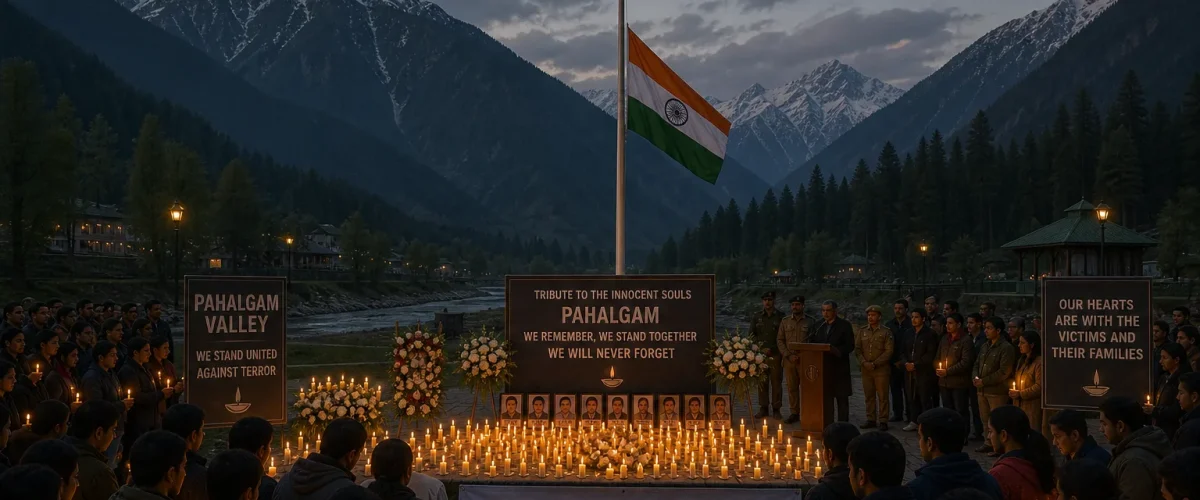
India marked the first anniversary of the Pahalgam terror attack on 22 April 2026, commemorating the 26 civilians, mostly Hindu tourists, who were killed when gunmen opened fire in the Baisaran Valley of Jammu and Kashmir on 22 April 2025. The anniversary was observed with memorial events, heightened security deployments, and strong statements from the Indian military and government, even as the attack’s aftermath continues to reshape India’s counter-terrorism strategy and its relationship with Pakistan.
The Attack That Changed Everything
On the afternoon of 22 April 2025, terrorists affiliated with The Resistance Front, believed to be linked to the Pakistan-based Lashkar-e-Taiba, emerged from forests near the popular tourist town of Pahalgam and opened fire on crowds of visitors with automatic weapons. The attack, which unfolded over approximately 20 minutes before security forces could respond, killed 26 people and injured dozens more.
The victims were predominantly tourists from across India who had come to Pahalgam, one of Kashmir’s most popular holiday destinations, during the spring season. Local Kashmiri guides were among those who helped rescue the injured and led tourists to safety during the chaos, earning widespread praise for their courage.
The Pahalgam attack was the deadliest terror incident in Jammu and Kashmir in over two decades, surpassing the 2019 Pulwama attack in terms of civilian casualties. It immediately triggered a massive security response, with Indian forces launching Operation Mahadev to track down the attackers. Within days, three terrorists were eliminated in the Dachigam National Park area near Srinagar.
Operation Sindoor: India’s Military Response
The Indian government’s response escalated dramatically on 07 May 2025, when the Indian military launched Operation Sindoor, a multi-domain precision strike targeting terrorism-related infrastructure of Pakistan-based militant groups Jaish-e-Mohammed and Lashkar-e-Taiba in Pakistan and Pakistan-administered Azad Kashmir.
India stated that the operation specifically targeted terror infrastructure, not Pakistani military or civilian facilities. The strikes, which used a combination of missile systems, drone swarms, and precision-guided munitions, represented the most significant Indian military action against Pakistan since the 2019 Balakot airstrikes and were far larger in scale and sophistication.
Pakistan disputed India’s characterisation, claiming that the strikes hit civilian areas, including mosques, and caused civilian casualties. The military escalation continued for several days, with cross-border shelling, aerial confrontations, and drone warfare along the Line of Control. India claimed that over 100 Pakistani military personnel were killed during the operation, though Pakistan disputed this figure. A ceasefire was eventually announced on 10 May 2025, bringing the acute military phase to a close.
One Year Later: Security Landscape Transformed
The anniversary finds India’s security apparatus fundamentally transformed. Defence spending has surged to its highest level as a percentage of GDP in two decades, with particular emphasis on missile systems, drone capabilities, and intelligence infrastructure along the western border. The Indian Army’s Northern Command has undergone a significant reorganisation, with enhanced surveillance systems and rapid response protocols deployed across the Kashmir Valley.
Tourism in Kashmir, which had been devastated immediately after the attack, has gradually recovered. Security measures at tourist destinations across the valley have been dramatically enhanced, with armed escorts, CCTV networks, and mobile check-posts becoming a permanent feature of the landscape. However, visitor numbers remain below pre-attack levels, and local businesses continue to feel the economic impact.
NIA Investigation and the Hunt for the Mastermind
The National Investigation Agency, which took over the investigation shortly after the attack, has filed a comprehensive chargesheet naming multiple individuals, including Pakistani handler Sajid Jatt, as key conspirators. India Today’s investigative team tracked Jatt to a safe house in Pakistan’s Punjab province, providing visual evidence of his location that was shared with international agencies.
India has sought Pakistan’s cooperation in apprehending the named suspects, but Islamabad has not responded to any formal requests. The diplomatic relationship between the two countries, which was suspended entirely after the attack, remains frozen. Trade, people-to-people contacts, and diplomatic communications have not been restored, making this the longest period of complete bilateral disconnect since the 1971 war.
Impact on India-Pakistan Relations
The Pahalgam attack and Operation Sindoor have fundamentally altered the India-Pakistan dynamic. India suspended the Indus Waters Treaty, a water-sharing agreement that had survived three previous wars and multiple crises. This decision, unprecedented in the treaty’s six-decade history, signalled India’s willingness to use economic and resource leverage alongside military capability.
International mediation efforts, including initiatives by the United States and the United Nations, have so far failed to restart dialogue between the two nuclear-armed neighbours. The anniversary has prompted renewed calls from global leaders for de-escalation, but neither side has shown willingness to make the first conciliatory move.
Recent security incidents, including the Punjab twin blasts claimed by the Khalistan Liberation Army, suggest that the threat landscape remains complex and multi-dimensional. Intelligence agencies believe that the degradation of LeT and JeM infrastructure through Operation Sindoor has reduced but not eliminated the risk of cross-border terrorism.
Domestic Political Dimensions
The Pahalgam attack and the government’s muscular response have had significant domestic political ramifications. The BJP leveraged the narrative of strong national security during the 2026 state assembly elections, contributing to its historic victories in West Bengal and other states. Prime Minister Modi’s social media profile picture was changed to the Operation Sindoor logo, accompanied by a statement that India would tolerate no compromise on national security.
Opposition parties have generally supported the military response while raising questions about intelligence failures that allowed the attack to occur in the first place. The families of the 26 victims have continued to demand accountability and the fulfilment of compensation promises made by both the central and state governments.
Remembering the Victims
Memorial events were held across India on the anniversary, with the most significant ceremony taking place in Pahalgam itself. A permanent memorial is being constructed at the Baisaran Valley site where the attack occurred, and the Jammu and Kashmir administration has announced scholarships for the children of the victims.
For the families who lost loved ones, the anniversary is a day of grief tempered by the knowledge that their loss prompted one of the most significant military and strategic recalibrations in India’s post-independence history. Whether that recalibration ultimately makes India safer remains a question that only time and continued vigilance can answer.
Read more on national security and politics at Social Trends and Culture & Lifestyle on Daily Tips.

- Indian Army Gets New Chief as General Dwivedi Hands Over Command Amid Push for Indigenous Defence Tech - July 1, 2026
- Ayodhya Ram Temple Donation Scandal Deepens as Trustees Resign and SIT Arrests Eight - June 29, 2026
- Bengal Seven Weeks On: Modi’s Historic Win and the Questions That Won’t Go Away - June 28, 2026