WHO Declares Ebola Outbreak Public Health Emergency — India Issues Travel Advisory for Congo and Uganda

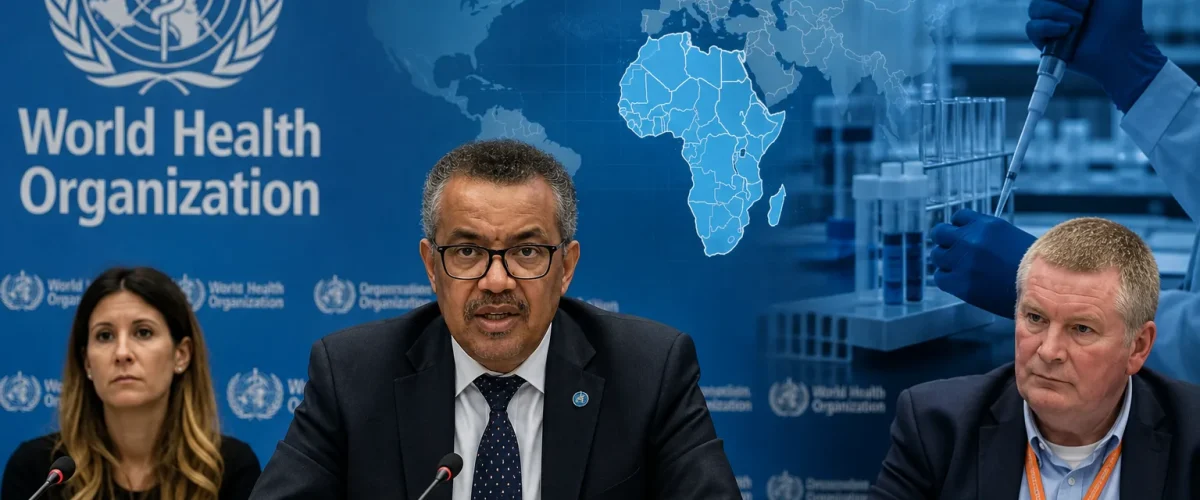
The World Health Organization (WHO) has officially declared the ongoing Ebola virus disease outbreak in the Democratic Republic of the Congo (DRC) and Uganda a Public Health Emergency of International Concern (PHEIC) — the highest level of alarm under international health regulations. In response, India has issued a strong advisory urging citizens to avoid all non-essential travel to Congo, Uganda, and South Sudan.
Scale of the Outbreak
The outbreak, caused by the Bundibugyo ebolavirus — a less studied but equally dangerous strain — has spread rapidly across northeastern DRC’s Ituri Province. As of the latest WHO situation report dated May 23, 2026, the numbers are alarming:
- 8 laboratory-confirmed cases in the DRC, spread across three health zones: Bunia, Rwampara, and Mongbwalu
- 246 suspected cases under investigation, with contact tracing revealing extensive community transmission
- 80 suspected deaths, though the actual toll is likely higher due to limited surveillance in remote areas
- 2 confirmed cases in Kampala, Uganda — both individuals had travelled from the DRC, confirming international spread
WHO Director-General Dr. Tedros Adhanom Ghebreyesus emphasised that while the situation constitutes a PHEIC, it does not yet meet the threshold for a “pandemic emergency” under the revised International Health Regulations (IHR 2005). However, he warned that the window for containment is narrowing.
Why This Outbreak Is Different
Unlike previous Ebola outbreaks in West Africa (2014–2016) and the DRC (2018–2020), which were caused by the Zaire ebolavirus, this outbreak involves the Bundibugyo strain, first identified in 2007. The Bundibugyo variant has a case fatality rate of around 25–34% — lower than the Zaire strain’s 50–90% — but it presents unique challenges:
- Limited diagnostic tools: Existing rapid diagnostic tests are optimised for the Zaire strain and may show reduced sensitivity for Bundibugyo, leading to potential underreporting.
- No approved vaccine: The rVSV-ZEBOV vaccine (Ervebo), which was instrumental in controlling the 2018–2020 outbreak, is designed specifically for the Zaire ebolavirus and offers no cross-protection against Bundibugyo.
- Conflict zones: Ituri Province has been plagued by armed conflict for years, with militia groups controlling several health zones. This makes it extremely difficult for WHO teams and Médecins Sans Frontières (MSF) to establish treatment centres and conduct contact tracing.
India’s Response and Travel Advisory
India’s Ministry of External Affairs (MEA) and the Ministry of Health and Family Welfare have jointly issued a comprehensive advisory:
- Indian citizens are strongly advised to avoid travel to the DRC, Uganda, and South Sudan unless absolutely necessary
- Those currently in affected regions should register with the Indian Embassy and follow local health authority guidelines
- Airports in Delhi, Mumbai, Chennai, Kolkata, Hyderabad, and Bengaluru have activated enhanced thermal screening for passengers arriving from or transiting through Central and East Africa
- The National Centre for Disease Control (NCDC) has been placed on high alert, with designated isolation facilities activated at AIIMS Delhi, Safdarjung Hospital, and state-level tertiary hospitals
Union Health Minister J.P. Nadda convened an emergency meeting of the Joint Monitoring Group (JMG) to review India’s preparedness. “India’s public health surveillance system has been significantly strengthened since the COVID-19 pandemic. We are well-prepared, but vigilance is critical,” he said in a statement.
Global Response and Vaccine Race
The PHEIC declaration unlocks additional WHO funding and allows for expedited regulatory processes. Several pharmaceutical companies, including Johnson & Johnson and Sabin Vaccine Institute, are reportedly working on adapting existing Ebola vaccine platforms to target the Bundibugyo strain, but clinical trials are still months away.
The Africa Centres for Disease Control and Prevention (Africa CDC) has also declared a Public Health Emergency of Continental Security (PHECS), mobilising rapid response teams from Nigeria, Ethiopia, and South Africa to support containment efforts in the DRC.
Lessons from Past Outbreaks
The 2014 West Africa Ebola crisis killed over 11,000 people and was widely criticised for WHO’s delayed response. The 2018 DRC outbreak, though eventually contained, exposed the challenges of operating in conflict zones. This time, the international community is under pressure to act faster and more decisively.
For India, which has deep trade and diaspora connections with East Africa, the situation demands both caution and compassion. The Indian government has pledged $5 million in humanitarian aid to WHO’s Ebola response fund, continuing its tradition of supporting global health emergencies.
Stay updated with the latest Science & Health coverage on Daily Tips.
Related Articles
- India Heatwave Intensifies as Delhi Hits 43.4 Degrees Celsius Making It Hottest May Day in Two Years and Power Demand Touches Record
- NASA Unveils Moon Base Strategy Under Artemis Program With Industry Partners as Agency Targets Sustained Lunar Presence by End of Decade
- WHO Declares Ebola Outbreak in Congo and Uganda a Global Health Emergency as Cases Cross 300 and Deaths Reach 88