Anthropic’s AI Model Discovers Over 10,000 Critical Bugs Across Open-Source Software Projects in Landmark Security Initiative

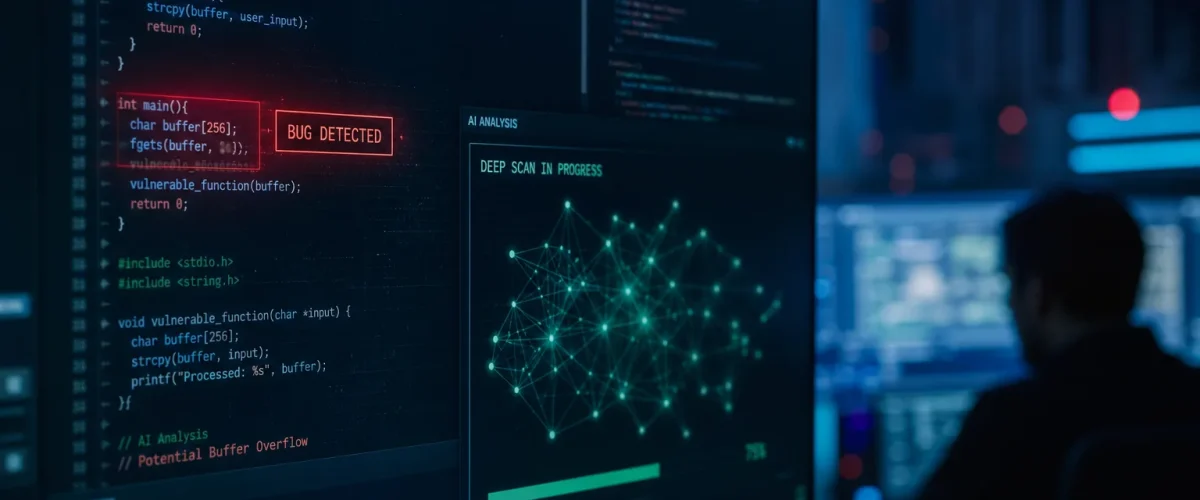
AI-Powered Code Review Uncovers Thousands of Previously Unknown Vulnerabilities
Anthropic, the San Francisco-based artificial intelligence startup, has revealed that its AI model has successfully identified over 10,000 critical bugs across major open-source software projects as part of a landmark security initiative that the company says demonstrates the potential of AI to fundamentally improve the safety and reliability of the software that underpins modern digital infrastructure. The findings were disclosed in a technical blog post published this week, accompanied by detailed data on the types, severity and distribution of the vulnerabilities discovered.
The initiative, which began in early 2026, involved approximately 50 carefully selected partners including major technology firms, research organisations and open-source foundations. These partners were given limited, controlled access to Anthropic’s advanced code analysis capabilities, which leverage the company’s latest AI model to perform systematic reviews of large codebases at a speed and scale that would be impossible for human reviewers working manually.
What Types of Bugs Were Found?
The 10,000-plus bugs identified span a wide range of categories and severity levels. Approximately 2,300 of the discovered vulnerabilities were classified as critical or high-severity, meaning they could potentially be exploited by malicious actors to execute arbitrary code, gain unauthorised access to systems or exfiltrate sensitive data. A further 4,500 were classified as medium-severity, encompassing issues such as memory leaks, race conditions and improper input validation that, while not immediately exploitable, could create security risks under specific conditions.
The remaining discoveries included logic errors, performance inefficiencies and code quality issues that, while not directly security-critical, contribute to the overall fragility and unpredictability of the affected software. Anthropic noted that many of these lower-severity findings had existed in the codebases for years or even decades, having evaded detection by traditional testing tools, manual code reviews and previous automated scanning efforts.
Among the most significant findings were several previously unknown vulnerabilities in widely used cryptographic libraries, networking protocols and database management systems. Anthropic declined to publicly identify the specific projects or vulnerabilities until responsible disclosure processes had been completed with the respective maintainers, a standard practice in the cybersecurity industry designed to prevent malicious exploitation of newly discovered flaws.
How Does AI Code Review Work?
The AI-powered code review process that Anthropic employed differs fundamentally from traditional static analysis tools and automated testing frameworks. Traditional tools operate by matching code patterns against known vulnerability signatures or by executing code through predefined test cases. While effective for catching common and well-documented bug types, these approaches are inherently limited to the patterns and scenarios that their creators have anticipated.
Anthropic’s approach leverages the reasoning capabilities of its large language model to understand code at a semantic level, analysing not just the syntactic structure of the code but the intent behind it and the logical implications of specific implementation choices. This enables the model to identify subtle bugs that arise from the interaction between different components, timing-dependent issues that only manifest under specific conditions, and logical errors where the code compiles and runs correctly but produces incorrect results in edge cases.
The model was also able to prioritise findings based on their potential real-world impact, distinguishing between theoretical vulnerabilities that exist only in extreme edge cases and practical security risks that could be exploited by attackers with reasonable effort. This prioritisation capability is crucial because it reduces the signal-to-noise ratio that has long plagued automated security scanning, where the volume of false positives can overwhelm development teams and lead to genuine vulnerabilities being overlooked.
Implications for Open-Source Security
The open-source software ecosystem, which underpins the vast majority of the world’s digital infrastructure including cloud computing platforms, mobile operating systems, web servers and financial systems, has long struggled with a fundamental security challenge. While the open availability of source code theoretically enables widespread review and scrutiny, in practice many critical open-source projects are maintained by small teams or individual volunteers who lack the resources for comprehensive security auditing.
High-profile incidents such as the Heartbleed vulnerability in OpenSSL and the Log4Shell exploit in Apache Log4j demonstrated the catastrophic consequences that can result when critical vulnerabilities lurk undetected in widely deployed open-source components. These incidents prompted increased investment in open-source security through initiatives like the Open Source Security Foundation, but the sheer volume of code, estimated at billions of lines across the global open-source ecosystem, means that human-led review efforts can only scratch the surface.
Anthropic’s initiative suggests that AI could play a transformative role in addressing this scale mismatch. The speed at which the model was able to analyse large codebases, typically completing in hours what would take human reviewers weeks or months, means that comprehensive security auditing of critical open-source infrastructure could become economically feasible for the first time.
Industry Reactions and Concerns
The announcement has generated mixed reactions across the technology industry. Security researchers and open-source advocates have broadly welcomed the initiative, with several prominent figures praising Anthropic for applying its AI capabilities to a problem of genuine public interest rather than solely pursuing commercial applications. The Linux Foundation issued a statement expressing interest in exploring formal collaboration with Anthropic on ongoing open-source security auditing.
However, some critics have raised concerns about the implications of AI-powered vulnerability discovery. If AI models can find bugs at this scale and speed, the same capabilities could theoretically be used by malicious actors to discover and exploit vulnerabilities before they can be patched. This dual-use dilemma is not new in cybersecurity but takes on added urgency when the discovery tool is an AI model that could potentially be replicated or adapted by adversaries.
Anthropic addressed these concerns by noting that its initiative was conducted under strict access controls, with partner organisations required to sign agreements governing the responsible disclosure and handling of any discovered vulnerabilities. The company also emphasised that the defensive applications of AI in cybersecurity significantly outweigh the offensive risks, because defenders can use AI to proactively find and fix vulnerabilities across entire codebases, while attackers typically only need to find a single exploitable flaw.
The initiative also raises questions about the future role of human software engineers in code review and quality assurance. While Anthropic was careful to frame its AI as a complement to human expertise rather than a replacement, the sheer volume of discoveries, over 10,000 bugs that had collectively evaded human detection for years, makes a compelling case that AI-assisted code review should become a standard practice in software development. As AI policy debates continue globally, initiatives like this demonstrate the technology’s potential for meaningful, positive impact on critical infrastructure security.
Related Articles
- Trump Scraps AI Executive Order After David Sacks Concerns
- NASA Unveils Moon Base Strategy Under Artemis Program
- India Tests Vayu Astra-1 Loitering Munition at Pokhran
- SpaceX Starship V3 Completes Key Test Objectives Before Exploding in Indian Ocea

- India’s Startup Funding Crosses $7.2 Billion in H1 2026 - July 1, 2026
- After Ireland Shock, India’s T20I Side Faces Bigger Test - July 1, 2026
- Ireland Stun World Champions India 2-0 in Belfast, Sooryavanshi Debate Rages On - June 29, 2026