Delhi Records Warmest May Night in 14 Years as Severe Heatwave Continues to Grip Northern and Central India

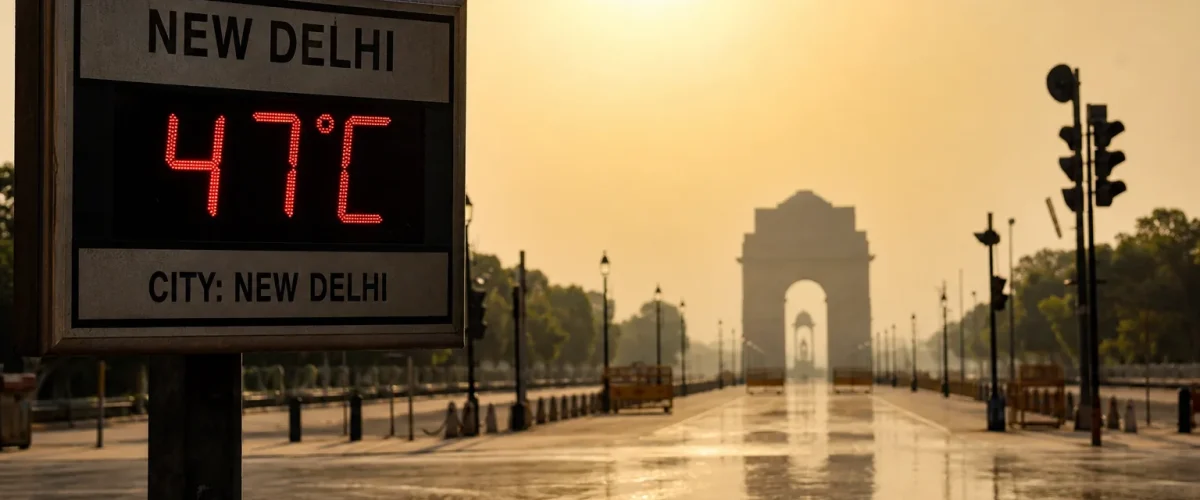
Delhi recorded its warmest May night in nearly 14 years on Sunday, as the India Meteorological Department (IMD) reported a minimum temperature of 32.4°C — a staggering 5.7 degrees above the seasonal normal. The reading, taken at the Safdarjung observatory early on May 25, underscores the severity of a heatwave that has been gripping northern and central India for over a week now, pushing temperatures to dangerous levels and straining the country’s power infrastructure to its limits.
The situation shows no signs of abating. IMD has warned that intense heat conditions are likely to continue for at least another four to five days across a vast swathe of the country, including Delhi, Rajasthan, Punjab, Haryana, Uttar Pradesh, Madhya Pradesh, Vidarbha, Chhattisgarh, Bihar, and Telangana. Maximum temperatures have been frequently exceeding 45°C in many areas, with Banda in Uttar Pradesh and Brahmpuri in Maharashtra’s Vidarbha region recording the country’s highest maximum temperature at a scorching 47.6°C on Monday.
Night-Time Heat: A Growing Health Concern
While daytime temperatures above 45°C grab headlines, experts say it is the persistently high night-time temperatures that pose the greatest health risk. When minimum temperatures remain above 30°C, the human body gets little opportunity to cool down during sleep, leading to heat stress, dehydration, and in extreme cases, heat stroke and organ failure.
“The minimum temperature not dropping below 32 degrees is extremely worrying from a public health perspective,” said Dr. Poornima Prabhakaran, Director of the Centre for Environmental Health at the Public Health Foundation of India. “The body needs a recovery period at night. When that doesn’t happen, the cumulative heat stress can be fatal, particularly for the elderly, outdoor workers, and those without access to cooling.”
Delhi’s previous record for the warmest May night was 33.2°C, recorded on May 22, 2012. While Sunday’s reading didn’t break that absolute record, it is the highest nighttime temperature recorded in the city since then, and meteorologists warn that the current conditions could push readings even higher in the coming days.
Daytime Extremes Across the Country
The daytime situation is equally alarming. Delhi’s Safdarjung weather station recorded a maximum of 43.6°C on May 24 — making it the hottest May day in the city in two years. But Delhi’s temperatures pale in comparison to what other parts of the country have been experiencing:
- Uttar Pradesh: Banda recorded 47.6°C, with several other cities including Jhansi (47.2°C), Prayagraj (46.8°C), and Varanasi (46.4°C) experiencing extreme heat.
- Maharashtra: Brahmpuri in Vidarbha matched Banda at 47.6°C, while Akola, Chandrapur, and Nagpur all crossed 46°C.
- Rajasthan: Churu (47.1°C), Ganganagar (46.9°C), and Bikaner (46.5°C) continued to bake under the desert sun.
- Madhya Pradesh: Khajuraho (46.3°C), Nowgong (46.1°C), and Gwalior (45.8°C) reported temperatures well above normal.
Power Grid Under Unprecedented Strain
The relentless heat has driven India’s power consumption to record levels. Peak electricity demand has repeatedly broken records throughout May, driven not only by daytime cooling needs but increasingly by nighttime air conditioning usage as temperatures refuse to drop. India set a new all-time peak power demand record earlier this month, and grid operators have warned of potential shortfalls if conditions persist.
“Higher heat means increased power consumption, and India has seen demand driven to repeated records, not only during the day but at night, resulting in occasional shortfalls,” noted a report from Business Standard. The situation has been exacerbated by the Iran conflict’s impact on global energy prices, which has raised the cost of imported coal and natural gas used in power generation.
Several states have reported power cuts ranging from two to six hours daily, with rural areas bearing the brunt of load shedding. In Uttar Pradesh, where temperatures have been among the highest in the country, farmer unions have demanded uninterrupted power supply for irrigation, warning that the heat could devastate the kharif sowing season if crops don’t receive adequate water.
El Niño and Climate Change: The Underlying Drivers
Climate scientists point to a combination of El Niño conditions and long-term climate change as the primary drivers behind this year’s exceptional heat. While the current El Niño event is weakening, its residual warming effect on sea surface temperatures continues to amplify heat extremes over the Indian subcontinent.
“What we’re seeing is consistent with climate projections for South Asia,” said Dr. Roxy Mathew Koll, a senior scientist at the Indian Institute of Tropical Meteorology. “Heatwaves are becoming more frequent, more intense, and longer-lasting. The combination of El Niño and background warming from greenhouse gas emissions is creating conditions that would have been considered extraordinary just a decade ago.”
A recent study published in Nature Climate Change found that heatwave events in India have increased in frequency by 30% over the past two decades, with the average duration of each event also rising. The study warned that without significant greenhouse gas emission reductions, such extreme heat events could become the norm rather than the exception by mid-century.
Impact on Agriculture and Livelihoods
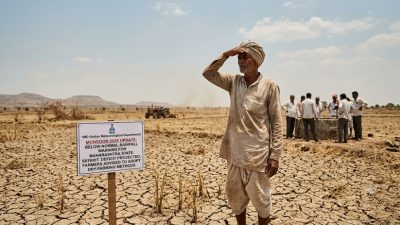
The heatwave’s impact extends far beyond personal discomfort. Maharashtra’s famed Alphonso mango trade has been devastated, with officials reporting that hotter weather has ruined this year’s crop of the variety known as the “King of Mangoes.” The combined effect of heat, El Niño, and the disruption caused by the Iran war has battered the mango trade across the state.
Wheat procurement in Punjab and Haryana has also been affected, with early maturation due to heat reducing grain quality and yields. Animal husbandry experts have warned of increased mortality among livestock, particularly in Rajasthan and Gujarat, where water sources are rapidly drying up.
Government Response and Advisories
The National Disaster Management Authority (NDMA) has issued heat action plans across affected states, urging citizens to stay indoors between 11 AM and 4 PM, maintain hydration, and avoid strenuous outdoor activity. Several state governments have modified school timings, with classes beginning and ending earlier to avoid peak heat hours.
Delhi Chief Minister has announced the opening of 500 additional “cooling shelters” across the city, equipped with water coolers and fans, to provide relief for the homeless and outdoor workers. Similar measures have been announced in Rajasthan, Uttar Pradesh, and Madhya Pradesh.
As India braces for several more days of punishing heat, the current crisis serves as a stark reminder of the country’s vulnerability to climate extremes — and the urgent need for long-term adaptation strategies that go beyond short-term crisis management.
Related Articles
- SpaceX Starship V3 Completes Key Test Objectives Before Exploding in Indian Ocean — Mock Starlink Satellites Deployed Successfully
- WHO Declares Ebola Outbreak Public Health Emergency — India Issues Travel Advisory for Congo and Uganda
- India Heatwave Intensifies as Delhi Hits 43.4 Degrees Celsius Making It Hottest May Day in Two Years and Power Demand Touches Record
Explore more: Science & Space