SpaceX Files for Largest IPO in History at 1.75 Trillion Dollar Valuation as Starlink Revenue Soars to 11.4 Billion

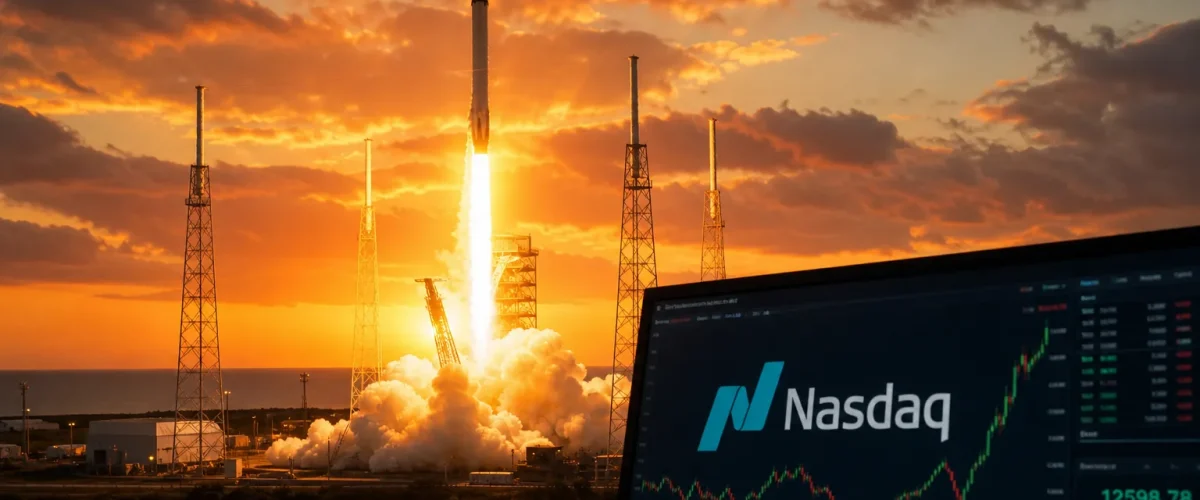
SpaceX, the aerospace company founded by Elon Musk, has filed what is expected to become the largest initial public offering in history. The company submitted its S-1 prospectus to the Securities and Exchange Commission on 22 May 2026, revealing for the first time that Starlink — not its rockets — is the financial engine keeping SpaceX viable.
The 250-page filing showed $18.7 billion in total revenue for 2025, with losses from operations reaching $2.6 billion. SpaceX plans to list on NASDAQ under the ticker SPCX, with the roadshow beginning around 4 June and pricing expected on 11 June. Trading could start as early as 12 June 2026.
At a targeted valuation of $1.75 trillion, the offering would raise approximately $75 billion — nearly three times the $26 billion raised by Saudi Aramco in 2019, which currently holds the record for the largest IPO globally.
Starlink Is Paying the Bills, Not Rockets
The prospectus made one thing unmistakably clear: SpaceX’s connectivity business, driven almost entirely by Starlink, generated $11.4 billion in revenue last year. That represents a 50 per cent year-over-year increase and accounts for roughly 60 per cent of total company revenue.
Starlink had 10.3 million subscribers across 164 countries and territories as of 31 March 2026, served by approximately 9,600 satellites in low-Earth orbit. The subscriber base has grown from 2.3 million at the end of 2023 to 4.4 million at the end of 2024, and then more than doubled through 2025.
What the numbers also reveal, however, is a trade-off that seasoned market analysts will recognise. Monthly average revenue per user dropped from $99 in 2023 to around $72 in 2025, a clear sign that SpaceX is sacrificing per-unit margins for subscriber volume. The question investors will have to answer is whether this growth trajectory can sustain premium valuations once the easy-to-reach markets are saturated.
When SpaceX first filed its landmark S-1 prospectus, the headline revenue figures grabbed attention. But the fine print tells a more nuanced story about capital intensity and long-term profitability.
Dual-Class Shares Keep Musk in Control
The filing confirmed a dual-class share structure that will give Musk, as both CEO and chairman, full voting control over SpaceX even after going public. This is not unusual in tech IPOs — Google, Meta and Snap all went public with similar structures — but it does mean public shareholders will have limited influence over strategic decisions.
For institutional investors, this is a calculated trade-off. They gain exposure to one of the most ambitious technology companies in the world, but they do so without meaningful governance rights. In practice, this means Musk’s decisions on capital allocation — whether that is Mars colonisation, Starshield military contracts, or Starlink expansion — will proceed with or without shareholder consensus.
What India’s Market Is Watching
The SpaceX IPO carries particular significance for India’s satellite internet market. Starlink has been seeking regulatory clearance from the Indian government for over two years, and the entry of a publicly listed Starlink would intensify the satellite internet race in India against Jio Space Fiber and Airtel OneWeb.
Indian institutional investors, including sovereign wealth-adjacent funds and large mutual fund houses, are expected to participate in the IPO either directly or through global allocation. The sheer size of the offering — $75 billion — will likely attract capital from markets far beyond the United States.
The Risk Factors Worth Reading
The S-1 disclosed several risk factors that go beyond the usual boilerplate. SpaceX’s rocket launch business, while iconic, actually operates at a loss. The company spent heavily on developing Starship, its next-generation vehicle, and has yet to complete a fully successful orbital mission with payload delivery. The recent Starship V3 test flight that ended in an explosion underlined the technical risks involved.
SpaceX also faces regulatory challenges. The Federal Aviation Administration has ramped up scrutiny of launch operations, and environmental groups have challenged launch site expansions in Texas. Internationally, Starlink’s operations require country-by-country regulatory approval, and several nations — including India — have not yet granted full commercial licences.
The company’s dependence on government contracts is another factor. SpaceX holds billions in contracts with NASA, the Department of Defense and other agencies. A shift in political priorities or budget cuts could materially affect revenue streams.
How the IPO Could Reshape Space Investment
If the SpaceX IPO prices at $1.75 trillion or higher, it would instantly become one of the most valuable companies on any public exchange. For context, that valuation places it in the same league as Apple, Microsoft and Nvidia — companies with decades of profitability behind them.
The broader impact extends to the space economy. A successful SpaceX listing would validate the commercial space model and could trigger a wave of investor interest in adjacent companies — from satellite manufacturers and launch service providers to space-focused startups developing everything from orbital logistics to debris removal.
SpaceX’s roadshow begins in the first week of June. The pricing and first day of trading will be closely watched by markets worldwide. Whether the company can justify its premium valuation against mounting operational losses will be the central question for every investor reviewing the prospectus.