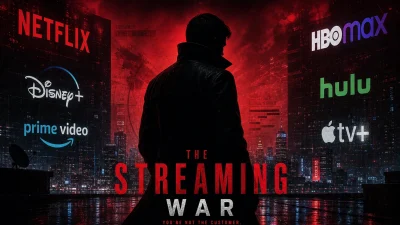
The Great Indian Streaming War: How JioCinema, Netflix, and Amazon Are Battling for Dominance in 2026


The Indian streaming market has become the most fiercely contested digital battleground in Asia, with global giants and domestic powerhouses locked in an intense war for subscribers, content supremacy, and long-term market dominance. As 2026 unfolds, the competitive dynamics have shifted dramatically from the relatively genteel early days of Indian OTT, when platforms could grow simply by offering an alternative to traditional television. Today, victory demands differentiated content, aggressive pricing, technological innovation, and, increasingly, the ability to build ecosystems that extend well beyond entertainment.
JioHotstar’s Disruptive Ascent
No discussion of India’s streaming landscape is complete without acknowledging JioHotstar’s transformative impact. Backed by the formidable resources of Reliance Industries, JioHotstar has deployed a multi-pronged strategy that has fundamentally altered market economics. The platform’s acquisition of premium sports rights—including Indian Premier League cricket, English Premier League football, and major international tennis tournaments—has given it a subscriber acquisition engine that no rival can easily replicate.
JioHotstar’s pricing strategy has been equally disruptive. By offering a premium tier at ₹89 per month and maintaining a robust ad-supported free tier, the platform has positioned itself as the most accessible premium streaming service in India. This strategy has attracted an estimated 180 million monthly active users, making it the country’s most-used streaming platform by a considerable margin. The platform’s integration with Jio’s telecommunications infrastructure—including zero-data-cost streaming for Jio mobile subscribers on select plans—has created an ecosystem advantage that pure-play streaming competitors struggle to match.
The platform has also invested heavily in original programming, with a particular focus on mass-entertainment content that appeals to audiences beyond the English-speaking metropolitan demographic. Recent original releases have included a family drama set in small-town Gujarat, a cricket-themed reality show, and a documentary series exploring India’s street food traditions across 15 states. The breadth of this content strategy reflects JioHotstar’s ambition to be India’s default entertainment platform rather than a niche offering for urban elites.
Netflix India’s Quality-First Counter-Strategy
Facing the pressure of JioHotstar’s scale and Amazon’s ecosystem, Netflix India has doubled down on a quality-first content strategy that emphasises prestige programming and critical acclaim. The platform’s Indian original slate for 2026 features several high-profile projects developed with acclaimed filmmakers and showrunners, positioning Netflix as the destination for India’s most ambitious and innovative storytelling.
This approach has yielded measurable results. Netflix India’s content has consistently featured in the platform’s global Top 10 non-English rankings, generating international visibility that reinforces the platform’s premium brand positioning. The success of Indian originals in global markets has also enabled Netflix to justify higher per-title budgets, creating a quality flywheel that attracts top creative talent. As covered in analysis of IPL 2026 Season Preview: Key Transfers, Injuries, and Franchise Strategies, this creative migration between theatrical and streaming formats has enriched both mediums.
Netflix’s subscriber numbers in India, while smaller than JioHotstar’s, have shown steady growth, with the platform reportedly crossing 15 million paid subscribers in early 2026. The introduction of a ₹149 mobile-only plan and partnerships with telecom operators have helped Netflix penetrate beyond its traditional metro-centric base, though the platform’s ARPU remains the highest among major Indian streaming services.
Amazon Prime Video’s Ecosystem Play
Amazon Prime Video continues to leverage its unique position as part of the broader Amazon ecosystem. The bundling of Prime Video with Amazon’s e-commerce Prime membership creates a compelling value proposition that few competitors can replicate. For many Indian consumers, the streaming service is effectively a free add-on to their shopping subscription, lowering the barrier to adoption while generating consistent engagement.
Content-wise, Amazon has pursued a balanced strategy, investing in both mass-market entertainers and critically acclaimed originals. The platform’s Indian slate has included successful franchises across multiple languages, with particular strength in Hindi, Tamil, and Telugu programming. Amazon’s investment in live sports—including certain cricket properties and kabaddi—has complemented its entertainment offerings, though the platform’s sports portfolio remains smaller than JioHotstar’s.
Amazon’s technological capabilities have also been a differentiator. Advanced recommendation algorithms, superior video compression for low-bandwidth environments, and early adoption of features like spatial audio and HDR10+ have positioned Prime Video as a technically superior platform. The company’s AWS infrastructure provides cost advantages in content delivery that are difficult for competitors to match.
The Mid-Tier Battle: Disney+ Hotstar, SonyLIV, and Zee5
Below the top three, a fierce battle rages among mid-tier platforms that are carving out distinctive identities. Disney+ Hotstar, which lost its IPL cricket rights to JioHotstar, has refocused on entertainment content, leveraging the Disney and Star Studios libraries alongside a growing slate of originals. The platform’s strength in South Indian content and its established brand recognition in smaller cities have helped it maintain a substantial user base.
SonyLIV has differentiated itself through a focus on international content, sports, and reality programming, while Zee5 has invested heavily in regional-language content across multiple Indian languages. The merger dynamics between Sony and Zee—following the collapse of their proposed union—have created competitive tensions that have actually benefited consumers through increased content investment from both entities.
Content Spending and the Profitability Question
The cumulative content spending by streaming platforms in India is estimated to exceed ₹15,000 crore in 2026, a figure that underscores both the market’s strategic importance and the financial pressure facing platforms. Despite massive subscriber growth, profitability remains elusive for most players, with only JioHotstar—benefiting from Reliance’s cross-subsidisation strategy—and Amazon—absorbing streaming costs within its broader business—appearing financially sustainable in the medium term.
Netflix India is reportedly approaching break-even, having benefited from subscriber growth and the global revenue contribution of its Indian originals. However, the platform’s path to profitability depends on continued subscriber growth and the maintenance of its premium pricing position—both of which face competitive pressure. Those following AI Summit 2026: India Showcases Ambitions but Structural Gaps Exposed will recognise the parallel with other digital sectors where scale has proven easier to achieve than profitability.
Technology and Innovation Frontiers
The competitive intensity has spurred technological innovation across the sector. Platforms are investing in AI-driven personalisation, interactive content formats, and enhanced accessibility features including improved subtitling, audio descriptions, and sign-language integration. Several platforms have introduced AI-powered dubbing that enables real-time language switching, potentially unlocking cross-linguistic audiences for regional content.
The rollout of 5G networks across India has created new possibilities for mobile streaming quality, enabling higher-resolution video and more immersive audio experiences on smartphones—still the dominant device for streaming consumption in India. Platforms are developing 5G-optimised features including augmented reality companion experiences and live interactive elements that blur the boundary between passive viewing and active participation.
The Road Ahead
India’s streaming war is far from decided. The market’s sheer scale—with a potential addressable audience exceeding 800 million internet users—ensures that multiple platforms can coexist, but the current level of investment is likely unsustainable without consolidation or significant revenue growth. Industry observers anticipate that 2026-2027 will be a decisive period, with potential mergers, strategic pivots, and possible market exits reshaping the competitive landscape.
For consumers, however, this competition has been unambiguously positive. The quality, quantity, and diversity of streaming content available to Indian audiences in 2026 are unprecedented, offering viewing experiences that span genres, languages, and production scales. Whether this golden age of Indian streaming content can endure beyond the current phase of aggressive investment remains the sector’s defining question. Those interested in how India’s broader technology ecosystem is evolving may also find relevant perspectives in coverage of March 2026 in Bollywood: Anil Kapoor Leads Bold Storytelling.
Editor’s Note (3 April 2026): This article has been updated to reflect the rebranding of JioCinema to JioHotstar following the merger with Disney+ Hotstar. Market share and subscriber figures cited are industry estimates.

- India’s Startup Funding Crosses $7.2 Billion in H1 2026 - July 1, 2026
- After Ireland Shock, India’s T20I Side Faces Bigger Test - July 1, 2026
- Ireland Stun World Champions India 2-0 in Belfast, Sooryavanshi Debate Rages On - June 29, 2026