India Issues Letter of Request to France for 114 Rafale Fighter Jets in Mega Defence Deal Worth Rs 3.25 Lakh Crore

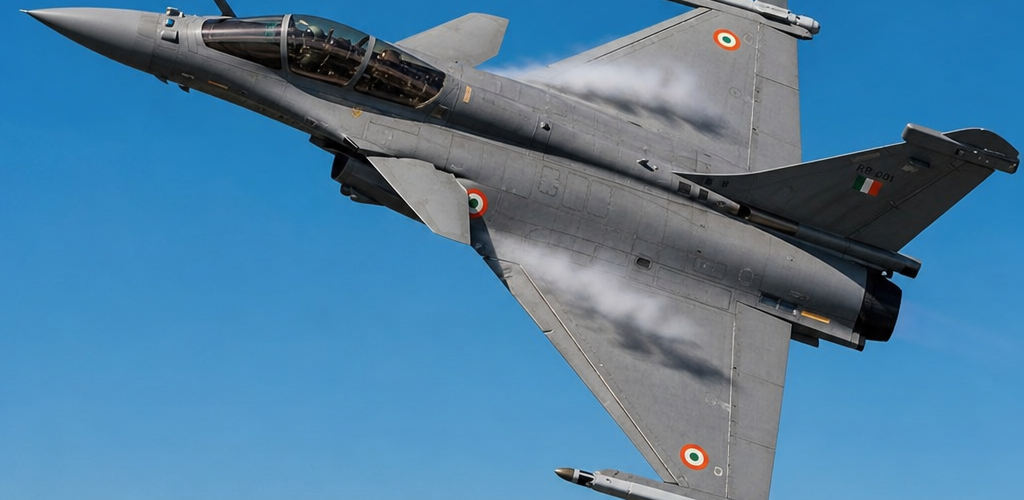
India has formally issued the Letter of Request to France to initiate the procurement of 114 Rafale multirole fighter aircraft for the Indian Air Force, marking a decisive step forward in what is expected to become one of the largest defence acquisitions in Indian military history. The deal, estimated to be worth approximately Rs 3.25 lakh crore (around $38 billion), will significantly boost the IAF’s depleting fighter squadron strength and deepen the strategic defence partnership between New Delhi and Paris.
What the Letter of Request Means
The Letter of Request is a formal government-to-government communication that initiates defence procurement under the Intergovernmental Agreement framework. With this step completed, France is expected to respond with detailed information regarding pricing, availability, delivery timelines, and logistical support arrangements. Following the French response, India will issue a formal Request for Proposal, after which detailed price negotiations between the two sides will begin.
The Defence Acquisition Council, chaired by Defence Minister Rajnath Singh, had already cleared the procurement proposal for the IAF, providing the administrative clearance needed to move the process forward. The final contract will require approval from the Cabinet Committee on Security before it can be signed, a process that defence officials say could take several months of intensive negotiations.
Make in India Component — 90 Jets to Be Built Domestically
A distinguishing feature of this procurement is the significant domestic manufacturing component. According to sources familiar with the negotiations, nearly 90 of the 114 fighter jets are planned to be manufactured in India through a partnership between French aerospace company Dassault Aviation and an Indian strategic partner. The remaining aircraft are expected to be delivered in fly-away condition directly from Dassault’s production facility in Mérignac, France.
This arrangement represents a substantial scaling up of the Make in India programme in the defence sector. The domestic production of 90 Rafale jets would involve setting up a dedicated production line in India, transferring critical aerospace technologies, and developing a supply chain of Indian component manufacturers — potentially creating thousands of high-skilled jobs in the process.
Industry experts note that the technology transfer component will be particularly significant, as it could enable India to build indigenous capabilities in areas such as advanced avionics, radar systems, and composite material manufacturing for military aircraft. This aligns with the government’s broader vision of making India a net defence exporter rather than one of the world’s largest arms importers.
Why 114 Rafale Jets? The IAF’s Squadron Crisis
The Indian Air Force has been grappling with a squadron strength crisis for over a decade. The IAF currently operates around 30 fighter squadrons against a sanctioned strength of 42 squadrons — a gap that military planners consider dangerously inadequate given India’s two-front security challenge involving both China and Pakistan. The retirement of ageing MiG-21 and MiG-27 fleets has further reduced operational capacity, making the acquisition of new multirole fighters a matter of urgent national security.
The Rafale, which India first inducted in 2020 under a separate 36-aircraft deal, has proven its capabilities in IAF service. Stationed at Ambala and Hashimara air bases, the existing Rafale fleet has enhanced India’s air combat capabilities with features including the Meteor beyond-visual-range air-to-air missile, the SCALP cruise missile, and advanced electronic warfare systems. The proposed 114-jet deal would effectively create a single-type fleet of 150 Rafale aircraft, simplifying maintenance logistics and achieving significant economies of scale.
Geopolitical Context and Strategic Implications
The timing of this acquisition is significant against the backdrop of an increasingly volatile global security environment. The ongoing tensions in the Middle East, China’s rapid military modernisation including the development of sixth-generation stealth fighters, and Pakistan’s acquisition of Chinese J-10CE aircraft have all underscored the urgency of modernising the IAF.
France has emerged as one of India’s most reliable defence partners, with the bilateral relationship extending beyond the Rafale to include submarine production under Project 75I, Scorpène submarine technology transfer, and cooperation in space and nuclear energy. The Rafale deal is expected to further cement this partnership and serve as a foundation for future defence technology cooperation, including potential joint development of next-generation combat systems.
Industry and Economic Impact
Defence analysts estimate that the domestic production component could generate over $10 billion in economic activity within India’s aerospace sector over the life of the programme. Indian companies across the supply chain — from large defence conglomerates like Hindustan Aeronautics Limited, Bharat Electronics, and private players like Tata Advanced Systems, to hundreds of small and medium enterprises — stand to benefit from the technology transfer and production-sharing arrangements.
The deal also sends a strong signal to international defence manufacturers about India’s commitment to indigenisation. As the world’s largest defence importer transitions toward a producer and exporter model, partnerships like the Rafale deal serve as reference cases for how large-scale technology transfer can work in practice.
The Defence Ministry is expected to push for an accelerated timeline for the procurement, given the IAF’s urgent operational requirements. However, the complexity of negotiating offset agreements, technology transfer protocols, and pricing for such a large order means the process could extend well into 2027 before a final contract is signed.