India’s Premium Housing Market in 2026: How Capital Discipline and Budget Reforms Are Reshaping Luxury Real Estate

India’s premium housing market is undergoing a fundamental transformation in 2026, driven less by speculative sentiment and more by capital discipline, institutional investment, and targeted policy interventions in the Union Budget 2026-27. The convergence of these forces is reshaping the landscape of luxury residential real estate across India’s major metropolitan areas, creating new patterns of demand, supply, and value creation that mark a decisive departure from the sector’s traditional boom-bust cycles.
The premium and luxury housing segment — broadly defined as properties priced above ₹2 crore in metro cities and above ₹1 crore in non-metro markets — has emerged as the standout performer in India’s residential real estate market over the past 18 months. Sales volumes in this segment grew approximately 32 per cent year-on-year in calendar year 2025, significantly outpacing the 12-15 per cent growth in the overall residential market.
Budget 2026-27: Policy Catalysts for Premium Housing
The Union Budget 2026-27 introduced several measures that have been particularly impactful for the premium housing segment. The proposed Infrastructure Risk Guarantee Fund, designed to ease financing during the construction phase for large-scale residential projects, addresses one of the sector’s most persistent bottlenecks — the availability and cost of construction finance for premium developments that have longer gestation periods and higher capital requirements.
Equally significant is the budget’s initiative to fast-track the monetisation of underutilised Central Public Sector Enterprise (CPSE) land. With vast tracts of government-owned land in prime urban locations across Delhi, Mumbai, Kolkata, and Chennai lying dormant, the release of these parcels for mixed-use development has the potential to augment premium housing supply in markets where land scarcity has been a primary driver of price escalation.
The budget also maintained the income tax deduction for home loan interest at ₹2 lakh under Section 24(b) and continued incentives for first-time homebuyers, measures that, while not exclusive to the premium segment, contribute to the overall positive sentiment in the housing market. The government’s commitment to fiscal discipline and its demonstrated willingness to invest in urban infrastructure has created a macroeconomic environment conducive to long-term real estate investment.
Mumbai: The Epicentre of Luxury Demand
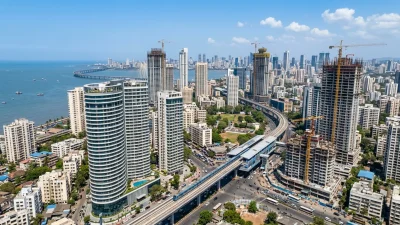
Mumbai continues to dominate India’s luxury housing landscape, with the city accounting for approximately 45 per cent of premium residential sales nationwide. The south Mumbai and Bandra-Kurla Complex corridors remain the most sought-after micro-markets, with prices for ultra-luxury apartments regularly exceeding ₹75,000-1,00,000 per square foot — placing them in the same bracket as prime properties in Singapore, Dubai, and parts of London.
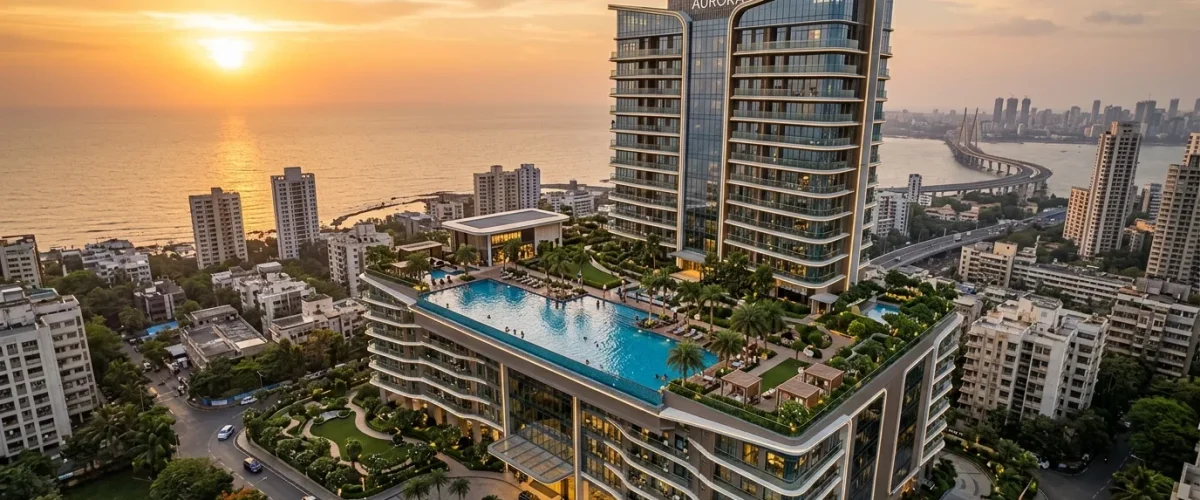
The demand drivers in Mumbai’s premium market are multi-faceted. A new generation of wealthy entrepreneurs, particularly from the technology and financial services sectors, is driving demand for larger, amenity-rich apartments that offer lifestyle features such as private pools, smart home technology, and concierge services. The post-pandemic shift towards work-from-home and hybrid work models has also increased the premium placed on spacious residences with dedicated home offices and wellness spaces.
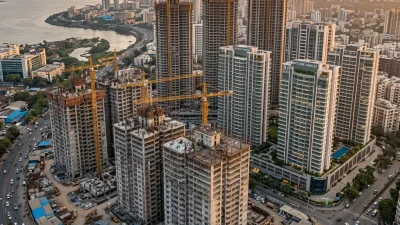
Several marquee projects launched in Mumbai during the past year have witnessed remarkable absorption rates. Developers report that premium units priced above ₹10 crore are selling within weeks of launch, often through private previews to existing customers and high-net-worth investor networks. This demand-supply imbalance at the top end of the market has enabled developers to maintain pricing discipline without resorting to the aggressive discounting that characterised earlier market downturns.
Delhi-NCR and Bangalore: Emerging Premium Markets
While Mumbai remains the undisputed leader, Delhi-NCR and Bangalore are rapidly emerging as significant premium housing markets in their own right. In Delhi-NCR, the transformation of Gurugram’s Golf Course Extension Road and Dwarka Expressway corridors into premium residential destinations has attracted both end-users and investors seeking alternatives to the congested and supply-constrained markets of south Delhi and central Gurugram.
Bangalore’s premium market is being driven by the city’s technology sector affluence and the emergence of north Bangalore (particularly the areas around the international airport) and Whitefield as premium residential corridors. The city’s relatively younger buyer demographic, higher proportion of dual-income households, and strong employment market have created sustained demand for premium apartments priced between ₹2-5 crore.
Hyderabad deserves special mention as a market where premium housing has grown exponentially over the past three years, driven by the city’s burgeoning technology ecosystem, relatively lower price points compared to Mumbai and Bangalore, and the development of world-class infrastructure in areas such as Financial District and Kokapet. Premium apartment launches in Hyderabad have delivered some of the highest returns on investment among India’s top cities.
Institutional Capital: A New Dynamic
One of the most significant structural changes in India’s premium housing market is the growing role of institutional capital. Real estate investment by private equity funds, sovereign wealth funds, and family offices has shifted decisively towards premium residential projects, reflecting confidence in the segment’s demand resilience and return potential.
Platform deals — where institutional investors partner with established developers to fund entire project portfolios — have become the preferred mode of capital deployment. These partnerships bring not only capital but also governance standards, project management discipline, and ESG considerations that elevate the quality of development and buyer confidence.
The emergence of small and medium Real Estate Investment Trusts (SM REITs) and fractional ownership platforms has also opened up premium real estate as an investment class for a broader pool of investors. While regulatory frameworks for these emerging models are still evolving, they represent a democratisation of access to premium real estate returns that was previously restricted to ultra-high-net-worth individuals.
Design and Sustainability: The New Differentiators
Premium housing in India is increasingly defined not just by size and location but by design excellence and sustainability credentials. Leading developers are collaborating with internationally renowned architects and interior designers to create residences that meet global luxury standards while reflecting Indian cultural sensibilities.
Green building certifications, energy-efficient systems, water recycling infrastructure, and the use of sustainable materials have moved from nice-to-have features to essential requirements in the premium segment. Buyers in this segment are increasingly educated about environmental impact and willing to pay a premium for developments that demonstrate genuine commitment to sustainability.
Smart home technology integration has become another key differentiator. From AI-powered climate control and security systems to voice-activated lighting and appliance management, technology is being woven into the fabric of premium residential design — a trend that mirrors India’s broader technological advancement as highlighted at the AI Summit 2026.
Outlook: Cautious Optimism with Quality Focus
The outlook for India’s premium housing market in 2026 and beyond is one of cautious optimism. Strong demand fundamentals — driven by wealth creation in technology, financial services, and entrepreneurship, combined with demographic tailwinds and urbanisation — provide a solid foundation for continued growth.
However, the market is not without risks. The dependence on favourable interest rates means that any unexpected shift in the RBI’s monetary policy stance could impact demand at the margin. The ongoing challenges with RERA enforcement, particularly regarding project delivery timelines and quality standards, remain a concern even in the premium segment. And the global economic uncertainty — including its implications for India’s technology sector employment, which drives a significant share of premium housing demand — warrants monitoring.
As Indian equity markets continue to create wealth through their sustained rally driven by improving fundamentals, the premium housing market stands to benefit from the spillover of financial market gains into real assets. The interplay between capital market wealth creation and real estate investment has always been a powerful dynamic in India, and the current market conditions suggest this relationship will remain strong through 2026 and beyond.
For buyers and investors, the key takeaway is that India’s premium housing market has matured significantly. The days of speculative froth and pre-launch flipping are giving way to a more disciplined, quality-focused market where informed decisions based on location fundamentals, developer track record, and project quality are the determinants of long-term value creation.