India’s Prototype Fast Breeder Reactor at Kalpakkam Hailed as Safe and Sound by IAEA Chief

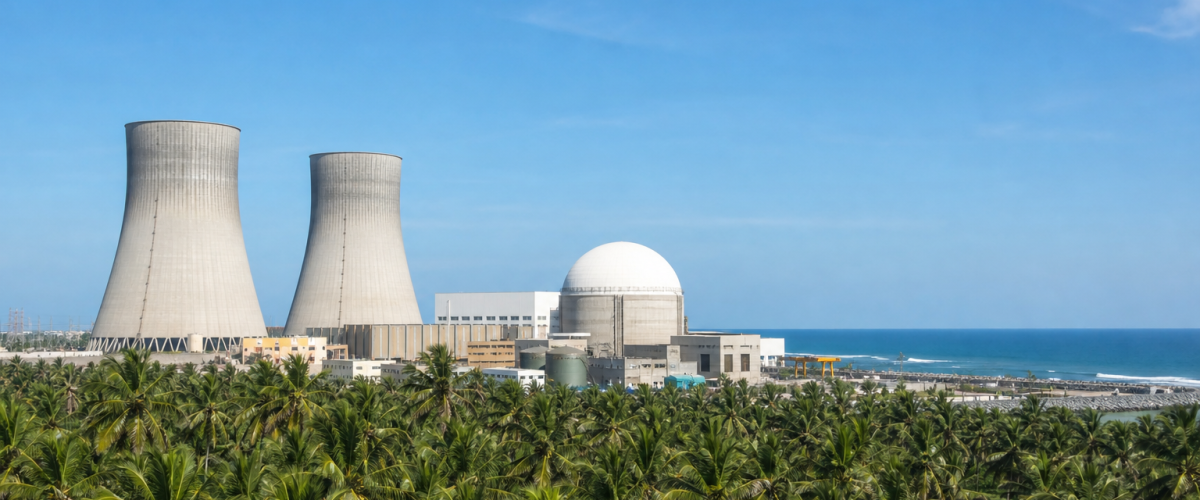
The head of the International Atomic Energy Agency (IAEA) has described India’s Prototype Fast Breeder Reactor (PFBR) at Kalpakkam, Tamil Nadu, as “safe and sound,” providing a significant international endorsement of India’s nuclear energy programme. The statement comes months after the PFBR achieved its historic first criticality on April 6, 2026, marking India’s entry into the second stage of its three-stage nuclear power programme.
With this milestone, India has become only the second country in the world after Russia to operate a commercial-scale fast breeder reactor, a distinction that has attracted both praise and scrutiny from the global nuclear community. The IAEA chief’s assessment, delivered during an exclusive interview from Vienna, is expected to bolster India’s credibility as a responsible nuclear power and could open doors for expanded international nuclear cooperation.
What Is the PFBR?
The Prototype Fast Breeder Reactor is a 500 MWe (megawatt electrical) sodium-cooled fast reactor designed and built entirely by Bharatiya Nabhikiya Vidyut Nigam Limited (BHAVINI) at the Kalpakkam Nuclear Complex. Unlike conventional light water reactors that use enriched uranium, the PFBR uses a mixed oxide fuel containing plutonium and uranium, enabling it to generate more fissile material than it consumes — hence the term “breeder.”
The reactor represents the cornerstone of Stage 2 of India’s three-stage nuclear power programme, a vision first articulated by Dr. Homi Jehangir Bhabha, the father of India’s nuclear programme, in the 1950s. The three stages are designed to progressively utilise India’s vast thorium reserves, which are among the largest in the world, to eventually achieve energy independence through nuclear power.
The Three-Stage Programme Explained
Stage 1 involves pressurised heavy water reactors (PHWRs) that use natural uranium as fuel and produce plutonium as a by-product. India has been operating PHWRs since the 1970s and currently has 22 operational nuclear reactors with a combined capacity of approximately 7,480 MWe.
Stage 2, now activated with the PFBR, uses the plutonium from Stage 1 as fuel in fast breeder reactors. These reactors not only generate electricity but also convert thorium-232 (placed as a blanket around the core) into fissile uranium-233, the fuel for Stage 3.
Stage 3 envisions advanced heavy water reactors that will use thorium and the uranium-233 bred in Stage 2. Given that India possesses approximately 25% of the world’s thorium reserves — estimated at over 360,000 tonnes — successful implementation of Stage 3 could provide India with energy security for centuries.
Global Significance
The PFBR’s achievement has drawn significant attention internationally. Russia’s BN-800 reactor at Beloyarsk has been operational since 2016 and remains the world’s only other commercial fast breeder reactor. China and France have both attempted fast breeder programmes but have faced technical and political challenges that delayed their progress.
Related: West Asia Crisis Threatens India’s Energy Security as Oil Prices Surge Past 109 Dollars
India’s success is particularly noteworthy because it was achieved entirely through indigenous effort. Unlike many countries that rely on imported reactor technology, India designed, manufactured, and commissioned the PFBR domestically, overcoming decades of international sanctions and technology denial regimes that followed the 1974 nuclear test.
Safety Architecture
The IAEA’s positive safety assessment addresses one of the primary concerns surrounding fast breeder reactors: the use of liquid sodium as a coolant. Sodium offers excellent heat transfer properties and allows the reactor to operate at lower pressures than conventional water-cooled reactors. However, sodium reacts violently with water and burns when exposed to air, necessitating elaborate safety systems.
The PFBR incorporates multiple redundant safety systems, including a passive decay heat removal system that can cool the reactor core even without external power — a critical feature given the lessons of the Fukushima disaster. The reactor also features a core catcher system designed to contain and cool the molten core material in the extremely unlikely event of a core meltdown.
BHAVINI engineers have conducted extensive testing of these safety systems, including simulated station blackout scenarios and multiple equipment failure combinations. The IAEA’s inspection teams, which have visited Kalpakkam multiple times, have reportedly been impressed by the thoroughness of India’s safety documentation and the quality of the reactor’s construction.
Economic and Energy Implications
India currently generates approximately 3.2% of its electricity from nuclear power, a figure that the government aims to increase to 25% by 2050. The successful operation of the PFBR is a crucial step toward this target, as it unlocks the pathway to utilising India’s thorium reserves.
The Department of Atomic Energy has already announced plans for four additional fast breeder reactors at Kalpakkam, each with a capacity of 600 MWe. Construction of the first two is expected to begin by 2028, with commercial operation targeted for the early 2030s.
Beyond electricity generation, fast breeder technology has applications in nuclear waste management. Fast reactors can transmute long-lived radioactive waste from conventional reactors into shorter-lived isotopes, potentially reducing the storage period for nuclear waste from hundreds of thousands of years to a few hundred years.
The Road Ahead
While the first criticality was a landmark achievement, the PFBR still has several milestones to cross before reaching full commercial operation. The reactor will undergo progressive power testing over the coming months, gradually increasing from the current low-power physics experiments to 25% power, 50% power, and eventually full rated capacity.
Each stage requires extensive testing and regulatory approval from the Atomic Energy Regulatory Board (AERB). Full commercial operation is expected by late 2027 or early 2028. When operational, the PFBR will add approximately 500 MW to India’s nuclear generating capacity while simultaneously producing the plutonium and uranium-233 needed for future reactor programmes.
As India navigates the dual challenges of meeting its massive energy demands and honouring its climate commitments, the PFBR at Kalpakkam represents both a technological triumph and a strategic imperative. The IAEA’s endorsement strengthens India’s position as a responsible nuclear power and could pave the way for expanded international collaboration in advanced nuclear technologies.
Also Read
- India’s Semiconductor and AI Surge: How Research Labs Are Powering a Global Transformation
- India Records Highest-Ever Power Demand as Heatwave Grips North — IMD Issues Orange Alert for Delhi on June 11
- India Power Demand Shatters All Records at 265 GW as Deadly Heatwave Pushes Temperatures Past 48 Degrees Celsius Across Northern India
- Reliance’s Ambani Green Energy Giga Complex Ships First Batch of High-Efficiency Solar Modules from Jamnagar — India’s Clean Energy Push Gets Major Boost
- India Heatwave Intensifies as Delhi Hits 43.4 Degrees Celsius Making It Hottest May Day in Two Years and Power Demand Touches Record