World Bank Cuts 2026 Global Growth Forecast to 2.5 Percent — Fears of Global Recession Intensify

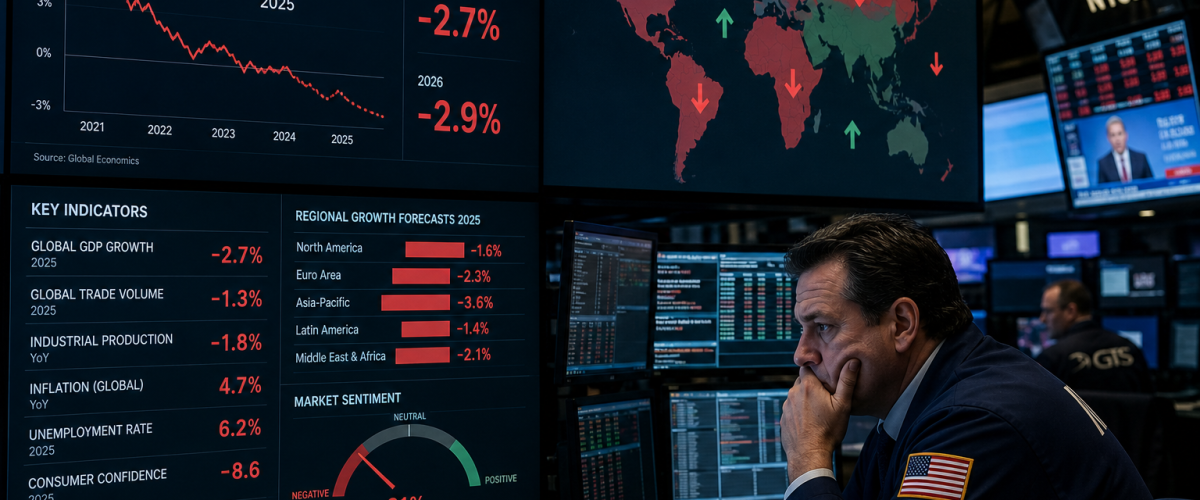
The World Bank has slashed its 2026 global economic growth forecast to 2.5 percent, down from earlier projections, warning that the world economy faces a “perfect storm” of geopolitical conflict, trade fragmentation, and tightening financial conditions that could tip several major economies into recession. The revised forecast, released in the Bank’s latest Global Economic Prospects report, has sent ripples through financial markets and intensified fears of a prolonged global slowdown.
The downgrade reflects the compounding effects of the US-Iran military confrontation in the Middle East, which has disrupted energy supply chains and sent oil prices soaring; persistent trade tensions between the US and China; and the lagged effects of aggressive monetary tightening by central banks worldwide over the past three years. The World Bank warned that if these risks materialise simultaneously, global growth could fall to as low as 1.3 percent — a level typically associated with global recession.
What’s Driving the Downgrade?
Several interconnected factors have forced the World Bank to lower its growth estimates:
1. The Middle East Crisis and Energy Prices: The US-Iran conflict and the effective closure of the Strait of Hormuz for extended periods have caused oil price volatility that has reverberated through global supply chains. With approximately 20 percent of the world’s oil supply transiting through Hormuz, any disruption has outsized effects on energy-importing economies, including India, Japan, and much of Europe.
2. Trade Fragmentation: The global trading system continues to fracture along geopolitical lines, with tariff wars, technology export controls, and supply chain “friend-shoring” reducing the efficiency of international trade. The World Bank estimates that trade fragmentation has reduced global GDP by approximately 0.3 percentage points compared to a fully integrated trading scenario.
3. Monetary Policy Lag Effects: The aggressive interest rate hikes implemented by the US Federal Reserve, European Central Bank, and other major central banks in 2023-2025 are still working their way through economies. Higher borrowing costs have dampened consumer spending, reduced business investment, and created stress in real estate and commercial property markets across developed economies.
4. China’s Slower Recovery: China’s post-COVID economic recovery has been slower and more uneven than anticipated, with the property sector crisis continuing to weigh on growth. As the world’s second-largest economy, China’s slowdown has direct implications for commodity exporters, manufacturing supply chains, and global aggregate demand.
Impact on India
The World Bank’s report maintains India as the fastest-growing major economy, with projected growth of approximately 6.5 percent for the current fiscal year. However, the global slowdown creates several challenges for India:
Related: RBI Holds Repo Rate at 5.25% as Strait of Hormuz Crisis Clouds India’s 6.9% Growth Forecast for FY27
Export demand, particularly for IT services and manufactured goods, could soften as developed economies slow. Remittance flows from the Middle East — a critical source of foreign exchange for states like Kerala, Uttar Pradesh, and Bihar — face risk from the regional instability. And elevated global oil prices directly impact India’s trade deficit, inflation trajectory, and fiscal calculations.
Domestically, the Indian economy faces its own headwinds, including the sustained withdrawal of foreign portfolio investment, challenges in the rural economy, and the uneven recovery of private sector capital expenditure. While government spending on infrastructure continues to provide a floor under growth, the sustainability of this fiscal-driven growth model is a subject of increasing debate.
Market Reactions
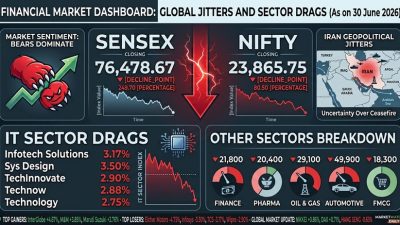
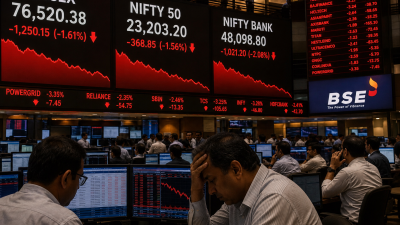
Global stock markets reacted nervously to the World Bank’s revised forecast. European indices fell between 1-2 percent on the day of the announcement, while Asian markets opened lower, with the Nifty 50 declining 0.8 percent in early trade before recovering partially. Safe-haven assets, including gold and US Treasury bonds, saw increased demand as investors sought protection against the deteriorating global outlook.
Currency markets also reflected the risk-off sentiment, with emerging market currencies — including the Indian rupee, Brazilian real, and South African rand — facing selling pressure against the US dollar. The rupee touched a new low against the dollar before the Reserve Bank of India intervened to provide stability.
Recession Risk: How Real Is It?
The World Bank’s warning that global growth could dip to 1.3 percent in a worst-case scenario has prompted serious discussion about recession risk. A global growth rate below 2 percent is generally considered recessionary in effective terms, even if it does not meet the technical definition of two consecutive quarters of contraction.
Key indicators suggest the risk is non-trivial. Manufacturing PMI readings in Europe have been in contraction territory for months. US consumer confidence has declined. China’s youth unemployment remains stubbornly high. And the Middle East conflict shows no signs of resolution, with its economic effects likely to persist regardless of diplomatic outcomes.
For India, insulation from a global recession would depend on the strength of domestic demand, the government’s ability to maintain infrastructure spending, and the Reserve Bank’s skill in managing the competing demands of growth support and inflation control. The coming months will be critical in determining whether the global economy can navigate these headwinds or whether the World Bank’s fears prove justified.
Also Read
- India GDP Growth Forecast 2026: RBI Holds Optimistic Outlook Despite Global Trade Headwinds
- RBI Holds Repo Rate at 5.25 Per Cent: India’s Growth Outlook Strengthens With 7.4 Per Cent GDP Forecast
- India’s Monsoon 2026 Forecast Drops to 90% of Normal — El Niño Threatens Agriculture and Economy as IMD Issues Below-Normal Warning
- RBI Keeps Repo Rate Unchanged at 5.25 Percent as Monetary Policy Committee Projects GDP Growth at 6.9 Percent Amid Global Uncertainty
- India GDP Revised to 7.6 Per Cent in FY26 as Manufacturing Boom Powers Fastest Growth Among Major Economies