India-Bangladesh Border Tensions Rise After Stone-Pelting Standoff at Meghalaya Frontier

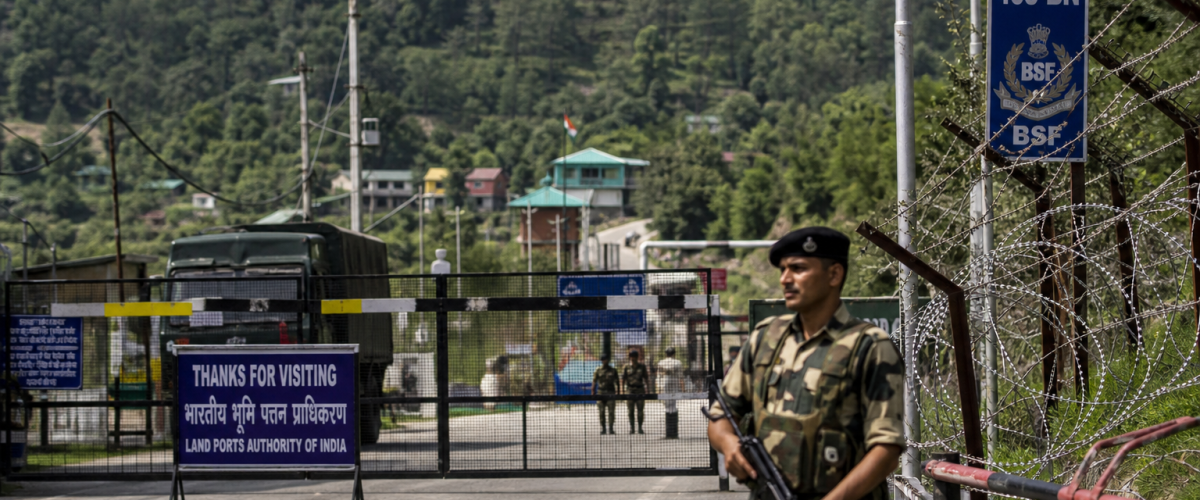
Tensions along the India-Bangladesh border have escalated sharply following a series of incidents in Meghalaya that saw stone-pelting, a standoff between the Border Security Force (BSF) and Bangladesh’s Border Guard Bangladesh (BGB), and reports of individuals stranded in the no-man’s land between the two countries. The flashpoints, coming amid broader bilateral tensions over illegal infiltration, smuggling, and border management, have raised concerns about the fragility of security along one of the world’s most porous international frontiers.
The latest incident occurred when BSF personnel detained a Bangladeshi national who had crossed into Indian territory near the Meghalaya frontier and initiated the process of repatriating him across the border. However, the BGB reportedly refused to accept the individual, triggering a tense standoff that quickly drew large crowds on both sides of the international boundary. The situation deteriorated rapidly as agitated residents began stone-pelting from both sides, forcing security personnel to exercise maximum restraint while working to de-escalate.
Multiple Flashpoints Along the Border
The Meghalaya incident is not isolated. In a separate development, nine individuals were found stranded in the no-man’s land along the India-Bangladesh border in Assam’s Mankachar area, creating a humanitarian and diplomatic complication. The individuals, believed to be Bangladeshi nationals, became trapped between the two border forces after being pushed back from one side and denied entry on the other.
Related: March 2026 OTT Releases: From Subedaar to Border 2, India’s Streaming Calendar Is Stacked
The India-Bangladesh border, stretching approximately 4,096 kilometres across the states of West Bengal, Assam, Meghalaya, Tripura, and Mizoram, is one of the world’s longest international frontiers and among the most challenging to police. The border runs through diverse terrain — from riverine floodplains and marshy wetlands to dense forests and hilly areas — creating numerous vulnerable points that are exploited for illegal crossings, cattle smuggling, and trafficking.
Despite extensive fencing efforts, significant stretches of the border remain unfenced due to terrain challenges, river erosion, and diplomatic sensitivities around construction within 150 yards of the international boundary. These gaps are the primary conduits for illegal border crossings in both directions.
BSF-BGB Talks in New Delhi
The border incidents coincided with a high-level meeting between the BSF and BGB in New Delhi to review border security challenges, discuss illegal infiltration patterns, and strengthen bilateral cooperation mechanisms. The timing underscored both the urgency of the border management challenge and the gap between diplomatic engagement at the leadership level and operational realities on the ground.
Key agenda items at the talks included coordinated patrol schedules, intelligence sharing on smuggling networks, the repatriation process for nationals who cross inadvertently, and the management of border haats (markets) that facilitate legitimate cross-border trade. Both sides reportedly agreed on the need for better communication protocols to prevent incidents like the Meghalaya standoff from escalating.
The BSF has been advocating for the adoption of technology-driven border surveillance, including drones, sensor arrays, and smart fencing with cameras and motion detectors, to complement human patrolling. Several pilot projects are underway along the Bangladesh border, but full-scale deployment remains years away due to budgetary and logistical constraints.
The Infiltration Challenge
Illegal infiltration from Bangladesh has been a politically sensitive and emotionally charged issue in India for decades. The states bordering Bangladesh — particularly Assam, West Bengal, and Tripura — have experienced significant demographic changes that some attribute to decades of cross-border migration. The issue intersects with questions of national identity, electoral politics, and the Citizenship Amendment Act (CAA), making it one of the most complex challenges in India’s domestic and foreign policy landscape.
Bangladesh has historically denied that large-scale illegal migration occurs, arguing that many of the individuals identified as Bangladeshi infiltrators are in fact Indian citizens. This fundamental disagreement has complicated bilateral cooperation on border management and made repatriation a consistently difficult process.
Diplomatic Dimensions
The border tensions come at a time when India-Bangladesh relations are under broader strain. The political changes in Bangladesh, evolving security dynamics in the Bay of Bengal region, and growing Chinese influence in Dhaka have added layers of complexity to a relationship that has traditionally been anchored in shared history, culture, and geography.
India’s approach to the border challenges reflects a dual strategy: strengthening physical and technological border infrastructure while maintaining diplomatic engagement to address root causes. The success of this approach will depend on sustained investment, political will on both sides, and the ability to separate border management as a technical issue from the larger political narratives that often inflame public sentiment.
For the residents of border areas — Indian and Bangladeshi alike — the hope is that the current tensions represent a temporary escalation rather than a new normal. Living on the frontier has always been challenging; the question is whether the institutions responsible for managing this complex border can evolve quickly enough to prevent small incidents from becoming major crises.
Also Read
- India to Send Bengal Tigers to Cambodia in First Ever Cross-Border Tiger Translocation Under 2022 Bilateral Agreement
- Ebola Crisis in Congo Surpasses 1,000 Confirmed Cases as Uganda Closes Border — India Sends Emergency Medical Supplies
- Indian Rupee Plunges to Record Low of 95.5 Against US Dollar as Crude Oil Surge and Iran Tensions Weigh on Markets
- Iran Strikes Jaish-al-Adl Terror Camps Near Pakistan Border in Sistan-Baluchestan as Cross-Border Tensions Escalate Amid US War
- Western Ghats Hill Stations 2026: Why Munnar and Meghalaya Are India’s Must-Visit Escapes