Southwest Monsoon Advances Rapidly: IMD Forecasts Above-Normal Rainfall for Most of India in Coming Weeks

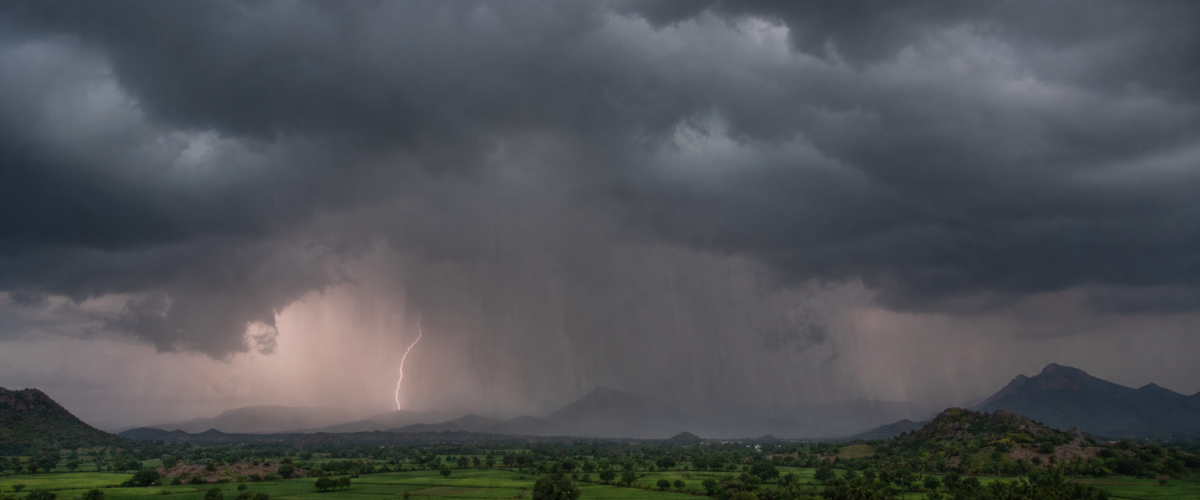
The southwest monsoon is advancing rapidly across the Indian subcontinent after making its official onset over Kerala on June 4, with the India Meteorological Department (IMD) forecasting above-normal rainfall for most of India in the coming weeks. The monsoon’s progress — which has covered the southern peninsula, parts of central India, and the Bay of Bengal — is being closely watched by farmers, policymakers, and markets alike, as the rainy season determines the fate of India’s agriculture, water resources, and rural economy.
The monsoon’s timely arrival and strong initial advance have eased concerns that had been building after forecasts earlier in the year suggested the possibility of below-normal rainfall. The IMD’s updated assessment paints a more optimistic picture, with the department now projecting that the monsoon will cover most of India by the end of June — roughly on schedule.
Monsoon Progress So Far
Since its onset over Kerala on June 4, the southwest monsoon has advanced in stages:
Southern Peninsula: Heavy to very heavy rainfall has been recorded across Kerala, Karnataka, Goa, and Tamil Nadu. The Konkan coast and the Western Ghats have received particularly intense precipitation, with several stations recording above-normal cumulative rainfall for June.
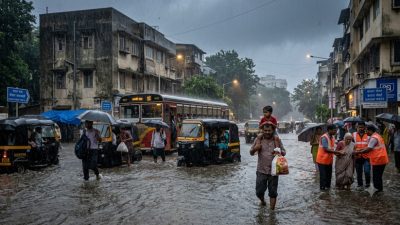
Central India: The monsoon has reached parts of Maharashtra and Madhya Pradesh, bringing relief to regions that were experiencing pre-monsoon heat stress. Mumbai’s monsoon arrival is imminent, with the city expected to receive its first substantial monsoon rainfall within the next few days.
Bay of Bengal Arm: The monsoon’s Bay of Bengal branch has advanced into northeast India, bringing widespread rainfall to Assam, Meghalaya, and the other northeastern states. Cherrapunji has recorded its first major monsoon rainfall spell of the season.
Northwest India: The monsoon has not yet reached the critical agricultural regions of Punjab, Haryana, Rajasthan, and Uttar Pradesh — the heartland of India’s wheat-rice cropping system. The IMD expects the monsoon to advance into these regions by late June to early July.
Agricultural Implications
The monsoon is the lifeblood of Indian agriculture. Approximately 52% of India’s net sown area depends on rainfall for irrigation, making the kharif (summer) cropping season — which begins with the monsoon — critical for the country’s food security and rural economy.
Kharif Sowing: The monsoon’s timely advance has allowed farmers in southern and central India to begin kharif sowing operations. Rice, cotton, soybean, and pulses are among the major crops being planted, with early sowing data showing progress broadly in line with the five-year average.
Reservoir Levels: India’s major reservoirs have begun filling, though current storage levels remain below the 10-year average. The next four to six weeks of monsoon performance will be critical for determining whether reservoir levels reach the thresholds needed for comfortable irrigation supply through the rabi (winter) season.
Rural Economy: Good monsoon rainfall supports rural incomes, consumption, and economic activity across a wide swathe of sectors including agriculture, FMCG, two-wheelers, and rural banking. For India’s GDP growth — projected at 6.9% by Goldman Sachs for 2026 — the monsoon’s performance is a significant variable.
Market Impact
The monsoon forecast has immediate implications for Indian financial markets. A good monsoon supports lower food inflation, stronger rural demand, and improved corporate earnings for agriculture-dependent sectors. The Reserve Bank of India’s monetary policy calculations also factor in monsoon performance, with above-normal rainfall reducing the pressure for food-price-driven interest rate adjustments.
The stock market’s recent rally — the Nifty breaking above 24,000 — has been supported in part by improved monsoon expectations. Agricultural commodity prices, particularly for rice, sugar, and oilseeds, will be sensitive to the monsoon’s performance in the coming weeks.
Climate Change Context
India’s monsoon is increasingly affected by climate change, with scientists observing shifts in rainfall patterns, increased intensity of individual rainfall events, and growing unpredictability in the monsoon’s advance and retreat. The 2026 monsoon’s strong initial advance is encouraging, but climate variability means that the season’s overall performance cannot be reliably predicted from its early stages alone.
For India’s 1.4 billion people, the monsoon remains the most consequential weather event of the year — a season that shapes livelihoods, determines food prices, and influences the trajectory of the world’s fifth-largest economy.
Also Read
- Super El Nino 2026 Threatens India Southwest Monsoon as IMD Forecasts Below-Normal Rainfall and Drought Risk Looms Over 60 Percent Farmers
- Southwest Monsoon to Hit Kerala Around June 4 as IMD Confirms Onset — What It Means for India’s Agricultural Season
- India’s Monsoon 2026 Forecast Drops to 90% of Normal — El Niño Threatens Agriculture and Economy as IMD Issues Below-Normal Warning
- Southwest Monsoon 2026 May Be India’s Weakest in 11 Years — IMD Issues Heavy Rain Alerts Across 8 States
- Southwest Monsoon 2026 Advances Rapidly — IMD Predicts Heavy Rain Across Southern and Central India