India Weighs Its Response to Iran’s Invitation for Khamenei State Funeral

New Delhi has not confirmed whether PM Modi will attend ceremonies beginning 4 July, a decision that carries significant diplomatic weight in a volatile West Asia
A formal diplomatic question is now sitting on India’s desk, and New Delhi is in no hurry to answer it.
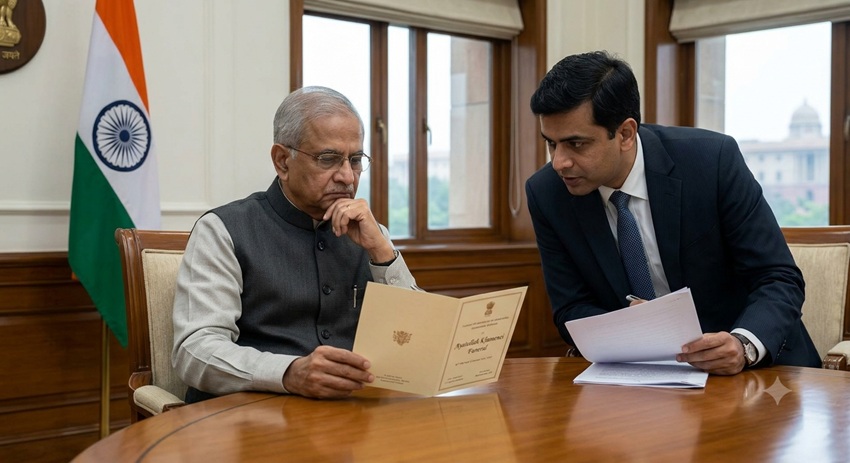
Iranian President Masoud Pezeshkian has invited Prime Minister Narendra Modi to attend the state funeral and burial ceremonies of Supreme Leader Ayatollah Ali Khamenei, who was killed in a US-Israeli airstrike on 28 February 2026. The Iranian Embassy in New Delhi delivered the invitation to India’s Ministry of External Affairs (MEA) on 24 June. As of 26 June, the government has offered no official response.
The funeral proceedings are elaborate and multi-city. Ceremonies are scheduled to begin at Tehran’s Grand Mosalla complex on 4 July, move to the holy city of Qom on 7 July, and conclude with Khamenei’s burial on 9 July at the Imam Reza shrine in Mashhad — his hometown — where he had expressed a wish to be interred. Iranian authorities expect millions of mourners to attend the farewell events across the country.
India’s silence is itself a statement of sorts. Pezeshkian has also extended invitations to China, Russia, Pakistan, France, and Qatar, and several countries have already confirmed participation or indicated they will send delegations. For India, any decision carries consequence in multiple directions.
The Modi government’s handling of the Iran war has drawn persistent criticism at home. Opposition leader Rahul Gandhi argued that India’s foreign policy left the country sidelined when it mattered most — particularly after Pakistan emerged as a key back-channel mediator between Tehran and Washington during the 40-day conflict. New Delhi, which has long positioned itself as the dominant strategic voice in South Asia, watched from the margins as Islamabad claimed a moment of rare international visibility.
Against that backdrop, attending Khamenei’s funeral could serve India’s interest in reaffirming its civilisational and diplomatic ties with Iran — a country with which it shares a long-standing relationship anchored in commerce, energy, and the Chabahar Port agreement. PM Modi last visited Tehran in May 2016, when he and Khamenei signed a trilateral framework to develop the port with Afghanistan. That agreement remains strategically significant for India’s access to Central Asia, bypassing Pakistani territory.
The complication, as analysts note, is that India is also careful not to send signals that alarm its Gulf partners — particularly Saudi Arabia and the UAE — where energy interests run deep. Modi spoke with Gulf leaders during the conflict, condemning strikes on regional sovereignty without naming Iran specifically, a formulation that satisfied neither side fully.
Foreign Secretary Vikram Misri visited the Iranian Embassy on 5 March to formally sign the condolence register after Khamenei’s assassination, and Iranian Foreign Minister Abbas Araghchi met both Jaishankar and Modi during the BRICS Foreign Ministers’ Meeting in New Delhi in recent months. The diplomatic traffic has been consistent, if carefully calibrated.
India’s decision on who — if anyone — attends the Mashhad burial will be read closely in Tehran, Riyadh, and Washington alike. Whether the Prime Minister travels himself, sends a senior minister, or dispatches a lower-level representative will signal where New Delhi places Iran in its current strategic priorities. That calculation is unlikely to be simple.
The government is expected to announce its decision in the coming days.

- Indian Army Gets New Chief as General Dwivedi Hands Over Command Amid Push for Indigenous Defence Tech - July 1, 2026
- Ayodhya Ram Temple Donation Scandal Deepens as Trustees Resign and SIT Arrests Eight - June 29, 2026
- Bengal Seven Weeks On: Modi’s Historic Win and the Questions That Won’t Go Away - June 28, 2026