From Side Hustles to Scalable Ventures: India’s Rising Founders Are Redefining Entrepreneurship in 2026

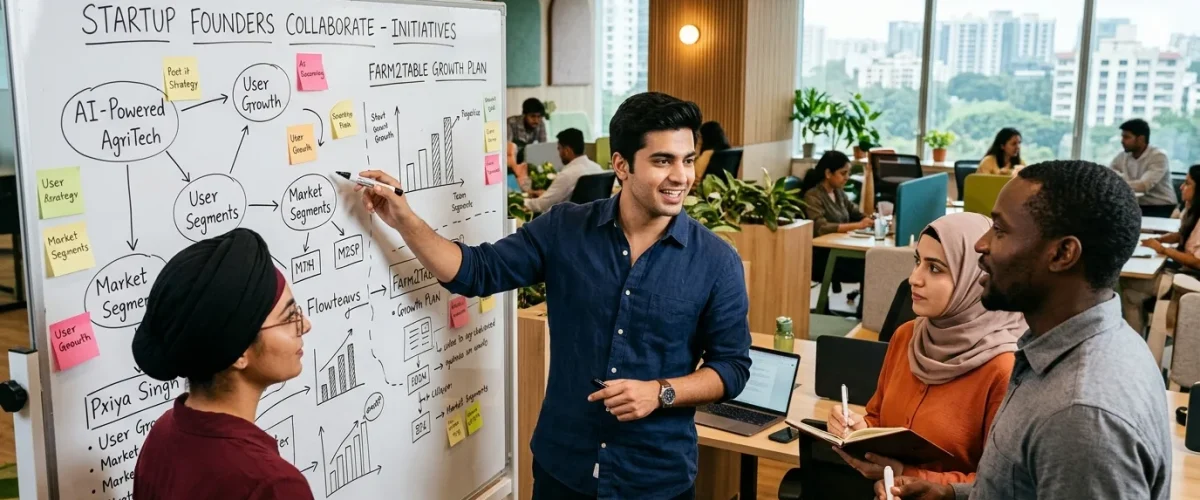
India’s entrepreneurial landscape in 2026 is being shaped by a new generation of founders who are breaking from the conventional startup playbook. Unlike the previous wave of entrepreneurs who typically left positions at established technology companies to launch well-funded ventures in familiar sectors, today’s rising founders are emerging from unexpected backgrounds—side hustles that gained traction during personal experiments, career pivots that transformed industry insights into business opportunities, and passion projects that evolved into category-defining companies. Their stories reflect a democratisation of entrepreneurship that is expanding the geographic, demographic, and sectoral boundaries of India’s startup ecosystem.
The New Founder Archetype: Resilience Over Pedigree
The defining characteristic of India’s 2026 founder class is their path-dependent innovation—building solutions that emerge from lived experience rather than market analysis alone. Arun Bakshi, Founder and CEO of Hebe Wellness, spent over 15 years in IT sales before transitioning to entrepreneurship in 2023, channelling his corporate experience into building a premium wellness brand that has achieved significant traction in a highly competitive consumer market.
This pattern—experienced professionals applying domain expertise to entrepreneurship—is increasingly common. Founders in their 30s and 40s, with deep industry knowledge and professional networks, are launching companies that benefit from mature operational thinking from day one. Unlike the fresh-out-of-college founders who dominated the 2015-2020 cohort, these experienced entrepreneurs tend to build more capital-efficient businesses with clearer paths to profitability.
Women founders, while still underrepresented, are making increasingly visible contributions. Companies founded or co-founded by women in sectors ranging from healthcare and education to fintech and sustainability are demonstrating that diversity in the founder pool leads to diversity in the problems being solved—often addressing needs overlooked by the predominantly male startup ecosystem.
Beyond Bengaluru: The Geographic Democratisation of Entrepreneurship
India’s startup activity is no longer concentrated in the Bengaluru-Delhi-Mumbai triangle. State-level startup policies, the proliferation of incubators and accelerators, improved digital infrastructure, and the demonstrated success of founders from non-traditional startup cities have collectively expanded the geographic footprint of Indian entrepreneurship.
Founders from Jaipur are building global SaaS companies. Entrepreneurs in Lucknow are launching healthtech ventures. Ahmedabad’s manufacturing prowess is producing a new generation of D2C brands that combine physical product expertise with digital marketing sophistication. Kochi’s techie diaspora returnees are building deep-tech companies that leverage Kerala’s high literacy rates and strong engineering talent pool.
The Startup India initiative, launched in 2016, has evolved from a registration platform into a comprehensive support ecosystem. As of National Startup Day 2026 in January, over 1,15,000 startups are recognised under the programme, with representation from every state and union territory. Tax benefits, simplified compliance processes, and government procurement preferences for startups have created an enabling environment that extends opportunity beyond traditional startup hubs.
Sector-Spanning Innovation: Founders Solving India’s Unique Challenges
India’s 2026 founders are tackling problems that are uniquely Indian in their scale and complexity. In fintech, entrepreneurs are building credit infrastructure for India’s 500 million underbanked citizens, leveraging UPI transaction data and alternative credit scoring models to extend financial services to populations that traditional banks have not served. In agritech, founders with farming backgrounds are building platforms that connect smallholder farmers directly to markets, provide crop advisory services through vernacular-language apps, and enable access to crop insurance and credit. The UPI ecosystem that powers much of this financial innovation has achieved transformative scale, as detailed in our analysis of UPI’s 20 billion monthly transactions and its impact on India’s financial landscape.
Climate technology has emerged as a significant category for purpose-driven founders. Entrepreneurs are building solutions for solar energy financing, agricultural waste management, sustainable packaging, and carbon credit verification—addressing India’s sustainability challenges while building commercially viable businesses. The alignment of profit motive with environmental impact is attracting a new breed of founder who views business as a vehicle for systemic change.
Deep-tech founders are pushing India’s innovation frontier further. Entrepreneurs in semiconductor design, quantum computing applications, space technology, and advanced materials are building companies that compete at the global technology frontier. While these ventures require longer development timelines and more patient capital, their potential to create defensible intellectual property and high-value exports makes them strategically significant for India’s economic evolution.
The Funding Journey: How Today’s Founders Raise Capital
The fundraising landscape for Indian founders has evolved significantly from the spray-and-pray era of 2021. Today’s successful founders demonstrate a more sophisticated understanding of investor expectations, typically building businesses to meaningful revenue milestones before raising institutional capital. Many bootstrap through initial stages using personal savings, revenue from early customers, or small angel investments—a discipline that builds operational rigour and demonstrates market validation.
Angel investing networks have matured considerably. Platforms like AngelList India, Indian Angel Network, and LetsVenture provide structured access to angel capital, while prominent founders who have achieved exits—the “founder-turned-investor” cohort—are actively deploying personal capital into the next generation of startups. This recycling of entrepreneurial wealth and experience is a hallmark of maturing startup ecosystems. The broader investor confidence is reflected in the resurgent funding environment documented in our analysis of India’s 87 unicorn club and renewed startup ecosystem confidence.
The Mental Health Reckoning: Founders Talk About Wellbeing
A significant and welcome shift in India’s founder culture is the growing openness about entrepreneurial mental health. The glamorisation of “hustle culture” and 18-hour workdays is giving way to a more nuanced conversation about sustainable leadership, the psychological toll of uncertainty, and the importance of founder wellbeing for business longevity.
Founder peer groups, executive coaching, and mental health support programmes specifically designed for entrepreneurs are gaining traction. Prominent founders publicly sharing their experiences with burnout, anxiety, and the pressures of fundraising and scaling have helped destigmatise these conversations and created permission for the broader founder community to prioritise wellbeing alongside performance.
The Ecosystem Enablers: Incubators, Accelerators, and Government Support
India’s founder ecosystem is supported by an increasingly sophisticated network of enablers. IIT incubators, IIM entrepreneurship cells, government-backed technology business incubators, and private accelerators such as Antler India, Venture Highway, and 100X.VC are providing not just capital but mentorship, market access, and operational support to early-stage founders.
The government’s Atal Innovation Mission, with over 10,000 Atal Tinkering Labs established in schools across India, is seeding entrepreneurial thinking at increasingly early ages. The pipeline of future founders being cultivated through school and university programmes today will determine the character and scale of India’s startup ecosystem in the 2030s.
Looking Forward: The Founder Generation That Will Shape India’s Next Decade
India’s rising founders of 2026 represent more than individual success stories—they are the human capital driving the country’s transition from a services-led economy to an innovation-led one. Their willingness to tackle hard problems, their resilience in navigating uncertain markets, and their ambition to build businesses of global significance reflect a national entrepreneurial confidence that has matured significantly over the past decade.
The challenges remain substantial. Access to early-stage capital for founders outside major cities, the regulatory complexity of operating across Indian states, and the intensity of competition in most startup sectors ensure that entrepreneurship remains a demanding path. But the growing depth of the ecosystem—in terms of capital, talent, infrastructure, and institutional support—means that more founders than ever before have a fighting chance to turn their visions into reality, contributing to India’s broader economic trajectory of sustained high growth and structural transformation.