Trump Amplifies ‘Hellhole’ Remark About India on Truth Social: Full Controversy, India’s Sharp Response, and What It Means for Bilateral Ties

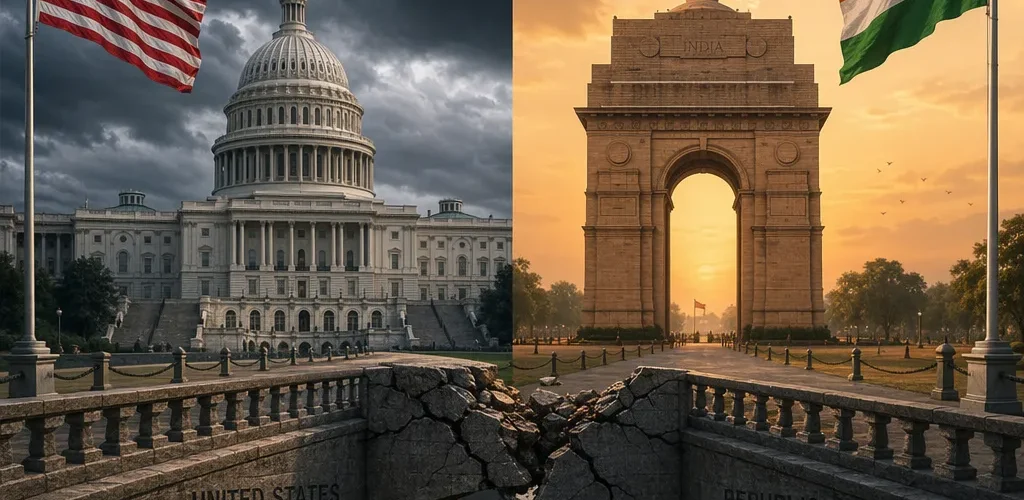
A fresh diplomatic controversy erupted between India and the United States on April 23, 2026, after US President Donald Trump amplified a social media post that referred to India, China, and other developing nations as “hellholes on the planet.” The remark, originally made by conservative radio host Michael Savage, drew immediate and sharp condemnation from India’s Ministry of External Affairs and triggered widespread outrage among Indian-origin politicians in the US. The controversy comes at a particularly sensitive time in India-US relations, just weeks after both countries signed a landmark trade agreement.
How the Controversy Erupted: Trump’s Truth Social Post
The controversy began when President Trump shared a transcript of a political talk show hosted by Michael Savage on his Truth Social account. In the transcript, Savage criticised the American Civil Liberties Union (ACLU) and US birthright citizenship policies, arguing against automatic citizenship for children born on American soil regardless of their parents’ nationality.
During the rant, Savage described countries like India and China as “hellholes on the planet,” claiming people travel from these nations to the United States during the ninth month of pregnancy specifically to give birth and secure US citizenship for their children. The language was inflammatory and broadly targeted developing nations without nuance or factual backing.
Trump’s decision to amplify the post on Truth Social — effectively endorsing its content — drew swift backlash from diplomatic quarters and politicians on both sides of the political aisle.
India’s Ministry of External Affairs Hits Back
India’s response was unusually direct. MEA spokesperson Randhir Jaiswal addressed the controversy at a press briefing on April 23, stating that India had taken note of both the original comments and a subsequent clarification issued by the US Embassy in New Delhi.
“We have seen the comments, as also the subsequent statement issued by the US Embassy in response. The remarks are obviously uninformed, inappropriate and in poor taste. They certainly do not reflect the reality of the India-US relationship, which has long been based on mutual respect and shared interests,” Jaiswal said.
The measured but firm language signalled India’s displeasure without escalating the situation into a full diplomatic crisis. The reference to “mutual respect” was widely interpreted as a subtle reminder of the diplomatic protocols that both nations have carefully maintained, especially during the historic India-US trade deal negotiations in recent weeks.
US Embassy Issues Damage Control Clarification
Within hours of the controversy gaining traction, the US Embassy in New Delhi issued a clarification on Trump’s behalf. A spokesperson quoted the President as saying: “India is a great country with a very good friend of mine at the top,” referring to Prime Minister Narendra Modi.
However, critics noted that the clarification did not include an explicit apology or retraction of the original post. The statement appeared designed to contain the fallout rather than address the substance of the criticism. Diplomatic analysts observed that this pattern — inflammatory content followed by partial walkback — has become a recurring feature of the Trump administration’s public diplomacy.
Indian-Origin US Politicians Lead Bipartisan Criticism
The fallout was particularly intense among Indian-American members of Congress and political leaders. Several prominent Indian-origin politicians in the US condemned the remarks as “offensive and ignorant,” noting that millions of Indian Americans contribute significantly to the US economy, technology sector, healthcare system, and academic institutions.
Democratic Party members were especially vocal, with some pointing out the irony of the President “amplifying racist trash on social media” while the US was engaged in military operations in the Middle East. The criticism extended beyond party lines, with moderate Republicans also expressing discomfort at the blanket characterisation of one of America’s largest trading partners and strategic allies.
Indian-American advocacy groups noted that the remarks could inflame anti-Asian sentiment and undermine decades of community-building by the Indian diaspora, which numbers approximately 4.4 million in the US and represents one of the highest-earning immigrant communities in the country.
Timing Could Not Be Worse: The India-US Trade Deal Context
The controversy arrives at an especially awkward moment in bilateral relations. Just weeks ago, India and the US signed a landmark trade agreement that reduced tariffs to 18 per cent and included a $500 billion commitment to strengthen economic ties. The deal was celebrated by both governments as a new chapter in India-US partnership.
Trade analysts warn that inflammatory rhetoric from the White House could complicate implementation of the deal, particularly as it requires cooperation on customs procedures, regulatory alignment, and investment facilitation. Indian business groups have also expressed concern that such comments could dampen the enthusiasm of American investors looking to expand operations in India.
The Indian stock market, already rattled by geopolitical tensions in the Strait of Hormuz, showed muted reaction to the controversy, suggesting investors are treating it as a political sideshow rather than a fundamental shift in the relationship.
India’s Diplomatic Strategy: Firm but Calibrated
India’s handling of the controversy reflects a strategy that New Delhi has refined over multiple Trump-era provocations. Rather than escalating the rhetoric or summoning ambassadors, the MEA delivered a pointed response through its spokesperson — firm enough to register displeasure, calibrated enough to leave room for normal diplomatic business to continue.
This approach mirrors India’s response to previous Trump administration comments that have tested diplomatic patience, including remarks on Kashmir, tariff threats, and the characterisation of India as a “tariff king” in earlier trade negotiations. India has consistently chosen to push back through official statements rather than public confrontation.
Foreign policy experts note that India’s leverage in the relationship has grown substantially in recent years, driven by its role as a counterbalance to China in the Indo-Pacific, its massive consumer market of 1.4 billion people, and its growing defence procurement from the United States. This economic and strategic weight gives India confidence to respond firmly without fear of retaliation.
Social Media Erupts: Memes, Outrage, and the Birthright Debate
On social media, the controversy predictably went viral. Indian netizens flooded platforms with responses ranging from biting sarcasm to genuine anger. Hashtags related to Trump and India trended on X (formerly Twitter) throughout April 23 and into the following day.
Some commentators used the opportunity to highlight India’s achievements — from its space programme and digital payments revolution to its position as the world’s fifth-largest economy — as a counter to the “hellhole” characterisation. Others pointed to the irony of the remark coming from a president whose administration actively courts Indian investment through initiatives like the IndiaAI Mission.
The underlying issue — birthright citizenship in the United States — is a longstanding political debate that predates this controversy. However, the use of derogatory language to describe specific countries added a racial and diplomatic dimension that went far beyond immigration policy discussions.
What Happens Next
Diplomats on both sides are expected to work behind the scenes to ensure the controversy does not disrupt ongoing bilateral initiatives, including defence cooperation, technology transfers, and the trade deal implementation. The Indian government’s swift but measured response suggests New Delhi is treating this as a political incident rather than a fundamental shift in relations.
However, the episode serves as a reminder that the India-US relationship, despite its strategic depth, remains vulnerable to the unpredictability of social media-driven diplomacy. For India, the key takeaway is clear: the partnership remains strong on fundamentals, but managing public perception in the age of Truth Social requires constant vigilance.