Domestic LPG Cylinder Price Hiked by Rs 29 to Rs 942 in Delhi — Second Increase in Three Months as West Asia Crisis Deepens

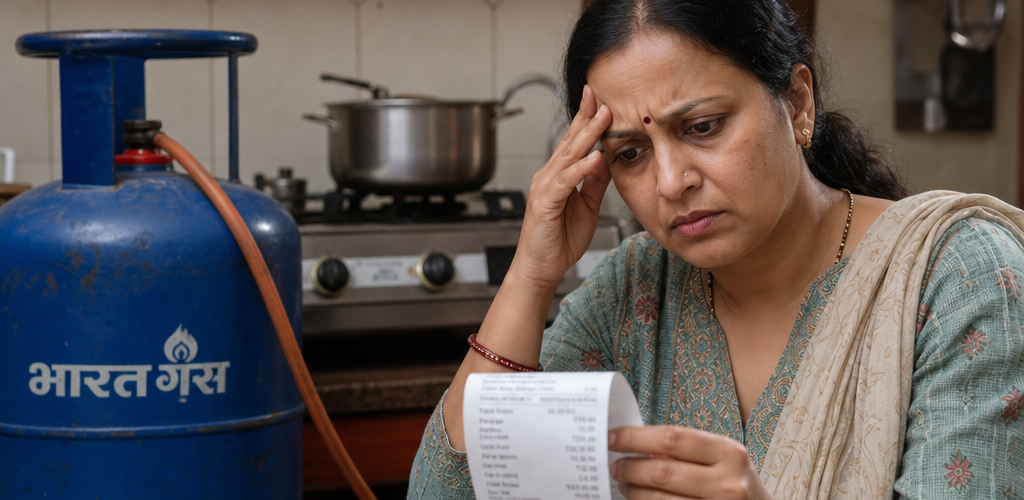
Oil marketing companies raised the price of domestic LPG cylinders by Rs 29 effective June 7, marking the second increase in three months as the West Asia crisis continues to push global energy costs to elevated levels. A 14.2 kg domestic cylinder in Delhi now costs Rs 942, up from Rs 913, while Ujjwala beneficiaries will pay an effective Rs 642 per cylinder.
The Scale of Under-Recovery
The Ministry of Petroleum and Natural Gas disclosed a striking figure alongside the hike: the actual cost of supplying a single domestic cylinder has crossed Rs 1,600. This means oil marketing companies — Indian Oil Corporation, Bharat Petroleum, and Hindustan Petroleum — absorb an under-recovery of approximately Rs 700 on every cylinder sold at the subsidised domestic rate.
This gap between market cost and consumer price is being driven by a 46 per cent surge in the Saudi Contract Price for LPG since late February. The Saudi CP is the international benchmark that determines the landing cost of LPG in India, and the West Asia conflict between the United States and Iran has disrupted supply routes and inflated prices across all petroleum products.
City-Wise Price Impact
The Rs 29 hike has been applied uniformly for domestic cylinders, but the effective price varies by city due to differences in local taxes and transportation charges. In Mumbai, the domestic cylinder now costs Rs 941.50. In Kolkata, it stands at Rs 968. Chennai prices have moved to Rs 957.50. Gurgaon consumers pay Rs 950.50, while Noida prices sit at Rs 939.50.
Commercial cylinders, which are fully market-priced, present an even starker picture. The 19 kg commercial cylinder in Delhi now costs Rs 3,113.50 — roughly Rs 164 per kilogram — after five consecutive increases during the West Asia crisis. This price is what hotels, restaurants, and dhabas across the country actually pay, and it explains the sharp increase in eating-out costs that consumers have noticed over the past quarter.
Historical Context
This is the second domestic LPG price hike in three months, following a Rs 60 per cylinder increase announced on March 7. Combined, domestic cylinder prices in Delhi have risen by Rs 89 over the past 12 months. While the government has emphasised that Indian households still pay among the lowest cooking gas prices globally — a claim supported by comparative data from the US, Australia, and neighbouring countries — the cumulative impact on household budgets is significant.
The political sensitivity of LPG pricing cannot be overstated. The Pradhan Mantri Ujjwala Yojana has distributed over 10 crore free LPG connections since 2016, making cooking gas access a flagship welfare achievement. Each price hike risks pushing some of these beneficiaries back toward firewood and dung cakes, undermining the programme’s public health objectives.
What Comes Next
Industry analysts expect further adjustments if crude oil prices remain elevated. Brent crude, which had fallen to around $72 per barrel in early 2025, has climbed back above $85 on West Asia supply disruption fears. Any escalation in the Iran conflict or disruption to shipping through the Strait of Hormuz could push both crude and LPG benchmarks significantly higher.
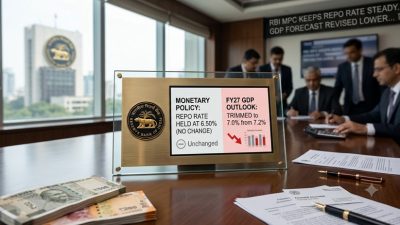
The government’s options are constrained. Further subsidising domestic LPG would widen the fiscal deficit at a time when the RBI has already flagged inflation concerns, raising its FY27 CPI forecast to 5.1 per cent. But allowing full pass-through of international prices would take the domestic cylinder price well above Rs 1,600 — a level that would trigger severe political backlash and genuine hardship for lower-income households.
For now, the Rs 700 per cylinder under-recovery is being absorbed by the OMCs, which report it as a cost against their marketing margins. How long this arrangement can continue without either a larger price hike or a direct budgetary subsidy remains an open question that the government will need to address as the West Asia situation evolves.
Impact on the Ujjwala Programme
The Pradhan Mantri Ujjwala Yojana, which provides free LPG connections to below-poverty-line families, has been one of the government’s most successful welfare schemes by coverage metrics. Over 10 crore connections have been distributed since the programme’s 2016 launch, and refill rates have been a key indicator of whether beneficiaries are actually using LPG or reverting to traditional fuels.
Data from the petroleum ministry suggests that while initial connection numbers are impressive, sustained refill rates among Ujjwala beneficiaries remain significantly lower than the general consumer population. Each price hike widens this gap. A family earning Rs 8,000-10,000 per month — which is typical for Ujjwala beneficiaries — now faces a monthly cooking fuel cost of Rs 642 for a single cylinder, or roughly 6-8 per cent of household income. When a cylinder lasts less than a month for larger families, the effective monthly burden is even higher.
The alternative — reverting to firewood, dung cakes, or kerosene — carries documented health costs. Indoor air pollution from solid fuel cooking is linked to respiratory diseases, eye infections, and reduced cognitive development in children. The World Health Organisation estimates that household air pollution causes approximately 3.2 million premature deaths globally each year, with India accounting for a disproportionate share.
Global Energy Market Context
The West Asia crisis — centred on the ongoing conflict between the United States and Iran — has disrupted energy markets since early 2026. The Strait of Hormuz, through which approximately 20 per cent of the world’s oil supply passes, has been the focal point of tensions. Iran’s threats to close the strait, combined with actual disruptions to shipping insurance and routing, have kept a risk premium embedded in global energy prices.
For India, which imports over 85 per cent of its crude oil and a significant portion of its LPG, the geopolitical premium translates directly into consumer prices. The government’s ability to shield households from international price volatility is constrained by fiscal realities — the combined under-recovery on domestic LPG, diesel, and petrol has already widened the subsidy bill beyond budgeted estimates for FY27.

- India’s Startup Funding Crosses $7.2 Billion in H1 2026 - July 1, 2026
- After Ireland Shock, India’s T20I Side Faces Bigger Test - July 1, 2026
- Ireland Stun World Champions India 2-0 in Belfast, Sooryavanshi Debate Rages On - June 29, 2026