Kevin Warsh Confirmed as Federal Reserve Chair After Senate Vote as Jerome Powell Named Interim Chief in Historic Leadership Transition

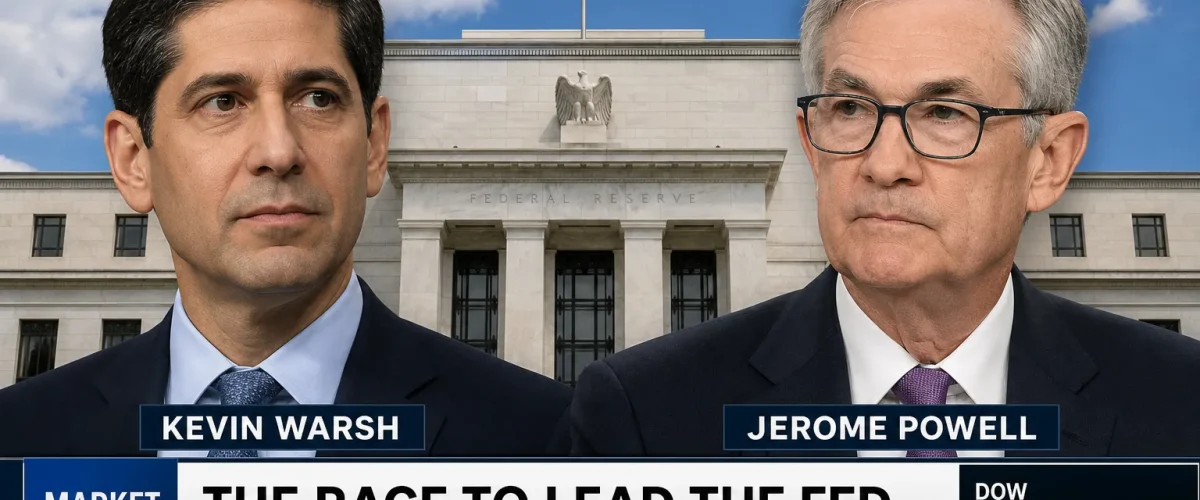
The United States Senate has confirmed Kevin Warsh as the new Chair of the Federal Reserve Board of Governors, completing President Donald Trump’s long-running effort to reshape the leadership of the world’s most powerful central bank. The confirmation vote, which passed 51-45 largely along party lines on Wednesday, followed an earlier vote that had confirmed Warsh to a 14-year term as a Fed governor. With the chairmanship vote secured, the former Wall Street banker and Stanford fellow is poised to take the helm of the institution that sets monetary policy for the world’s largest economy.
Powell Named Interim Chief in Unprecedented Move
In a highly unusual development, outgoing Chair Jerome Powell has been designated as “chair pro tempore” — an interim chief — following the expiry of his four-year chairmanship term on Friday, 16 May. The Federal Reserve announced the temporary arrangement on its official channels, explaining that Powell would serve in the role until Kevin Warsh’s official commission is signed by the President and the swearing-in ceremony is completed.
Powell’s decision to remain on the Fed Board as a rank-and-file governor makes him the first outgoing chair in more than 75 years to stay on after his leadership term ends. Powell has stated that he will maintain a “low profile” and remain on the board until he is confident that an ongoing investigation related to his tenure is “well and truly over.” His term as a governor runs until January 2028, giving him the option to stay for nearly two more years.
Who Is Kevin Warsh?
Kevin Warsh, 56, is no stranger to the Federal Reserve. He served on the Fed’s Board of Governors from 2006 to 2011, a period that included the 2008 global financial crisis. During that tumultuous era, Warsh played a key role in the emergency policy response, working alongside then-Chair Ben Bernanke on the unprecedented interventions that included near-zero interest rates and the first round of quantitative easing.
After leaving the Fed in 2011, Warsh spent over a decade as a visiting fellow at Stanford University’s Hoover Institution, where he became known for his criticism of the Fed’s communication strategies and its reliance on forward guidance as a policy tool. He also served as a partner in the investment firm of legendary hedge fund manager Stanley Druckenmiller.
President Trump had considered Warsh for the Fed chairmanship as early as 2017 but ultimately chose Powell. This time around, Warsh emerged as the frontrunner after a selection process that was complicated by the political fallout from a criminal probe into Powell’s handling of certain Fed decisions during Trump’s first term.
Policy Agenda: What Changes Can Markets Expect?
Warsh has outlined an ambitious agenda for his tenure that goes beyond the traditional inflation-targeting and employment mandate. He has publicly stated his intention to reform several of the Fed’s long-standing tools, including how it tracks economic conditions and how it communicates policy decisions to the public and financial markets.
Market participants are watching closely for signals on three key issues. First, Warsh’s approach to interest rates: with the US economy facing the conflicting pressures of elevated inflation from energy costs and slowing growth from the West Asia conflict’s impact on trade, the new chair will need to navigate what economists have described as a “stagflationary” environment.
Second, Warsh has been critical of the Fed’s balance sheet management, particularly the pace at which the central bank has been reducing its holdings of Treasury securities and mortgage-backed bonds. He may accelerate the quantitative tightening process, which could have implications for long-term bond yields and, by extension, global equity markets.
Third, Warsh’s views on the dollar and international monetary coordination will be closely watched, particularly given the ongoing volatility in currency markets linked to the energy crisis. The Indian rupee, which has come under significant selling pressure in recent months, could be affected by any shift in the Fed’s dollar policy.
Impact on Global and Indian Markets
The Fed leadership transition comes at a particularly sensitive time for global financial markets. US bond yields have been volatile, with the 10-year Treasury yield swinging between 4.5 and 5.1 per cent over the past month. Any perception that Warsh will be more hawkish than Powell could push yields higher, triggering capital outflows from emerging markets including India.
Indian equity markets, which have already seen significant foreign portfolio investor withdrawals totalling over Rs 2 lakh crore since the beginning of the year, are likely to remain sensitive to Fed policy signals. The Sensex and Nifty have both declined more than 8 per cent from their recent peaks, with banking and IT stocks bearing the brunt of the selling.
“The Warsh appointment adds another layer of uncertainty for emerging market investors. While he is unlikely to make dramatic policy changes immediately, the direction of travel on rates and the balance sheet matters enormously for capital flows to India and other EM economies,” said Ridham Desai, India equity strategist at Morgan Stanley.
Senate Confirmation: Political Dynamics
The 51-45 confirmation vote reflected the partisan nature of the appointment. All 50 Republican senators and one independent voted in favour, while 44 Democrats and one independent voted against. Democratic senators, led by Banking Committee ranking member Elizabeth Warren, objected to what they characterised as the politicisation of the Fed and expressed concern that Warsh’s close ties to Wall Street could influence monetary policy in favour of financial institutions at the expense of working families.
Warsh’s confirmation takes the seat previously held by Stephen Miran, a Trump adviser who was confirmed to the Fed last September to fill an earlier vacancy. Miran’s term had technically ended in January but he was permitted to remain until his successor was confirmed. With Warsh now on the board, the Fed has a full complement of seven governors for the first time in several years.
What Powell’s Legacy Looks Like
Jerome Powell’s tenure as Fed chair, which began in February 2018, will be remembered as one of the most consequential in the institution’s history. He steered the Fed through the COVID-19 pandemic, implementing emergency rate cuts and massive bond-buying programmes that prevented a depression. He then pivoted to aggressive rate hikes starting in 2022 to combat the worst inflation in four decades, ultimately bringing price increases back toward the Fed’s 2 per cent target by late 2024.
However, Powell’s final year was overshadowed by the West Asia energy crisis, which reignited inflationary pressures and complicated the Fed’s path to rate normalisation. His decision to remain on the board as a regular governor is seen by some as an effort to provide institutional continuity and by others as a statement of defiance against the political pressures that marked his relationship with the Trump administration.
As Warsh prepares to take the oath, global markets, central bankers, and policymakers from Washington to Mumbai will be parsing his every word and action for clues about the future direction of American monetary policy and its ripple effects across the world economy.