Oil Prices Crash Over 11 Percent as US-Iran Ceasefire Talks Signal Possible End to Middle East Conflict

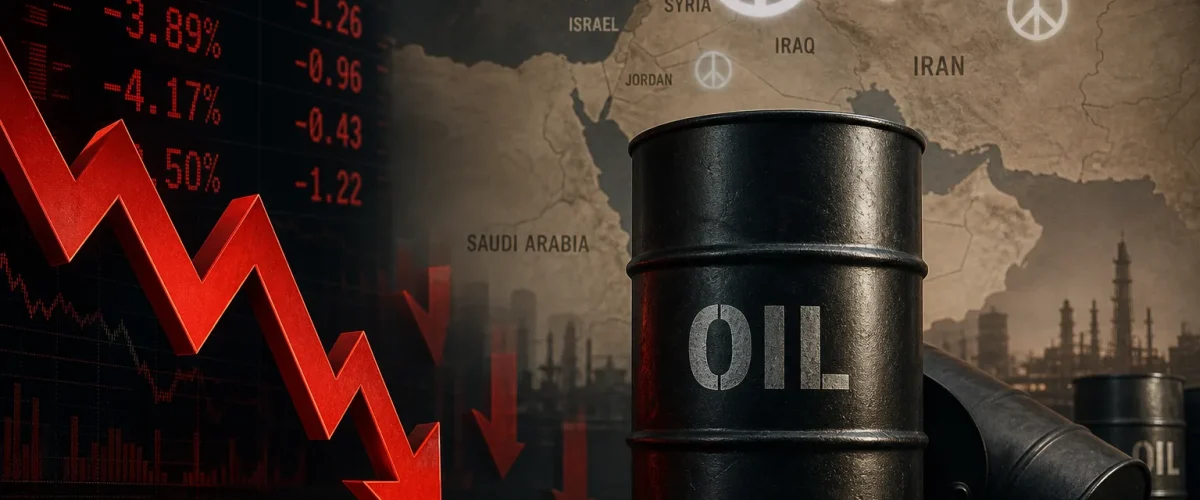
Global oil markets witnessed a dramatic sell-off on 07 May 2026, with Brent crude plunging over 11 percent to approximately $97.50 per barrel and West Texas Intermediate (WTI) crude falling more than 13 percent to around $89 per barrel. The steep declines mark the third consecutive day of losses for both benchmarks and represent the sharpest single-day drop in crude prices since the early days of the Middle East conflict.
The trigger for the crash was renewed optimism surrounding diplomatic talks between the United States and Iran. Senior US officials told reporters on Wednesday that a ceasefire agreement is now considered imminent, following weeks of back-channel negotiations mediated through Oman and Qatar. If finalised, the deal could reopen the Strait of Hormuz — the world’s most critical oil chokepoint — and ease the supply constraints that had driven Brent crude past $114 per barrel just days earlier.
How Did Oil Prices Move on 07 May 2026?
Brent crude opened at approximately $109 per barrel on Wednesday morning and fell throughout the trading session, eventually settling near $97.50. This 11 percent single-day decline follows a 4 percent drop on 06 May, indicating accelerating downward momentum as market participants scramble to unwind long positions built during the crisis.
WTI crude futures fared even worse, dropping over 13 percent from around $102 to approximately $89 per barrel. The differential between Brent and WTI narrowed as traders reassessed the supply risk premium that had been built into prices over the past several weeks.
The sell-off was broad-based across energy markets. Natural gas futures also fell sharply, while shares of major oil companies including ExxonMobil, Chevron, and BP declined between 5 and 8 percent in early trading.
US-Iran Ceasefire: What We Know So Far
The diplomatic breakthrough appears to have come after President Donald Trump signalled that the Iran deal is “coming to an end very soon.” According to multiple reports, the framework agreement would involve a phased withdrawal of naval forces from the Strait of Hormuz, a suspension of Iran’s missile strikes on UAE energy infrastructure, and a gradual easing of sanctions on Iranian oil exports.
However, several analysts caution that the path to a final agreement remains uncertain. Iran has publicly maintained that it will not negotiate under military pressure, and hardliners in Tehran have reportedly pushed back against concessions on the nuclear programme. A formal ceasefire announcement is expected within days, but the precise terms and implementation timeline remain unclear.
Impact on India: Rupee, Markets, and Fuel Prices
The oil price crash is a significant positive for India, the world’s third-largest oil importer. The sharp decline could provide relief to the Indian rupee, which had plunged to a record low of 95.5 against the US dollar during the peak of the crisis.
Indian stock markets responded positively. The benchmark Sensex surged over 1,200 points in early trading, while the Nifty 50 crossed the 24,500 level. Oil-sensitive sectors including airlines, paints, and tyre companies led the rally, with shares of IndiGo, Berger Paints, and Apollo Tyres gaining between 6 and 10 percent.
The government had been considering a petrol and diesel price hike of Rs 4 to 5 per litre — the first fuel price increase in four years — amid surging global crude prices. The sudden drop in oil prices could delay or reduce the quantum of any planned increase, providing relief to consumers already dealing with record LPG prices.
Global Oil Reserves at Eight-Year Lows
Despite the price relief, analysts warn that the underlying supply picture remains tight. Global commercial oil inventories have fallen to their lowest levels in eight years, driven by months of supply disruptions caused by the Iran conflict and the blockade of the Strait of Hormuz.
Even if the ceasefire holds, it will take weeks for oil flows through the strait to normalise. Damaged port infrastructure in the UAE, particularly at the Fujairah terminal, will require extensive repairs before full capacity can be restored. Meanwhile, the OPEC Plus agreement to raise output targets by 188,000 barrels per day for June may not be sufficient to rebuild depleted reserves quickly.
What Do Analysts Expect Next?
Market analysts remain divided on the near-term outlook. Goldman Sachs revised its Brent crude forecast downward to $95 per barrel for the third quarter of 2026, contingent on a successful ceasefire. JPMorgan maintained a more cautious view, noting that oil prices could rebound sharply if talks collapse.
“The market has priced in a best-case diplomatic scenario,” said Amrita Sen, director of research at Energy Aspects. “If the ceasefire fails or is delayed, we could see Brent back above $110 within days. The inventory picture simply does not support prices below $100 for an extended period.”
OPEC’s next formal meeting in June will be crucial. The group must decide whether to accelerate production increases to capitalise on the diplomatic window or maintain discipline to support prices as the global economy navigates the aftermath of the conflict.
Energy Transition Implications
The extreme price volatility of recent weeks has reignited the debate around energy security and the pace of the global transition to renewable sources. India, which spent over $180 billion on oil imports in FY26, has accelerated its push toward domestic renewable capacity. The country added a record 51 GW of renewable energy in FY26, and policymakers have cited the Iran crisis as evidence that faster diversification away from fossil fuels is essential.
For global markets, the coming days will be pivotal. Traders and policymakers alike are watching the US-Iran negotiations closely, knowing that the outcome will determine whether the current price crash is the beginning of a sustained correction or merely a temporary pause in a longer bull market driven by geopolitical instability.